
Barkudia insularis
The Madras spotted skink (Barkudia insularis) is a critically endangered, limbless lizard species first described in 1917. Resembling a large earthworm, it inhabits the subsoil and is thought to feed on small arthropods. While initially believed to be restricted to mangrove habitats around Barkuda Island in Chilka Lake, Odisha, India, later observations suggest a broader distribution within the state.
Key Facts
- ›Critically endangered limbless skink species.
- ›Resembles a large earthworm in appearance.
- ›Inhabits subsoil environments.
- ›Diet is believed to consist of small arthropods.
- ›Found in Odisha, India, with a potentially larger range than initially thought.

Madras Spotted Skink
Odisha, India
Subsoil, Mangrove Habitats
- Limbless Skink.
- Elongated Body Resembling A Large Earthworm.
- Depressed, Obtusely Pointed Snout.
- Light Brown Dorsal Coloration With 12-14 Longitudinal Lines Formed By Central Dots On Each Scale.
- Whitish Lower Parts.
- Top of Head Clouded With Brown.
- Body With 140 Ventral Scales Between the Post-Mental and Pre-Anal Plates.
- 20 Smooth Scales Around the Mid-Body.
- Tip of the Tail Is Blunt and Not Much Narrower Than the Base.
Small Arthropods
Burrows Rapidly Into the Ground., Likely Lives In the Subsoil.
About Barkudia insularis
Barkudia insularis: The Madras Spotted Skink
The Madras spotted skink, scientifically known as Barkudia insularis, is a limbless lizard species that has garnered attention due to its critically endangered status and elusive nature. First formally described in 1917, this unique reptile was rediscovered in the wild in 2003, marking a significant moment for herpetological research in India.
Physical Characteristics and Habitat
Visually, Barkudia insularis bears a striking resemblance to a large earthworm, a characteristic attributed to its limbless morphology and subterranean lifestyle. Its body is elongated, and it possesses a depressed, obtusely pointed snout. The dorsal coloration is typically light brown, adorned with longitudinal lines formed by small dots on each scale, while its underside is whitish. The top of its head often displays brown clouding. This skink inhabits the subsoil, burrowing rapidly into the ground, and was initially believed to be confined to the mangrove environments surrounding Barkuda Island in Chilka Lake, Odisha, India.
Diet and Behavior
While specific dietary habits are not extensively documented, it is presumed that Barkudia insularis feeds on small arthropods found within its underground habitat. Its behavior is primarily focused on subterranean life, with rapid burrowing observed when individuals are encountered. Information regarding its social structure, activity patterns, or defense mechanisms remains scarce in available records.
Distribution and Conservation
Subsequent observations have indicated that the range of the Madras spotted skink may be broader than initially understood, extending to other areas within the state of Odisha. Despite these expanded observations, the species continues to be classified as critically endangered. The limited number of sightings since its initial description underscores the challenges in studying and conserving this rare reptile. The rarity and specialized habitat requirements of Barkudia insularis highlight the importance of ongoing research and habitat protection efforts to ensure its survival.
Source: Wikipedia ↗
Frequently Asked Questions
What is the scientific name of the Madras spotted skink?
The scientific name of the Madras spotted skink is Barkudia insularis. This binomial nomenclature is used to classify the species within the scientific community.
Where is the Madras spotted skink found?
The Madras spotted skink is found in Odisha, India. While initially thought to be restricted to mangrove habitats near Barkuda Island in Chilka Lake, recent observations suggest its range extends to other parts of Odisha.
What does the Madras spotted skink eat?
Little is definitively known about the diet of the Madras spotted skink. However, it is presumed to feed on small arthropods found in its subsoil habitat.
What are the physical characteristics of Barkudia insularis?
Barkudia insularis is a limbless skink with an elongated body that resembles a large earthworm. It has a depressed, obtusely pointed snout. Its dorsal side is light brown with longitudinal lines formed by dots on each scale, and its lower parts are whitish. The top of its head is clouded with brown.
Why is the Madras spotted skink considered critically endangered?
The Madras spotted skink is listed as critically endangered due to its rarity and limited documented sightings since its initial description. Habitat loss and other unknown factors likely contribute to its precarious conservation status.
Related Lizards
Brookesia desperata
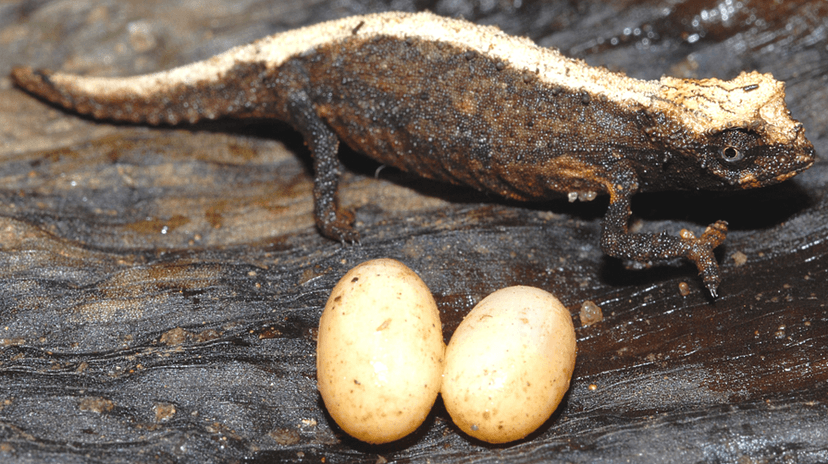
Brookesia desperata is a critically endangered species of chameleon found only in the Foret d'Ambre Special Reserve in northern Madagascar. Its name, 'desperata,' reflects the dire state of its threatened habitat, which is being lost to deforestation for agriculture, charcoal production, logging, quarrying, and grazing. This small chameleon is known to roost on small branches or leaves a short distance above the ground at night.

Furcifer belalandaensis
Furcifer belalandaensis, also known as the Belalanda chameleon, is a critically endangered chameleon species endemic to a small region in southwestern Madagascar. It is characterized by its green coloration and a somewhat smaller casque compared to its relative, the veiled chameleon. The species' habitat has been significantly altered by logging, leading to its current existence in planted non-indigenous trees and remaining mature trees.
Sierra curlytail lizard
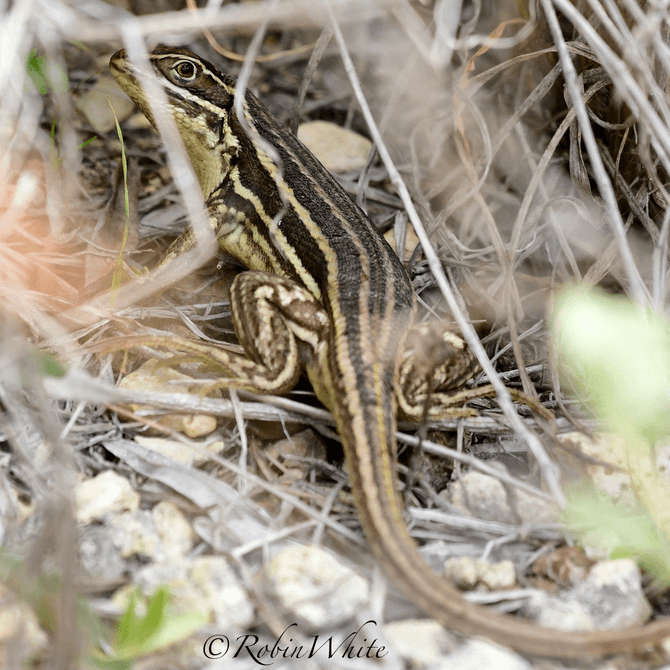
The Sierra curlytail lizard (*Leiocephalus onaneyi*) is a critically endangered species endemic to the Guantánamo Province of Cuba. This medium-sized lizard is characterized by a distinctive chocolate-brown dorsal stripe bordered by darker lines, with multiple alternating stripes extending along its back. Its habitat is a xeric environment with limestone karst topography near the coast.