
Furcifer belalandaensis
Furcifer belalandaensis, also known as the Belalanda chameleon, is a critically endangered chameleon species endemic to a small region in southwestern Madagascar. It is characterized by its green coloration and a somewhat smaller casque compared to its relative, the veiled chameleon. The species' habitat has been significantly altered by logging, leading to its current existence in planted non-indigenous trees and remaining mature trees.
Key Facts
- ›Endemic to Belalanda, a small rural commune in southwestern Madagascar.
- ›Classified as Critically Endangered by the IUCN.
- ›Has an extremely restricted range, covering only 4 square kilometers.
- ›Its original habitat of gallery forest has been cleared, and it now inhabits planted trees.
- ›Primary threat is extensive logging for charcoal production.
- ›The species is the subject of local preservation initiatives involving municipal authorities and local people.

Belalanda Chameleon, Sangoritan'I Belalanda
Madagascar
Gallery Forest, Canopies of Non-Indigenous Trees, Mature Trees
- Green Coloration.
- Possesses A Casque, Similar To the Veiled Chameleon But Somewhat Smaller.
Logging For Charcoal Production, Habitat Destruction
About Furcifer belalandaensis
Furcifer belalandaensis: The Critically Endangered Belalanda Chameleon
Furcifer belalandaensis, commonly known as the Belalanda chameleon or Sangoritan'i Belalanda, is a species of chameleon endemic to Madagascar. It was first described by Édouard-Raoul Brygoo and Charles Domergue in 1970. This species is recognized by the International Union for Conservation of Nature (IUCN) as Critically Endangered, facing an extreme risk of extinction.
Distribution and Habitat
The Belalanda chameleon is found exclusively in Belalanda, a town and rural commune in the Atsimo-Andrefana region of southwestern Madagascar. Its natural range is exceptionally small, spanning only approximately 4 square kilometers. Historically, its habitat was gallery forest, but this has been entirely cleared. Consequently, the species now resides in the canopies of non-indigenous trees that have been planted in the area, as well as in the few remaining mature trees.
Description and Threats
Physically, the Belalanda chameleon is green in color and features a casque on its head, which is similar to that of its relative, the veiled chameleon, though it is somewhat smaller. The primary threat to the survival of Furcifer belalandaensis is the substantial amount of logging occurring in its limited habitat for the production of charcoal. Despite the unknown precise population numbers, the IUCN believes the population is in decline.
Conservation Efforts
Recognizing the precarious state of the species, conservation initiatives are in place. The World Wide Fund for Nature is actively working to save Furcifer belalandaensis from extinction. Locally, the municipal authority has taken steps to ban the collection and trade of this chameleon, and community members are involved in its preservation efforts. The species can be found at elevations between 18 and 20 meters above sea level.
Source: Wikipedia ↗
Frequently Asked Questions
What is Furcifer belalandaensis?
Furcifer belalandaensis, commonly known as the Belalanda chameleon, is a species of chameleon found only in Madagascar. It was first identified in 1970. This species is facing a severe threat of extinction.
Where is the Belalanda chameleon found?
The Belalanda chameleon is endemic to Belalanda, a town and rural commune located in the Atsimo-Andrefana region of southwestern Madagascar. Its natural habitat is confined to an extremely small area of just 4 square kilometers.
What does the Belalanda chameleon look like?
The Belalanda chameleon is green in color. It possesses a casque on its head, which is similar in form to that of the veiled chameleon, though it is somewhat smaller in size.
What is the conservation status of Furcifer belalandaensis?
Furcifer belalandaensis is listed as Critically Endangered on the IUCN Red List of Threatened Species. This designation highlights its extreme vulnerability to extinction.
What are the main threats to the Belalanda chameleon?
The most significant threat to the Belalanda chameleon is extensive logging, particularly for the manufacture of charcoal in its habitat. The clearing of its original gallery forest has also led to its reliance on planted trees for survival.
Are there efforts to save the Belalanda chameleon?
Yes, conservation efforts are underway to save the Belalanda chameleon from extinction. The World Wide Fund for Nature is involved in these efforts, and local initiatives include a ban on the collection and trade of the species by the municipal authority, with local people participating in its preservation.
Related Lizards

Furcifer tuzetae
Furcifer tuzetae is a chameleon species endemic to Madagascar, known only from its type locality near Befandriana Sud. This species inhabits dry forest environments and is oviparous, meaning it reproduces by laying eggs. Due to limited data, its conservation status is rated as "data deficient" by the IUCN, with potential threats including agricultural practices and logging.
Sphaerodactylus sabanus
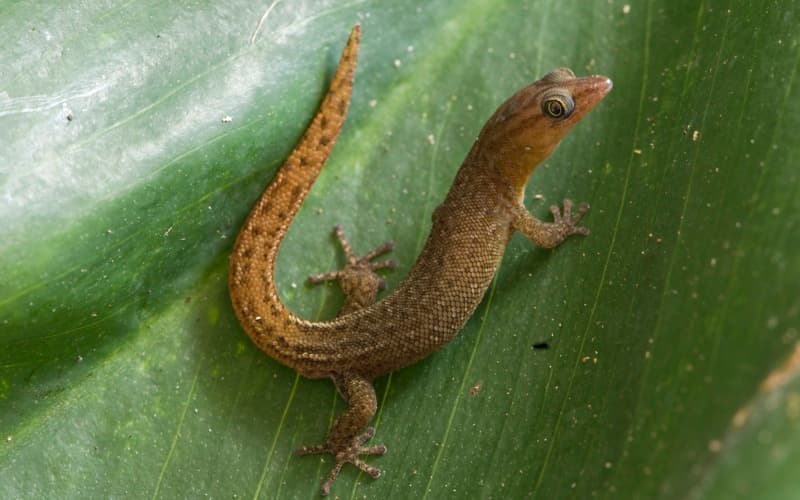
The Saba least gecko (Sphaerodactylus sabanus) is a small gecko species endemic to the Lesser Antilles in the Caribbean. It exhibits a range of coloration from light to dark brown, with some individuals displaying dull orange heads and dark brown stripes. This adaptable species inhabits various environments, including forests, palm groves, xeric habitats, and human settlements, and is generally considered to be of least concern for conservation.
Brookesia desperata
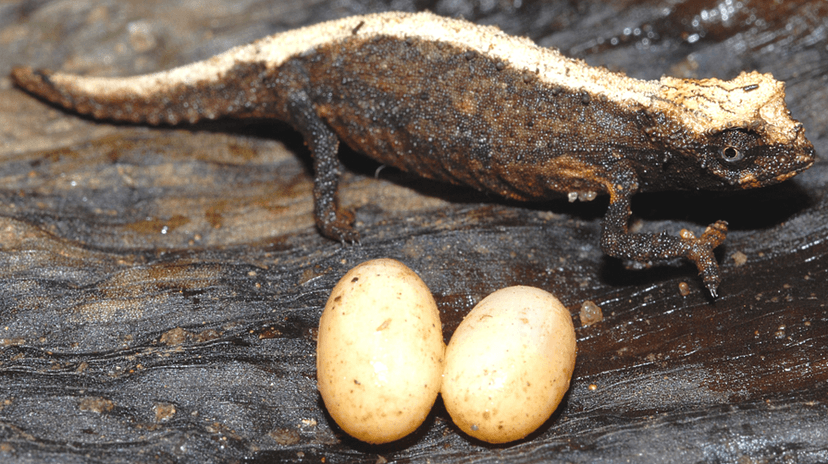
Brookesia desperata is a critically endangered species of chameleon found only in the Foret d'Ambre Special Reserve in northern Madagascar. Its name, 'desperata,' reflects the dire state of its threatened habitat, which is being lost to deforestation for agriculture, charcoal production, logging, quarrying, and grazing. This small chameleon is known to roost on small branches or leaves a short distance above the ground at night.