
Brookesia desperata
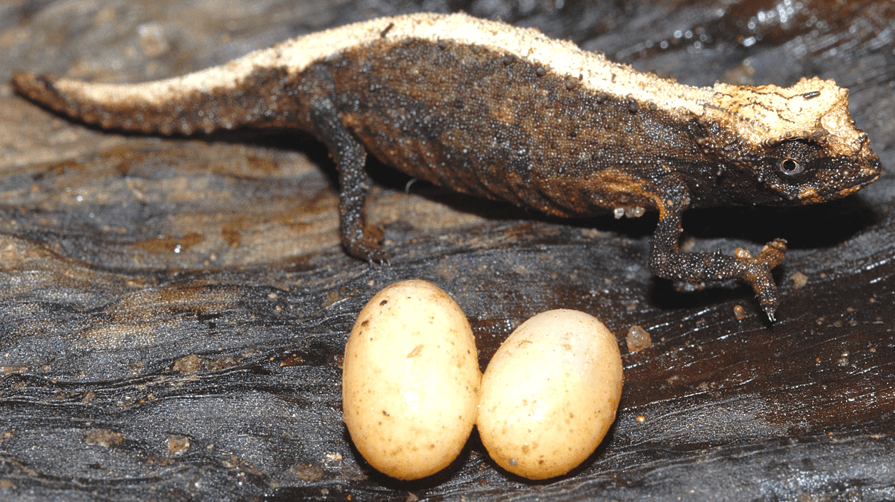
Brookesia desperata is a critically endangered species of chameleon found only in the Foret d'Ambre Special Reserve in northern Madagascar. Its name, 'desperata,' reflects the dire state of its threatened habitat, which is being lost to deforestation for agriculture, charcoal production, logging, quarrying, and grazing. This small chameleon is known to roost on small branches or leaves a short distance above the ground at night.
Key Facts
- ›Endemic to Foret D'Ambre Special Reserve in north Madagascar.
- ›Critically endangered due to severe habitat loss.
- ›Habitat decline is caused by agriculture, charcoal production, logging, quarrying, and cattle grazing.
- ›Roosts above ground on small branches or leaves at night.
- ›Named 'desperata' to highlight the precarious situation of Madagascar's micro-endemic species.
Madagascar
Small Chameleon Species.
- Roosts Above Ground On Small Branches Or Leaves At Night.
Habitat Loss, Clearance of Forest For Crops, Charcoal Production, Timber Extraction, Small-Scale Quarrying, Cattle Grazing
About Brookesia desperata
Brookesia desperata is a species of chameleon distinguished by its critically endangered status and its highly restricted habitat. It is found exclusively within the Foret d'Ambre Special Reserve in the northern region of Madagascar. The species' scientific name, 'desperata,' was deliberately chosen to draw attention to the dire and threatened condition of the natural environments that support Madagascar's many micro-endemic species.
Habitat and Threats
The primary concern for Brookesia desperata is the severe decline of its forest habitat. This habitat destruction is attributed to a range of human activities, including the clearance of forests for agricultural purposes, the production of charcoal, logging for timber, small-scale quarrying operations, and the grazing of cattle. These pressures combine to make the continued survival of the species precarious.
Behavior and Discovery
At night, Brookesia desperata exhibits a specific roosting behavior, resting on small branches or leaves typically between 5 to 100 centimeters above the ground. This species was formally identified and described in 2012 by a research team led by Dr. Frank Glaw, associated with the Zoologische Staatssammlung München. Its discovery highlights the ongoing need for research and conservation efforts for Madagascar's unique biodiversity.
Source: Wikipedia ↗
Frequently Asked Questions
Where is Brookesia desperata found?
Brookesia desperata is found exclusively in the Foret d'Ambre Special Reserve, located in the northern part of Madagascar. This means it has a very restricted natural range.
Why is Brookesia desperata considered critically endangered?
The species is critically endangered primarily because its habitat is rapidly declining. This deforestation is driven by human activities such as clearing land for crops, producing charcoal, extracting timber, small-scale quarrying, and allowing cattle to graze.
What does the name 'desperata' signify?
The scientific name 'desperata' was chosen to draw attention to the desperate and threatened condition of the habitat for many micro-endemic species in Madagascar, including this chameleon.
How does Brookesia desperata behave at night?
At night, Brookesia desperata can be observed roosting above the ground. It typically rests on small branches or leaves, usually between 5 to 100 centimeters above the ground.
When was Brookesia desperata first described?
Brookesia desperata was formally described in 2012. The description was made by a research team led by Dr. Frank Glaw, who is affiliated with the Zoologische Staatssammlung München.
Related Lizards

Furcifer belalandaensis
Furcifer belalandaensis, also known as the Belalanda chameleon, is a critically endangered chameleon species endemic to a small region in southwestern Madagascar. It is characterized by its green coloration and a somewhat smaller casque compared to its relative, the veiled chameleon. The species' habitat has been significantly altered by logging, leading to its current existence in planted non-indigenous trees and remaining mature trees.
Paroedura lohatsara
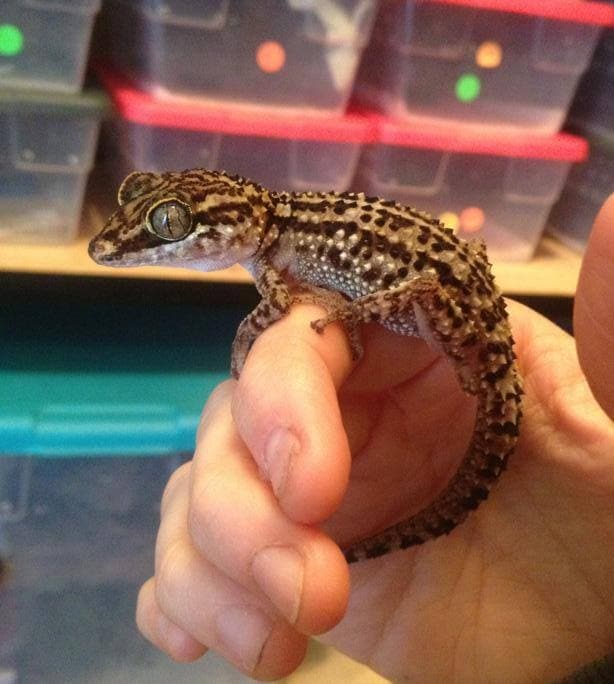
Paroedura lohatsara is a critically endangered gecko species native to a single mountain range in northern Madagascar. These small to medium-sized geckos are characterized by their brown coloration with black speckling, which can form longitudinal bands in adults, and a distinct banded pattern in juveniles. Primarily ground-dwelling but also found on boulders and low tree branches, they are nocturnal and face significant threats from habitat destruction.

Barkudia insularis
The Madras spotted skink (Barkudia insularis) is a critically endangered, limbless lizard species first described in 1917. Resembling a large earthworm, it inhabits the subsoil and is thought to feed on small arthropods. While initially believed to be restricted to mangrove habitats around Barkuda Island in Chilka Lake, Odisha, India, later observations suggest a broader distribution within the state.