
Bassiana duperreyi
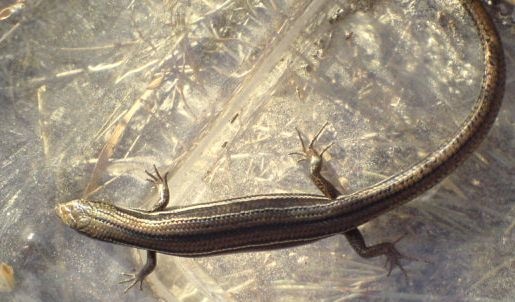
The eastern three-lined skink, also known as Bassiana duperreyi, is a species of skink endemic to Australia. It is distinguished by its prominent stripes and has been the subject of extensive research into lizard learning, viviparity, and sex determination. This species inhabits a variety of environments across southeastern Australia and is classified as 'Least Concern' by the IUCN.
Key Facts
- ›Endemic to southeastern Australia, including Tasmania and several islands.
- ›Characterized by a strong pattern of black or grey stripes running down its body.
- ›Hatchlings may exhibit bright red throat coloration that fades with age.
- ›Known for its communal nesting behavior, where multiple females lay eggs together.
- ›Plays a role in scientific understanding of temperature-dependent sex determination in reptiles.
- ›Classified as 'Least Concern' by the IUCN.
Eastern Three-Lined Skink, Bold-Striped Cool-Skink, Duperrey's Window-Eyed Skink, Three-Lined Skink
Australia, Islands Off the Coast of Australia
Grasslands, Wet-Dry Sclerophyll Forests, Temperate Forests, Temperate Shrublands, Human-Developed Pasturelands, Alpine Regions
- Strongly Striped With Black Or Grey Stripes Running Along the Sides of the Body and A Black Stripe Down the Spine.
- Hatchlings Typically Have Bright Red Throat Coloration That Fades To Orange-Pink Or Disappears.
- Comparatively Small Body Size, Up To 80 Millimeters In Snout-To-Tail Length.
- Hatchlings Have Relatively Larger Head Sizes Than Adults.
- Possesses More Than 22 Maxillary Teeth.
- Has An Autonomous Tail That Can Break Away.
Small Invertebrates, Insects
- Exhibits Tail-Waving Behavior As An Anti-Predator Defense, Deflecting Predators Towards the Tail.
- Hatchlings Incubated At Lower Temperatures Bask For Longer Periods.
- Capable of Learning To Navigate Mazes and Perform Visual Discrimination Tasks Using Color Cues.
- Gravid Females Intentionally Select Communal Nesting Sites.
- Modifies Attack Methods Based On Prey Size.
- More Likely To Flee From Large Prey and Less Likely To Attack Prey Larger Than Their Body Size.
Insectivore, Invertebrate Feeder
Snakes, Birds
Residential and Commercial Development, Habitat Degradation, Introduced Species, Predation By Cats, Predation By Dogs, Predation By Pigs, Climate Change
About Bassiana duperreyi
The eastern three-lined skink, scientifically known as Acritoscincus duperreyi and also referred to as Bassiana duperreyi in some taxonomic contexts, is a species of skink native to Australia. This lizard is characterized by its distinctive pattern of stripes that run longitudinally along its body, typically in shades of black or grey, with a prominent stripe down its spine. Hatchlings often display a striking bright red coloration on their throat, which gradually fades as they mature.
Distribution and Habitat
Bassiana duperreyi is found across southeastern Australia, including the states of New South Wales, South Australia, Tasmania, and Victoria, as well as on several coastal islands. Its preferred habitats are diverse, encompassing grasslands, temperate forests, temperate shrublands, and human-modified pasturelands. While it thrives in cool climate regions and can be found at higher elevations, it generally does not inhabit areas above 1,650 meters.
Reproduction and Development
This oviparous species lays clutches of 3 to 9 eggs annually in early summer, often communally at sites chosen for their sunny and open conditions, typically under logs or rocks. Incubation temperature plays a crucial role in the development of Bassiana duperreyi offspring, influencing their size, behavior, and even sex through temperature-dependent sex determination. Notably, some genotypic females (XX) can develop into phenotypic males under specific cool incubation temperatures.
Behavior and Ecology
Eastern three-lined skinks exhibit fascinating behaviors, including a tail-waving anti-predator display where they wiggle their tails to distract predators. Research has also shown that hatchlings possess learning capabilities, navigating mazes and tasks based on visual color cues, with warmer incubation conditions enhancing this ability. Their diet consists mainly of small invertebrates and insects, and they are known to modify their hunting strategies based on prey size.
Conservation Status
The International Union for Conservation of Nature (IUCN) classifies the eastern three-lined skink as a species of 'Least Concern.' However, threats such as habitat loss due to development, the impact of introduced species, and climate change-induced alterations in nesting temperatures pose ongoing challenges to its populations.
Source: Wikipedia ↗
Frequently Asked Questions
What are the common names for Bassiana duperreyi?
Bassiana duperreyi is commonly known as the eastern three-lined skink. Other names include the bold-striped cool-skink, Duperrey's window-eyed skink, and the three-lined skink.
Where is the eastern three-lined skink found?
This species is found in south-eastern Australia, including New South Wales, South Australia, Tasmania, and Victoria. It also inhabits several islands off the coast.
What kind of habitats does Bassiana duperreyi prefer?
Bassiana duperreyi inhabits a range of environments such as grasslands, wet-dry sclerophyll forests, temperate forests, temperate shrublands, and human-developed pasturelands. They are particularly abundant in cool climate regions.
What does the eastern three-lined skink eat?
The diet of Bassiana duperreyi primarily consists of small invertebrates, especially insects. They are considered foraging generalists, and their diet does not significantly change between juveniles and adults.
How does incubation temperature affect Bassiana duperreyi hatchlings?
Incubation temperature significantly impacts the development, body size, and behavior of Bassiana duperreyi hatchlings. It can influence their learning ability, locomotion speed, and even their sex due to temperature-dependent sex determination.
What is unique about the reproduction of Bassiana duperreyi?
Bassiana duperreyi are oviparous, laying 3 to 9 eggs annually in early summer. A notable behavior is their tendency to lay eggs at communal sites, which has been observed to result in larger hatchlings with faster running speeds.
Does Bassiana duperreyi exhibit any special anti-predator behaviors?
Yes, hatchlings of Bassiana duperreyi have been observed to wiggle their tails vertically when faced with predators. This behavior is thought to misdirect the predator's attention to the expendable tail, allowing the skink to escape.
What are the main threats to Bassiana duperreyi?
Threats to Bassiana duperreyi include residential and commercial development, habitat degradation from introduced species, and predation by domestic animals like cats, dogs, and pigs. Climate change also poses a threat, potentially affecting offspring phenotypes through altered incubation temperatures.
Related Lizards

Podarcis carbonelli
Podarcis carbonelli, commonly known as Carbonell's wall lizard, is a species of lizard native to Portugal and Spain. It is characterized by its grey or brown dorsal coloration, often speckled with dark markings, and typically greenish flanks. This species inhabits temperate shrublands and sandy shores, with a declining population facing threats from habitat loss.
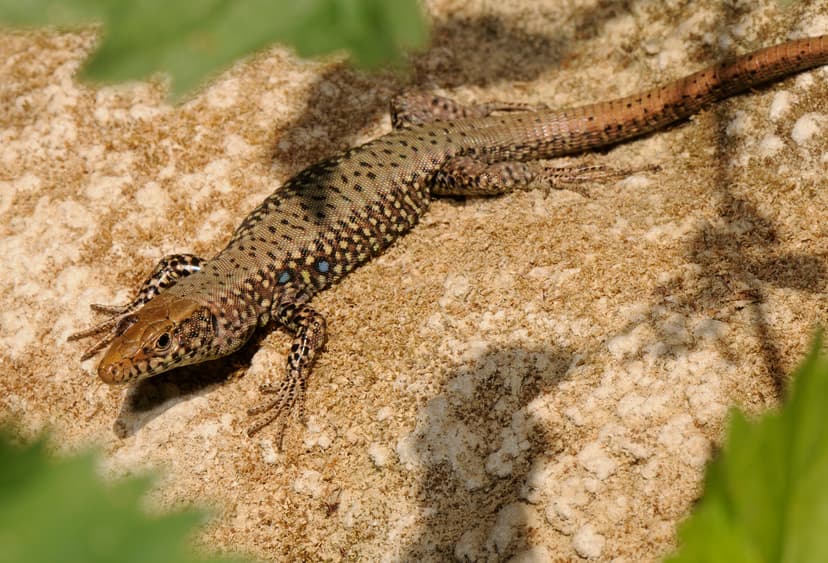
Greek rock lizard
The Greek rock lizard is a medium-sized lizard endemic to southern Greece, characterized by its glossy greyish-brown coloration and a tail at least twice its body length. It inhabits temperate forests, Mediterranean shrubland, rocky areas, and pastures, often near water sources. This agile species is known for its climbing abilities and a unique defense mechanism of spitting acid when threatened.
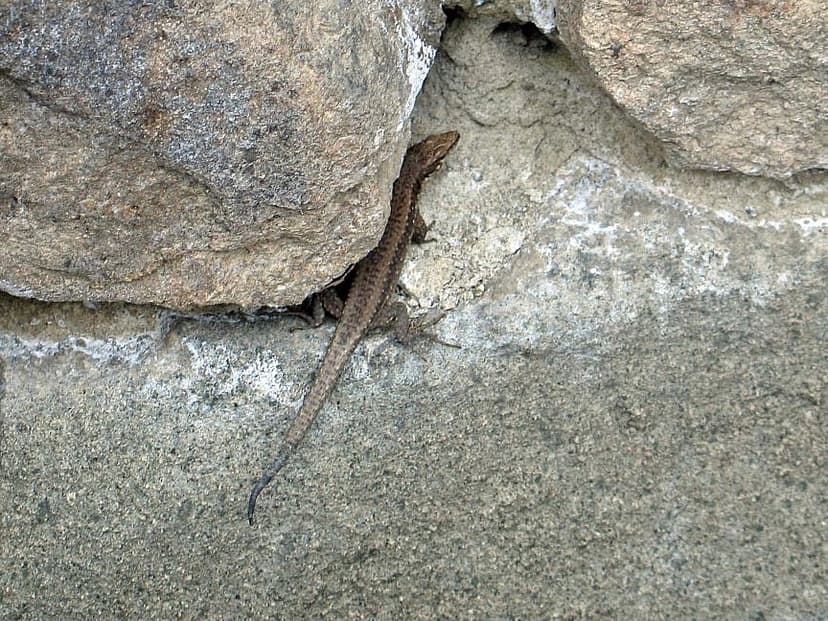
Anatolian rock lizard
The Anatolian rock lizard, scientifically known as Anatololacerta anatolica, is a common lizard species found in western Anatolia and adjacent Greek islands. This lizard inhabits temperate forests and rocky environments, characterized by its flattened body and variable markings, often featuring pale spots on a dark olive-brown base.