
Gray checkered whiptail
The gray checkered whiptail (Aspidoscelis dixoni), also known as Dixon's whiptail, is a lizard species found in northern Mexico and the southwestern United States. It is characterized by its gray coloration, thin body, and long tail adorned with 10-12 longitudinal white or yellow stripes, often with checkering. This diurnal and insectivorous species prefers rocky, semi-arid habitats with sparse vegetation and reproduces asexually through parthenogenesis.
Key Facts
- ›Native to northern Mexico, southern New Mexico, and western Texas.
- ›Characterized by a gray body with 10-12 longitudinal white or yellow stripes.
- ›Prehensile tail, thin body, and total length up to 30 cm (12 in).
- ›Diurnal and insectivorous, known for being wary and fast-moving.
- ›Inhabits rocky, semi-arid areas with sparse vegetation.
- ›Parthenogenetic, with females laying unfertilized eggs.

Dixon's Whiptail, Gray-Checkered Whiptail
Northern Mexico, Southern New Mexico, Usa, Western Texas, Usa
- Grows To Between 20 and 30 Centimeters In Total Length, Including Tail.
- Typically Gray In Color.
- Features 10–12 White Or Yellow Stripes That Run the Length of the Body.
- Stripes Often Have Spotting Or Checkering.
- Thin-Bodied With A Long Tail.
Insects
Diurnal, Insectivorous, Wary, Energetic, Fast-Moving, Darts For Cover When Approached
About Gray checkered whiptail
The gray checkered whiptail, scientifically known as Aspidoscelis dixoni, is a species of lizard recognized for its distinctive striped pattern and its unique method of reproduction. This species is found in the semi-arid rocky regions of northern Mexico, as well as in southern New Mexico and western Texas in the United States.
Description and Habitat
Adult gray checkered whiptails typically reach a total length of 20 to 30 centimeters (8 to 12 inches), including their tails. Their coloration is predominantly gray, distinguished by 10 to 12 prominent white or yellow stripes that extend along the length of their bodies. These stripes may also feature spotting or a checkered appearance. The lizard possesses a slender body and a notably long tail. Its preferred habitat consists of rocky, semi-arid environments characterized by sparse vegetation, where it can often be found darting for cover.
Behavior and Reproduction
As a diurnal species, the gray checkered whiptail is active during daylight hours. It is an insectivore, feeding on insects found within its habitat. The species is known for its wary nature, energetic movements, and speed, which it uses as a defense mechanism to evade perceived threats. A remarkable characteristic of Aspidoscelis dixoni is its parthenogenesis, meaning that females reproduce asexually. They lay unfertilized eggs, usually in the mid-summer, which then hatch approximately six weeks later. Some taxonomic sources consider the gray checkered whiptail a subspecies of the common checkered whiptail (Aspidoscelis tesselatus), while others classify it as a distinct species. The species epithet, dixoni, honors the renowned American herpetologist James R. Dixon.
Source: Wikipedia ↗
Frequently Asked Questions
What is the scientific name of the gray checkered whiptail?
The scientific name of the gray checkered whiptail is Aspidoscelis dixoni. It is also sometimes referred to as Dixon's whiptail.
Where is the gray checkered whiptail found geographically?
The gray checkered whiptail is native to northern Mexico, and to the United States in southern New Mexico and western Texas.
What does the gray checkered whiptail look like?
This lizard is typically gray with 10–12 white or yellow stripes running the length of its body. It has a thin body and a long tail, reaching a total length of 20 to 30 centimeters (8 to 12 inches).
What is the habitat of the gray checkered whiptail?
The preferred habitat of Aspidoscelis dixoni consists of rocky, semi-arid areas that have sparse vegetation.
How does the gray checkered whiptail reproduce?
The gray checkered whiptail is a parthenogenetic species. This means that females lay unfertilized eggs, typically in mid-summer, which then hatch after about six weeks.
What is the typical behavior of the gray checkered whiptail?
Like most whiptail lizards, the gray checkered whiptail is diurnal, meaning it is active during the day. It is known for being wary, energetic, and fast-moving, quickly darting for cover when approached.
Related Lizards

Sonoran spotted whiptail
The Sonoran spotted whiptail (Aspidoscelis sonorae) is a parthenogenic lizard species native to the southwestern United States and Mexico. It is characterized by its unique reproductive method and its presence in arid environments.
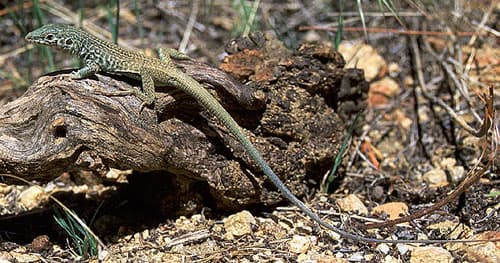
Aspidoscelis tigris
The western whiptail (Aspidoscelis tigris), previously known as Cnemidophorus tigris, is a lizard species found across the southwestern United States and northern Mexico. It inhabits a variety of environments, from deserts to woodlands, often seeking refuge in burrows. This species is distinguished by its slender body, small grainy scales on its back, and larger belly scales, frequently featuring light stripes.
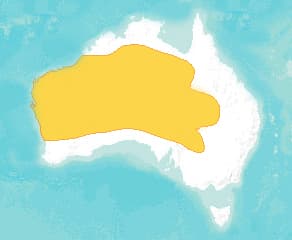
Central Netted Dragon
The Central Netted Dragon is a medium-sized lizard native to arid and semi-arid regions of Australia, characterized by a distinctive net-like pattern on its reddish-brown to orange-brown body. It is a diurnal, terrestrial species known for its burrowing behavior and a diet that includes insects and vegetation. These dragons are popular pets and are commonly found in zoos.