
Chalcides simonyi
The Fuerteventura skink (Chalcides simonyi) is an endangered ovoviviparous species of skink found exclusively on the Canary Islands of Fuerteventura and Lanzarote. Characterized by the general skink traits of smaller legs and less pronounced necks, this species inhabits a variety of environments including shrubland, grassland, rocky areas, pastureland, and even urban settings.
Key Facts
- ›Endangered ovoviviparous species of skink.
- ›Found only on Fuerteventura and Lanzarote in the Canary Islands.
- ›Inhabits diverse habitats from shrubland to urban areas.
- ›Named in honor of naturalist Oskar Simony.

Fuerteventura Skink
Fuerteventura, Lanzarote, Canary Islands
- Skinks Are Generally Characterized By Their Smaller Legs and Less Pronounced Necks Compared To Typical Lizards.
About Chalcides simonyi
Fuerteventura Skink (Chalcides simonyi)
The Fuerteventura skink, scientifically classified as Chalcides simonyi, is a species of skink recognized for its endangered status. This reptile belongs to the family Scincidae, a diverse group of lizards commonly known as skinks, which are generally distinguished by their comparatively smaller legs and less pronounced necks when contrasted with other lizard types.
Distribution and Habitat
The natural range of Chalcides simonyi is quite restricted, as it is found exclusively on the islands of Fuerteventura and Lanzarote, both part of the Canary Islands archipelago. These skinks exhibit adaptability in their habitat preferences, thriving in a variety of environments. Their natural habitats include temperate shrubland, Mediterranean-type shrubby vegetation, temperate grassland, and rocky areas. Furthermore, they are found in pastureland and have adapted to coexist with human presence in urban areas.
Taxonomy and Naming
The specific epithet, simonyi, was chosen in honor of Oskar Simony, a naturalist from Vienna. Simony, who lived from 1852 to 1915, made significant contributions to the study of the region's fauna and was also responsible for the description of the El Hierro giant lizard, another notable reptile from the Canary Islands.
Conservation Status
The Fuerteventura skink is designated as an endangered species. This classification underscores the vulnerability of its populations and the importance of ongoing conservation efforts to ensure its survival in its native habitat.
Source: Wikipedia ↗
Frequently Asked Questions
Where is the Fuerteventura skink found?
The Fuerteventura skink, scientifically known as Chalcides simonyi, is found exclusively on the islands of Fuerteventura and Lanzarote, which are part of the Canary Islands archipelago.
What kind of habitats does the Fuerteventura skink prefer?
This species is adaptable and can be found in a range of natural and semi-natural environments. Its preferred habitats include temperate shrubland, Mediterranean-type shrubby vegetation, temperate grassland, rocky areas, and pastureland. It has also been observed in urban areas.
What does the name 'simonyi' refer to?
The specific name, simonyi, honors the Viennese naturalist Oskar Simony. Simony was active in the late 19th and early 20th centuries and also described another notable lizard species from the same region, the El Hierro giant lizard.
What is the conservation status of the Fuerteventura skink?
The Fuerteventura skink (Chalcides simonyi) is classified as an endangered species. This status highlights the need for conservation efforts to protect its populations and habitats.
Related Lizards
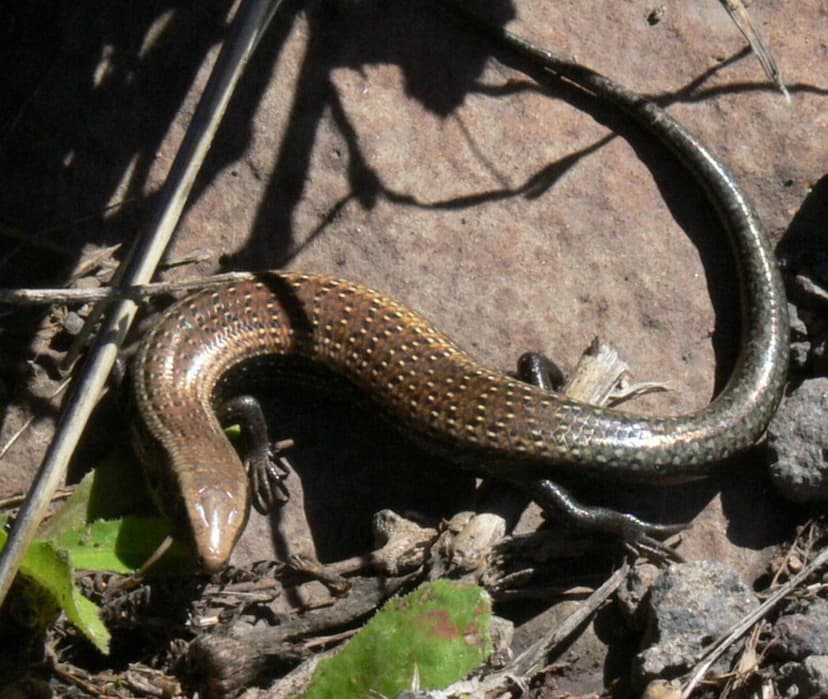
Chalcides viridanus
The West Canary skink, scientifically known as Chalcides viridanus, is a species of lizard endemic to the Canary Islands. This skink inhabits a diverse range of environments, from temperate forests and grasslands to urban areas, and can be found at elevations up to 2,000 meters. It is characterized by its cylindrical body and can reach a total length of approximately 18 cm.

West Canary skink
The West Canary skink, also known as the Canaryan cylindrical skink, is a species of lizard endemic to the Canary Islands. It inhabits a variety of environments, from temperate forests to urban areas, and can be found at altitudes up to 2,000 meters. This viviparous lizard is active during the day and at dusk, reaching a total length of about 18 cm.
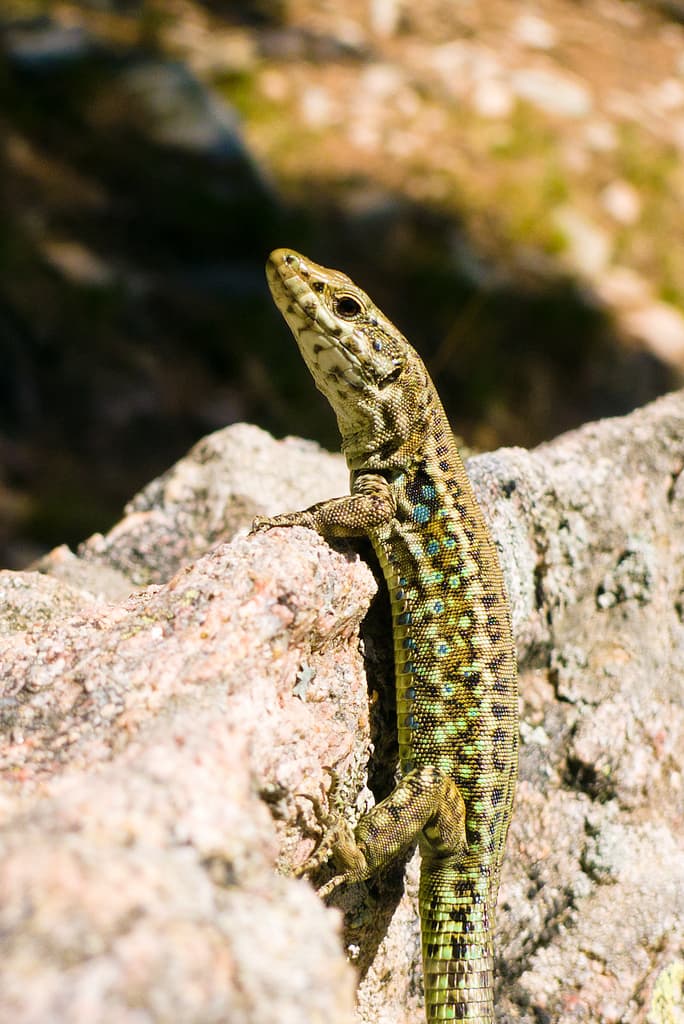
Podarcis tiliguerta
The Tyrrhenian wall lizard (Podarcis tiliguerta) is a species of lizard belonging to the Lacertidae family. It is native to the islands of Corsica and Sardinia and their surrounding islets, inhabiting a variety of temperate and Mediterranean environments. This species is distinguished by its subspecies diversity and is not currently considered threatened.