
Coleonyx switaki
Switak's banded gecko (Coleonyx switaki) is a species of lizard found in the deserts and rocky areas of the southwestern United States and northwestern Mexico. It is characterized by a body covered in round brown spots and can reach a snout-to-vent length of up to 8.6 centimeters. This oviparous species is named in honor of German herpetologist Karl-Heinz Switak.
Key Facts
- ›Indigenous to southern California, Baja California, and Baja California Sur.
- ›Inhabits desert and rocky environments.
- ›Reaches a snout-to-vent length of 5.1–8.6 cm (2.0–3.4 in).
- ›Body is covered in round brown spots.
- ›Color pattern can be variable and may not always feature bands.
- ›Reproduction method is oviparous (egg-laying).

Barefoot Banded Gecko, Barefoot Gecko, Switak's Barefoot Gecko
United States, Mexico
- Reaches A Snout-To-Vent Length of 5.1–8.6 Centimeters .
- Body Is Covered In Round Brown Spots.
- Color Pattern Is Variable and May Not Always Feature Bands.
About Coleonyx switaki
Switak's Banded Gecko
Switak's banded gecko, scientifically known as Coleonyx switaki, is a species of lizard recognized for its distinctive appearance and native range. This gecko is indigenous to the arid and rocky landscapes of the extreme southwestern United States, specifically southern California, and extends into adjacent northwestern Mexico, including the Baja California peninsula.
Physical Characteristics and Habitat
The species typically reaches a snout-to-vent length ranging from 5.1 to 8.6 centimeters (2.0 to 3.4 inches). Its body is characteristically covered in round brown spots. Despite one of its common names, the color pattern of Coleonyx switaki can be variable and may not always exhibit prominent bands, leading to potential confusion with other species.
Switak's banded gecko thrives in desert and rocky environments, adapting to the harsh conditions of these arid regions. The species' common names, such as the barefoot banded gecko and barefoot gecko, are derived from its physical characteristics, though the specific etymology for 'barefoot' is not detailed in available records.
Taxonomy and Naming
The scientific name Coleonyx switaki was established with the specific epithet "switaki" in honor of Karl-Heinz Switak, a German herpetologist born in 1938. The family to which this species belongs is Eublepharidae.
Reproduction
Coleonyx switaki is oviparous, meaning that reproduction occurs through the laying of eggs. Details regarding clutch size, incubation periods, or specific reproductive behaviors are not extensively documented in the provided information.
Geographic Range
The natural distribution of Coleonyx switaki is limited to southern California within the United States and the Mexican states of Baja California and Baja California Sur. While a related species, Coleonyx gypsicolus, found on Isla San Marcos in Mexico, is sometimes considered a subspecies, C. switaki itself is confined to the mainland regions specified.
Source: Wikipedia ↗
Frequently Asked Questions
What is Switak's banded gecko commonly known as?
Switak's banded gecko is also commonly referred to as the barefoot banded gecko, the barefoot gecko, and Switak's barefoot gecko.
Where is Switak's banded gecko found?
This species is native to the extreme southwestern United States, specifically southern California, and adjacent northwestern Mexico, including Baja California and Baja California Sur.
What kind of habitat does Switak's banded gecko prefer?
The preferred natural habitats for Switak's banded gecko are desert and rocky areas.
What are the physical characteristics of Switak's banded gecko?
Switak's banded gecko typically measures between 5.1 to 8.6 centimeters in snout-to-vent length. Its body is adorned with round brown spots, although its color pattern can vary and may not always display bands.
How does Switak's banded gecko reproduce?
Switak's banded gecko is oviparous, meaning it reproduces by laying eggs.
Why is this gecko named Switak's banded gecko?
The specific name, switaki, was given in honor of the German herpetologist Karl-Heinz Switak, who was born in 1938.
Related Lizards

Alsophylax boehmei
Alsophylax boehmei, formerly considered a subspecies of Altiphylax stoliczkai, is a species of gecko endemic to South Asia. It inhabits arid and mountainous regions, preferring deserts, grasslands, and rocky terrains. This species is oviparous, laying eggs as its primary method of reproduction.
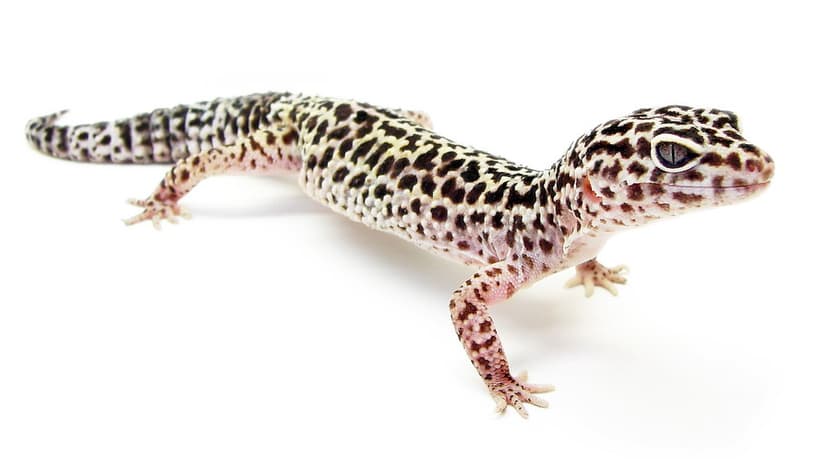
Common leopard gecko
The common leopard gecko (Eublepharis macularius) is a ground-dwelling lizard native to the arid regions of South Asia, including Afghanistan, Pakistan, India, and Nepal. Known for its distinctive spotted patterns and thick, fat-storing tail, it is a popular pet, often considered the first domesticated lizard species. These geckos are primarily nocturnal and opportunistic predators, feeding on invertebrates and small vertebrates.
Frontier bow-fingered gecko
The Frontier bow-fingered gecko, scientifically known as Altiphylax stoliczkai, is a species of lizard belonging to the Gekkonidae family, native to South Asia. This gecko inhabits arid and rocky environments at high altitudes, preferring deserts, grasslands, and stony areas. It is distinguished by its adaptations to these harsh conditions and its oviparous reproductive strategy.