
Cryptagama aurita
The Cryptagama aurita, also recognized as the gravel dragon or hidden dragon, is a unique species of agamid lizard native to the arid regions of northeastern Western Australia and the adjacent Northern Territory. This species is distinguished by its squat build, short limbs, and a blunt-tipped tail shorter than its body, with coloration ranging from reddish-brown to brick red, aiding in its camouflage among gibber stones.
Key Facts
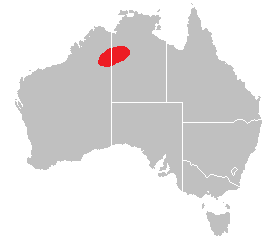
- ›Found in the arid north-eastern interior of Western Australia and the adjacent Northern Territory.
- ›The only species within its genus, Cryptagama.
- ›Adults are squat with short limbs and a tail shorter than their body.
- ›Coloration varies from pale reddish brown to brick red, with pale brownish grey on the head and back.
- ›Total length averages around 7.4 cm (2.9 in).
- ›Mimics the appearance of a gibber stone for camouflage.
Gravel Dragon, Hidden Dragon
Western Australia, Northern Territory
Arid Interior, Spinifex, Gibber Plains
Very Squat Body, Short Limbs, Blunt-Tipped Tail Shorter Than Body, Coloration: Pale Reddish Brown To Brick Red, Head and Back Coloration: Pale Brownish Grey, Mimics the Look of A Gibber Stone
- Mimics Appearance of Gibber Stone For Camouflage
About Cryptagama aurita
The Cryptagama aurita, commonly referred to as the gravel dragon or hidden dragon, is a distinctive species of agamid lizard found exclusively in the arid interior regions of northeastern Western Australia and the adjacent Northern Territory. This lizard holds the unique position of being the only species within its genus, Cryptagama, highlighting its evolutionary isolation.
Physical Characteristics and Habitat
Adults of this species are characterized by a very squat build, short limbs, and a blunt-tipped tail that is notably shorter than their body. Their coloration typically ranges from a pale reddish-brown to a brick-red hue, complemented by pale brownish-grey on their head and back. This coloring, combined with their body shape, allows them to effectively mimic the appearance of the gibber stones prevalent in their habitat, which consists of arid areas dotted with spinifex and gibber plains.
Size
The Cryptagama aurita reaches an average total length of approximately 7.4 cm (2.9 inches), including its tail. This relatively small size further aids in its cryptic lifestyle.
Unique Adaptations
The most striking adaptation of the Cryptagama aurita is its remarkable ability to blend seamlessly with its environment. By mimicking the appearance of gibber stones, it achieves a high level of camouflage, which is crucial for avoiding predation in its open, arid habitat.
Source: Wikipedia ↗
Frequently Asked Questions
What are the common names for Cryptagama aurita?
Cryptagama aurita is commonly known as the gravel dragon or the hidden dragon. These names likely reflect its habitat and cryptic nature.
Where is Cryptagama aurita found?
This lizard species is naturally found in the arid north-eastern interior of Western Australia and the adjacent area of the Northern Territory. These regions are characterized by dry, stony environments.
What does Cryptagama aurita look like?
Adults are very squat with short limbs and a blunt-tipped tail that is shorter than their body. Their coloration ranges from pale reddish brown to brick red, with pale brownish grey on their head and back, helping them blend into their surroundings.
What is the size of Cryptagama aurita?
Cryptagama aurita reaches a total length, including the tail, of about 7.4 cm (2.9 inches). They are a relatively small lizard species.
What is unique about the genus Cryptagama?
Cryptagama aurita is the sole species within its genus, Cryptagama. This indicates it is a distinct lineage with no other closely related species in the same genus.
Related Lizards

Ctenophorus fordi
The Mallee dragon (Ctenophorus fordi) is a small lizard native to the arid regions of southern Australia, characterized by its reddish-orange coloration and pale, black-bordered stripes. It inhabits shrubland and hummock grass environments, particularly in Mallee woodlands and spinifex areas, often near vegetated sand dunes. This species is primarily an ant specialist, employing a sit-and-wait strategy to ambush its prey.
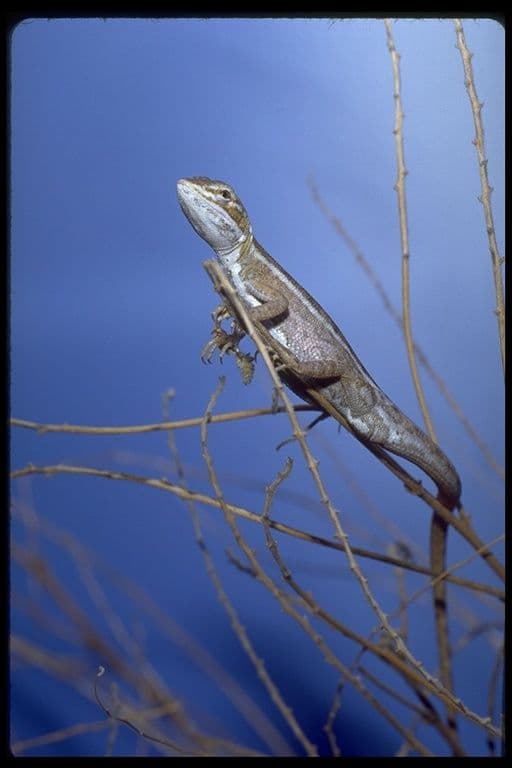
Diporiphora winneckei
The Canegrass Dragon (Diporiphora winneckei) is a small, terrestrial lizard endemic to the arid zones of Australia. Characterized by its slim build, long tail and limbs, and distinctive grey or pale brown coloration with prominent ventral and lateral stripes, this diurnal species is well-camouflaged within its sandy habitat. It is an insectivore, though it may occasionally consume plant matter, and plays a role in the food web of its environment.

Morethia obscura
The shrubland Morethia skink (Morethia obscura) is a small, terrestrial lizard endemic to Australia. It is characterized by its olive-brown to olive-gray coloration, often with pale dorsolateral and broad black lateral stripes, and measures up to 129 mm in total length. Primarily found in arid and semi-arid woodlands, heaths, and shrublands, this species is insectivorous and reproduces by laying eggs.