
Ctenophorus salinarum
The claypan dragon, scientifically known as Ctenophorus salinarum, is a species of agamid lizard found in the arid and semi-arid regions of southern Western Australia. It typically inhabits chenopod shrublands surrounding salt lakes and claypans, as well as adjacent sandy heaths.
Key Facts
- ›Commonly known as the claypan dragon or saltpan ground-dragon.
- ›Found in arid to semi-arid chenopod shrublands.
- ›Inhabits areas around salt lakes and claypans.
- ›Also found in adjacent sandy heaths.
- ›Native to southern Western Australia.

Claypan Dragon, Saltpan Ground-Dragon
Southern Western Australia
Arid Shrublands, Semi-Arid Shrublands, Chenopod Shrublands, Salt Lakes, Claypans, Sandy Heaths
About Ctenophorus salinarum
Ctenophorus salinarum, widely recognized as the claypan dragon or saltpan ground-dragon, is a species of lizard belonging to the Agamidae family. This reptile is native to the southern regions of Western Australia, where it thrives in arid and semi-arid environments.
Habitat and Distribution
The preferred habitat of Ctenophorus salinarum includes chenopod shrublands that are often found in the vicinity of salt lakes and claypans. Additionally, these lizards can be found in adjacent sandy heathlands. This specific ecological niche suggests an adaptation to environments with particular soil types and vegetation cover characteristic of saline or intermittently wet areas.
Source: Wikipedia ↗
Frequently Asked Questions
What is the common name for Ctenophorus salinarum?
Ctenophorus salinarum is commonly known as the claypan dragon or the saltpan ground-dragon. These names reflect its preferred habitat.
Where does the claypan dragon live?
The claypan dragon is found in arid to semi-arid regions of southern Western Australia. Its habitat includes chenopod shrublands, particularly around salt lakes and claypans, as well as nearby sandy heaths.
What kind of environment does Ctenophorus salinarum prefer?
This lizard prefers arid to semi-arid environments characterized by chenopod shrublands. It is often found in the vicinity of salt lakes and claypans, as well as in sandy heath areas.
Related Lizards

Ctenophorus maculatus
Ctenophorus maculatus, also known as the spotted military dragon or spotted sand-dragon, is a species of agamid lizard found in the semi-arid and arid shrublands and hummock grasslands of Western Australia and a small part of South Australia. It is characterized by its spotted pattern, which aids in camouflage within its natural habitat.

Ctenotus leonhardii
Ctenotus leonhardii, commonly known as Leonhardi's ctenotus or Leonhardi's skink, is a small, slender lizard native to arid and semi-arid regions of mainland Australia. This diurnal species is characterized by its brown to ochre-brown coloration with distinctive pale and dark stripes along its body and tail. It inhabits open grasslands, sandplain deserts, and shrublands, where it actively forages for insects and other invertebrates.
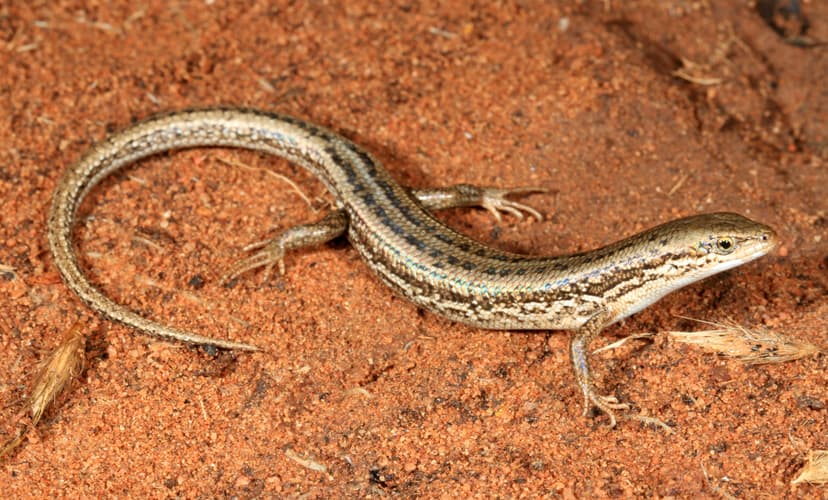
Morethia adelaidensis
The saltbush skink (Morethia adelaidensis) is a small skink species endemic to Australia, known for its transparent eye discs and specialized limbs for sand dune traversal. Primarily inhabiting arid shrublands, particularly those with saltbush chenopod shrubs, these diurnal lizards are insectivorous and exhibit a high tolerance for saline environments. They reproduce by laying eggs, with males developing distinctive orange markings during the breeding season.