
Madrean alligator lizard
The Madrean alligator lizard (Elgaria kingii) is a species of lizard native to the southwestern United States and northwestern Mexico. It inhabits diverse environments including deserts, grasslands, shrublands, and forests. The species is known for its oviparous reproduction and is recognized by three subspecies.
Key Facts
- ›Native to southeastern Arizona, New Mexico, and parts of northwestern Mexico.
- ›Found in desert, grassland, shrubland, and forest habitats.
- ›Reproduces by laying eggs (oviparous).
- ›Recognized by three distinct subspecies.
- ›The specific name honors Phillip Parker King, a Royal Navy officer.

King's Alligator Lizard, El Lagarto De MontañA
Southeastern Arizona, United States, Southwestern New Mexico, United States, Jalisco, Mexico, Colima, Mexico, Nayarit, Mexico, Southeastern Zacatecas, Mexico, Southwestern Aguascalientes, Mexico
About Madrean alligator lizard
The Madrean alligator lizard, scientifically known as Elgaria kingii, is a species of lizard belonging to the Anguidae family. This reptile is native to a region encompassing the southwestern United States and extending into northwestern Mexico.
Range and Habitat
This species is distributed across southeastern Arizona and southwestern New Mexico in the United States, with its range continuing southward into Mexico, including states such as Jalisco, Colima, Nayarit, southeastern Zacatecas, and southwestern Aguascalientes. The Madrean alligator lizard demonstrates adaptability, inhabiting a variety of environments. These include arid desert landscapes, open grasslands, dense shrublands, and forested areas.
Taxonomy and Etymology
The specific name, kingii, was chosen to honor Phillip Parker King, an Australian-born officer of the Royal Navy recognized for his surveys of the South American coast. Three subspecies of Elgaria kingii are currently recognized as valid: the nominate subspecies Elgaria kingii kingii, Elgaria kingii ferruginea, and Elgaria kingii nobilis. Historically, some subspecies were described under different genera, as indicated by authorities in parentheses.
Reproduction
The Madrean alligator lizard is oviparous, meaning that reproduction occurs through the laying of eggs. Further details regarding its reproductive cycle, such as gestation or incubation periods and clutch sizes, are not extensively documented in the provided information.
Source: Wikipedia ↗
Frequently Asked Questions
What is the scientific name of the Madrean alligator lizard?
The scientific name of the Madrean alligator lizard is Elgaria kingii. It belongs to the family Anguidae.
Where is the Madrean alligator lizard found?
The Madrean alligator lizard is found in the southwestern United States, specifically southeastern Arizona and southwestern New Mexico. It also ranges southward into various states in northwestern Mexico, including Jalisco, Colima, Nayarit, Zacatecas, and Aguascalientes.
What kind of habitats does the Madrean alligator lizard prefer?
This lizard species is adaptable and can be found in a variety of habitats. These include desert environments, grasslands, shrublands, and forested areas.
How does the Madrean alligator lizard reproduce?
The Madrean alligator lizard is oviparous, meaning it reproduces by laying eggs. Limited additional details about its reproductive cycle are provided in the available information.
Are there different types of Madrean alligator lizards?
Yes, three subspecies of Elgaria kingii are recognized as valid. These include the nominotypical subspecies, Elgaria kingii ferruginea, and Elgaria kingii nobilis.
Related Lizards

Ctenotus helenae
Ctenotus helenae, commonly known as the clay-soil ctenotus, is a species of skink found across various Australian habitats including forests, shrublands, grasslands, and deserts. This terrestrial and diurnal lizard is oviparous, meaning it reproduces by laying eggs. The species' scientific name honors Helen Louise Pianka.

Agama anchietae
Agama anchietae, commonly known as Anchieta's agama or the western rock agama, is a species of lizard native to southern Africa. It is characterized by its cryptic coloration, a wider head and longer tail in males due to sexual dimorphism, and a diet primarily consisting of insects, particularly ants. This species inhabits diverse environments including deserts, shrublands, and grasslands, and it reproduces by laying eggs.
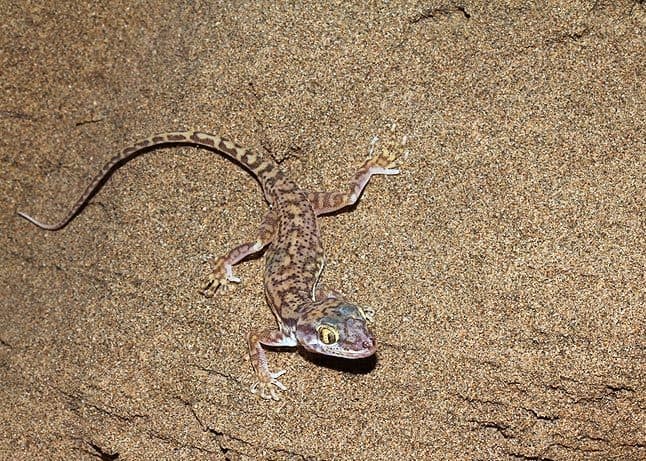
Crossobamon eversmanni
Crossobamon eversmanni, commonly known as the comb-toed gecko, is a species of Asian gecko found in desert, grassland, and shrubland habitats across Iran, Pakistan, and Central Asia. This terrestrial and nocturnal lizard is characterized by its burrowing behavior and oviparous reproduction, with females laying one to two eggs per clutch.