
Delma haroldi
Delma haroldi, also known as Butler's legless lizard or the spinifex snake-lizard, is a species of legless lizard endemic to Australia. This small species is found in grassland habitats across various arid and semi-arid regions of the continent. It is characterized by its limbless form and a tail significantly longer than its body.
Key Facts
- ›Delma haroldi is a limbless lizard species native to Australia.
- ›Its preferred habitat is grassland environments.
- ›The species is oviparous, meaning it reproduces by laying eggs.
- ›Adults can reach a snout-to-vent length of up to 9 cm, with a tail three times that length.
- ›Populations are geographically separated by arid regions in central Australia.

Butler's Legless Lizard, Butler's Scalyfoot, Spinifex Snake-Lizard, Unbanded Delma
Australia
Limbless, Small For Its Genus, Snout-To-Vent Length Up To 9 cm, Tail Length Approximately Three Times Svl
About Delma haroldi
Delma haroldi: Butler's Legless Lizard
Delma haroldi, commonly recognized as Butler's legless lizard, Butler's scalyfoot, the spinifex snake-lizard, or the unbanded delma, is a distinct species of legless lizard native to Australia. Belonging to the Pygopodidae family, this species is characterized by its limbless form and is adapted to the arid and semi-arid environments of its homeland.
Habitat and Distribution
The preferred natural habitat of Delma haroldi is grassland. Its populations are notably separated across the hyperarid center of Australia, spanning regions such as the Simpson Strzelecki Dunefields, Stony Plains, Great Victoria Desert, Finke, MacDonnell Ranges, and the Nullarbor bioregions. This geographic separation is likely a consequence of recent aridification events in the continent's interior.
Physical Description and Reproduction
Delma haroldi is relatively small for its genus. Adult individuals can achieve a snout-to-vent length of up to 9 centimeters (approximately 3.5 inches). A striking feature is its tail, which is notably long, measuring about three times the length of its body. The species is oviparous, indicating that it reproduces by laying eggs.
Source: Wikipedia ↗
Frequently Asked Questions
What is Delma haroldi commonly known as?
Delma haroldi is commonly known by several names, including Butler's legless lizard, Butler's scalyfoot, the spinifex snake-lizard, and the unbanded delma.
Where is Delma haroldi found?
This lizard species is endemic to Australia. Its populations are found across various grassland regions, including the Simpson Strzelecki Dunefields, Stony Plains, Great Victoria Desert, Finke, MacDonnell Ranges, and Nullarbor bioregions.
What is the habitat of Delma haroldi?
The preferred natural habitat for Delma haroldi is grassland. They inhabit arid and semi-arid areas of Australia.
What are the physical characteristics of Delma haroldi?
Delma haroldi is a limbless lizard, small for its genus. It can reach a snout-to-vent length of up to 9 cm (3.5 inches), with a tail that is approximately three times the length of its body.
How does Delma haroldi reproduce?
Delma haroldi is oviparous, which means it reproduces by laying eggs.
Related Lizards
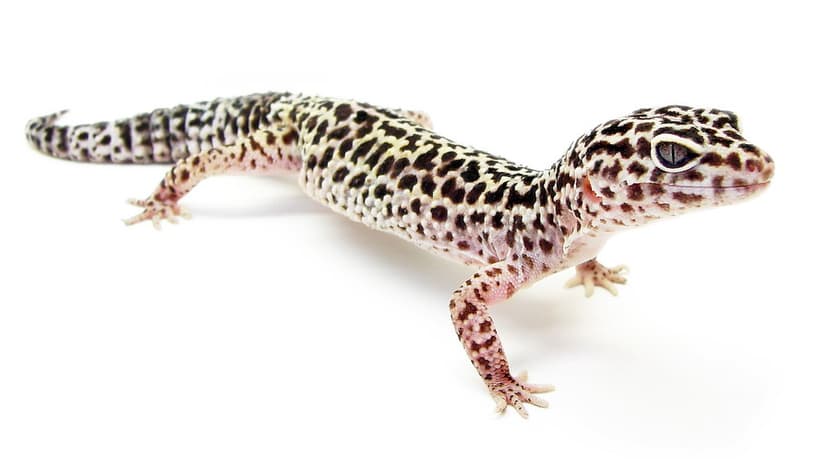
Common leopard gecko
The common leopard gecko (Eublepharis macularius) is a ground-dwelling lizard native to the arid regions of South Asia, including Afghanistan, Pakistan, India, and Nepal. Known for its distinctive spotted patterns and thick, fat-storing tail, it is a popular pet, often considered the first domesticated lizard species. These geckos are primarily nocturnal and opportunistic predators, feeding on invertebrates and small vertebrates.
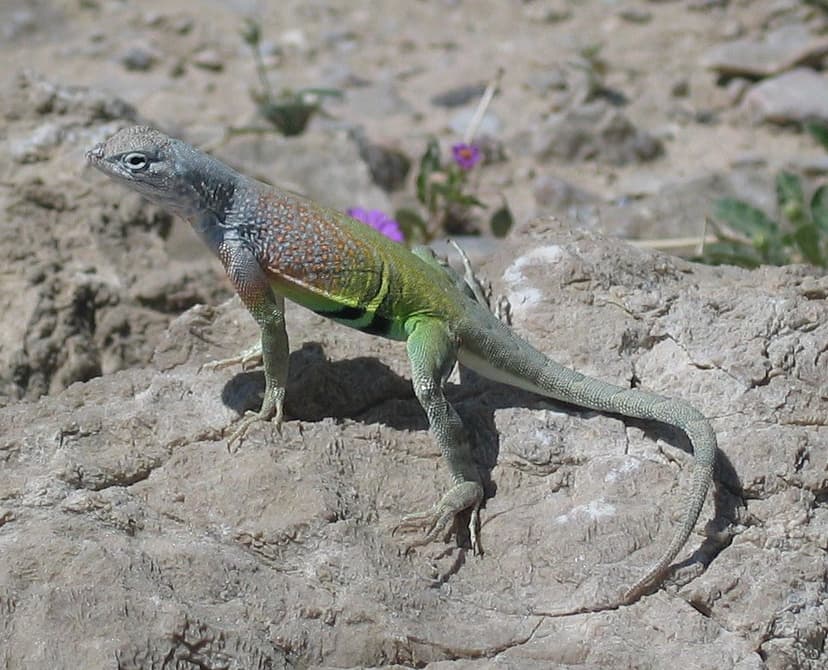
Cophosaurus texanus
The greater earless lizard (Cophosaurus texanus) is a medium-sized lizard native to arid and semi-arid regions of the southwestern United States and northern Mexico. It is distinguished by its lack of external ear openings, an adaptation for burrowing, and exhibits notable sexual dimorphism, with males being larger and more vibrantly colored than females. These lizards are primarily insectivores and rely on camouflage and speed to evade predators.

Ctenotus pantherinus
The leopard ctenotus (Ctenotus pantherinus) is a skink species found in the arid and semi-arid regions of central and western Australia. It is characterized by its brown or grey coloration with distinctive yellow/white spots outlined in black, and a tail nearly as long as its body. This fast-growing species is an insectivore, primarily feeding on termites and their larvae, and is oviparous, laying clutches of 4-7 eggs.