
Delma tincta
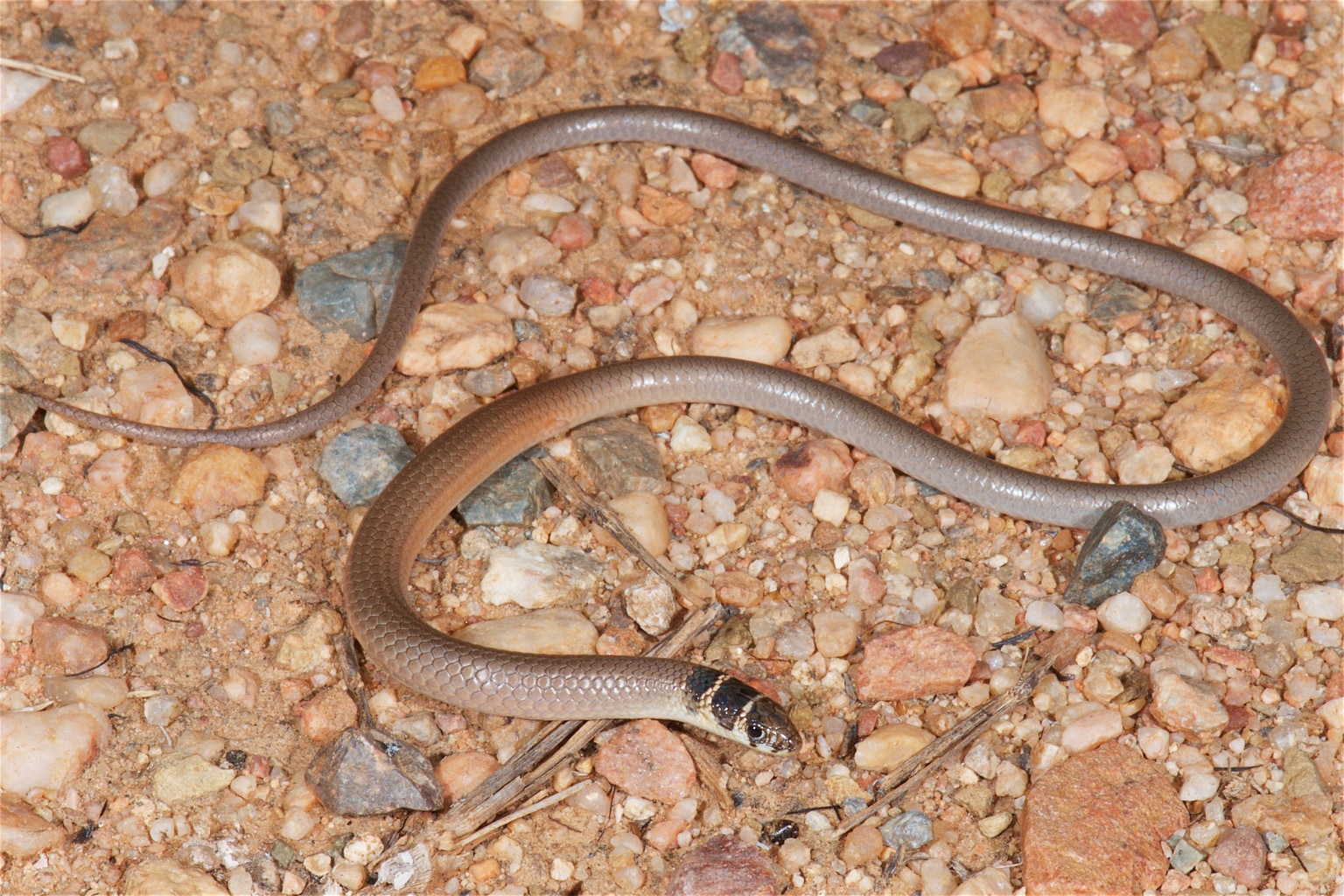
The excitable delma (Delma tincta) is a slender, legless lizard native to Australia, known for its active and jumpy defense mechanism. This nocturnal species spends most of its time hiding and is rarely spotted in the wild. It inhabits a variety of environments, from deserts to forests, and feeds on insects.
Key Facts
- ›Legless lizard endemic to Australia.
- ›Possesses a distinctive jumping defense mechanism.
- ›Nocturnal and spends most of its time concealed.
- ›Tail is three to four times its body length.
- ›Feeds on insects and is oviparous, laying two eggs per clutch.
Excitable Delma
Australia
- Slender, Long Legless Lizard, Appearing Snake-Like Due To Limb Loss.
- Extremely Long and Slender Body With A Tail That Is Three To Four Times Its Body Length.
- Rounded Snout.
- Body Size From Snout To Vent: 80-90 mm For Adults, 40 mm For Juveniles.
- Tail Length: 240 mm For Adults, 136 mm For Juveniles.
- Olive Green To Grey-Brown Body With A White Cream Underbody.
- 14 Rows of Midbody Scales, Three Subocular Supralabial Scales, and One Pair of Supranasal Scales.
- Three Distinct Black Markings Across the Upper Section of the Head and Neck, Intersected By Four Yellow Bands.
Insects
- Active and Jumpy Defense Mechanism.
- Erratic Jumping and Body Twisting When Agitated.
- Nocturnal.
- Spends Most of Its Time Hiding.
- Moves Via Saltation .
- Capable of Vocalizing Sounds.
About Delma tincta
The Excitable Delma (Delma tincta)
The excitable delma, scientifically known as Delma tincta, is a distinctive legless lizard native to Australia. Its common name derives from its remarkable defense mechanism, where it exhibits energetic and erratic jumping to evade predators. This species is characterized by its slender, elongated body and the complete absence of limbs, a result of evolutionary adaptation.
Habitat and Distribution
This legless lizard is found across a significant portion of Australia, inhabiting a variety of environments. Its range extends through Queensland, northern New South Wales, the southern two-thirds of the Northern Territory, north-eastern South Australia, and parts of Western Australia. The excitable delma prefers habitats such as dry forests, spinifex deserts, and rocky outcrops, where it typically seeks refuge under loose rocks, logs, or debris.
Physical Characteristics and Behavior
The excitable delma typically measures between 25 to 30 centimeters in total length, with its tail being three to four times the length of its body. Adults have a snout-to-vent length of about 8 to 9 centimeters. Its coloration is generally olive green to grey-brown with a cream underbelly. A notable feature is the presence of three distinct black markings on its head and neck, intersected by yellow bands. As a nocturnal species, it is rarely seen as it spends most of its time concealed. Its primary method of locomotion, particularly when threatened, is saltation, a form of jumping that allows for rapid and evasive movement.
Diet and Reproduction
The excitable delma is an insectivore, feeding on insects it encounters while traversing its habitat. Reproduction is oviparous, with females laying a small clutch of just two eggs. Due to its secretive and nocturnal nature, much of its behavior remains elusive to casual observation.
Source: Wikipedia ↗
Frequently Asked Questions
What is the excitable delma's defense mechanism?
The excitable delma is known for its active and jumpy defense. When agitated, it uses its long tail to generate upward thrusts, causing its entire body to lift off the ground. It then erratically changes direction with each jump, twisting its body in a display of acrobatics to confuse or scare predators.
Where is the excitable delma found?
Originally thought to be limited to Queensland and northern New South Wales, the excitable delma is now known to be found in five of Australia's eight states and territories. Its distribution includes widespread areas of Queensland, northern New South Wales, southern two-thirds of the Northern Territory, north-eastern South Australia, and central west to northern Western Australia.
What kind of habitats does the excitable delma prefer?
This legless lizard inhabits a wide variety of environments. These include dry forests, spinifex deserts, and rocky outcrops. They are typically found seeking shelter under loose rocks, logs, debris, or the surface layers of soil.
What does the excitable delma eat?
The excitable delma is an insectivore. It feeds on insects that it encounters while moving through its environment, such as through grass, under logs, among surface soil, and near loose rocks.
What is the typical size of an excitable delma?
The excitable delma is a small to moderate-sized lizard. The typical total length is between 250 to 300 mm. The body from snout to vent measures approximately 80 to 90 mm, with the tail being much longer, around 240 mm.
How does the excitable delma move?
The excitable delma moves using a locomotion known as saltation, which is a form of jumping. This behavior is common in limbless vertebrates and is a response to predation. Saltation allows them to move their bodies at a greater wave-speed, propelling themselves forward at a 45° angle, with movement initiating in the tail.
Related Lizards

Ctenotus leonhardii
Ctenotus leonhardii, commonly known as Leonhardi's ctenotus or Leonhardi's skink, is a small, slender lizard native to arid and semi-arid regions of mainland Australia. This diurnal species is characterized by its brown to ochre-brown coloration with distinctive pale and dark stripes along its body and tail. It inhabits open grasslands, sandplain deserts, and shrublands, where it actively forages for insects and other invertebrates.

Paroedura rennerae
Paroedura rennerae is a species of gecko endemic to Madagascar, distinguished by its spiny scales and brown dorsal coloration with lighter crossbands. It inhabits a variety of environments, including dry forests, caves, and human settlements, and is believed to be a nocturnal species. This gecko is known for its defensive biting behavior and its ability to autotomize its tail.

Furcifer rhinoceratus
The rhinoceros chameleon (Furcifer rhinoceratus) is a species of chameleon endemic to the dry forests of Madagascar, distinguished by a prominent horn-like nose, particularly in males. It is a tree-dwelling insectivore, with males defending territories and using their snouts in potential combat. The species is listed as Vulnerable due to habitat loss and degradation.