
Egernia pilbarensis
The Pilbara crevice-skink (Egernia pilbarensis) is a large skink species native to Western Australia. Belonging to the family Scincidae, this lizard is characterized by its size and its habitat within crevices.
Key Facts
- ›Native to Western Australia.
- ›Belongs to the family Scincidae (skinks).
- ›A large species of skink.
- ›Inhabits crevices.

Pilbara Crevice-Skink
Western Australia
Large Skink Species.
Inhabits Crevices.
About Egernia pilbarensis
Pilbara Crevice-skink (Egernia pilbarensis)
The Pilbara crevice-skink, scientifically recognized as Egernia pilbarensis, is a notable species of lizard native to the vast region of Western Australia. This creature belongs to the diverse family Scincidae, commonly known as skinks.
Key Characteristics
As a large skink, Egernia pilbarensis is distinguished by its size. Its preferred habitat is within crevices, suggesting a reliance on these sheltered spaces for survival, protection, and potentially thermoregulation.
Distribution and Habitat
The geographic range of the Pilbara crevice-skink is confined to Western Australia. The specific environmental niche it occupies involves rocky areas or formations that provide ample crevices for shelter.
Source: Wikipedia ↗
Frequently Asked Questions
What is the Pilbara crevice-skink?
The Pilbara crevice-skink, scientifically known as Egernia pilbarensis, is a species of large lizard belonging to the skink family. It is native to the region of Western Australia.
Where does the Pilbara crevice-skink live?
This species is found in Western Australia. Its habitat is characterized by crevices, which it utilizes for shelter.
What family does the Pilbara crevice-skink belong to?
The Pilbara crevice-skink is a member of the family Scincidae, which comprises the skinks. This family is known for its diverse range of lizard species.
Related Lizards

Cordylidae
Cordylidae, commonly known as girdled lizards, spinytail lizards, or girdle-tail lizards, are a family of small to medium-sized lizards native to southern and eastern Africa. They are characterized by their flattened bodies, armored scales, and often spiny tails, which aid in defense and securing themselves in crevices. These diurnal and insectivorous lizards are primarily terrestrial, inhabiting rocky terrain, though some species may burrow or live in trees.
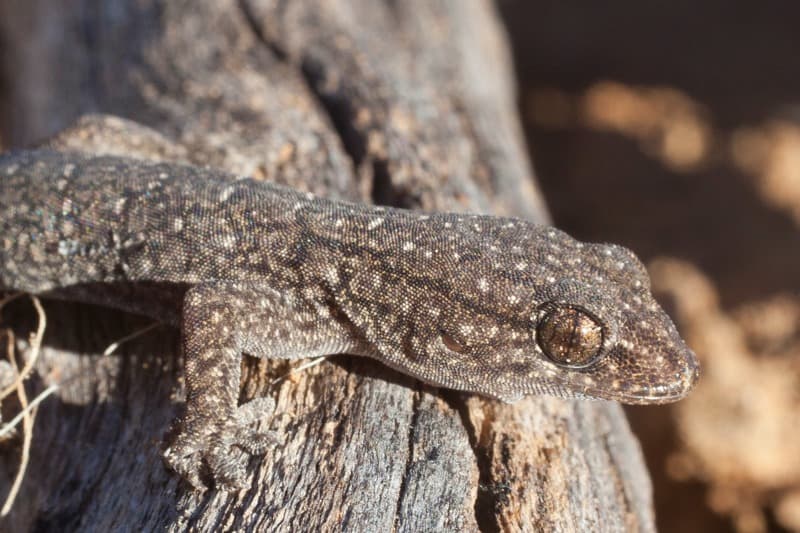
Gehyra variegata
Gehyra variegata, also known as the tree dtella, is a gecko species native to inland Australia. This lizard is characterized by its highly variable dorsal coloration, ranging from grey to brown with blotches or spots, and its ability to climb using specialized toe pads. It inhabits arid to sub-humid woodlands, shrublands, and rocky areas, demonstrating adaptability to disturbed land.

Pseudothecadactylus lindneri
The giant cave gecko, Pseudothecadactylus lindneri, is a species of lizard endemic to Australia, specifically Arnhem Land in the Northern Territory. It is characterized by its dark purplish-brown coloration with irregular, pale orange to cream-colored crossbands. This species primarily inhabits caves and crevices within sandstone escarpments.