
Pseudothecadactylus lindneri
The giant cave gecko, Pseudothecadactylus lindneri, is a species of lizard endemic to Australia, specifically Arnhem Land in the Northern Territory. It is characterized by its dark purplish-brown coloration with irregular, pale orange to cream-colored crossbands. This species primarily inhabits caves and crevices within sandstone escarpments.
Key Facts
- ›Endemic to Arnhem Land, Northern Territory, Australia.
- ›Adults typically measure around 9.5 cm (3.7 in) in snout-to-vent length.
- ›Distinguished by a dark purplish-brown body with lighter, irregular crossbands.
- ›Prefers habitats such as caves and crevices in sandstone escarpments.
- ›Reproduction is oviparous, meaning they lay eggs.

Giant Cave Gecko, Northern Giant Cave Gecko
Australia
- Adult Snout-To-Vent Length of About 9.5 cm .
- Dorsal Coloration Is Dark Purplish Brown.
- Features Lighter Irregular Crossbands That Are Pale Orange To Cream-Colored.
- Crossbands Often Do Not Meet Neatly In the Middle.
About Pseudothecadactylus lindneri
The giant cave gecko, scientifically known as Pseudothecadactylus lindneri, is a species of lizard that is endemic to Australia. It is also commonly referred to as the northern giant cave gecko. This species belongs to the family Diplodactylidae.
Description and Habitat
Adult Pseudothecadactylus lindneri typically exhibit a snout-to-vent length of approximately 9.5 centimeters (3.7 inches). Their dorsal coloration is a distinctive dark purplish-brown, overlaid with lighter, irregular crossbands. These crossbands are usually pale orange to cream-colored and are often noted for not meeting neatly in the middle of their body. The preferred natural habitat for this species consists of caves and crevices found within sandstone escarpments, where they likely find shelter and suitable conditions for survival.
Geographic Range and Reproduction
Pseudothecadactylus lindneri is geographically restricted to Arnhem Land, a region located in the Northern Territory of Australia. The species is oviparous, meaning that it reproduces by laying eggs. Further details regarding its diet, lifespan, specific behavioral traits, or conservation status are not extensively documented in the provided information.
Source: Wikipedia ↗
Frequently Asked Questions
What is the scientific name of the giant cave gecko?
The scientific name of the giant cave gecko is Pseudothecadactylus lindneri. It is also sometimes referred to by the name Rhacodactylus lindneri in older literature.
Where is the giant cave gecko found?
Pseudothecadactylus lindneri is found exclusively in Arnhem Land, located in the Northern Territory of Australia. This region is its sole natural habitat.
What does Pseudothecadactylus lindneri look like?
Adults of Pseudothecadactylus lindneri typically have a snout-to-vent length of about 9.5 cm. Their dorsal coloration is a dark purplish-brown, marked with lighter, irregular crossbands that are pale orange to cream-colored and may not always meet in the center.
What kind of habitat does the giant cave gecko prefer?
The preferred natural habitat for Pseudothecadactylus lindneri consists of caves and crevices found within sandstone escarpments. These sheltered locations provide them with protection and suitable living conditions.
How does Pseudothecadactylus lindneri reproduce?
Pseudothecadactylus lindneri is oviparous, which means that females lay eggs as their method of reproduction. Details on clutch size or incubation periods are not provided in the available information.
Related Lizards
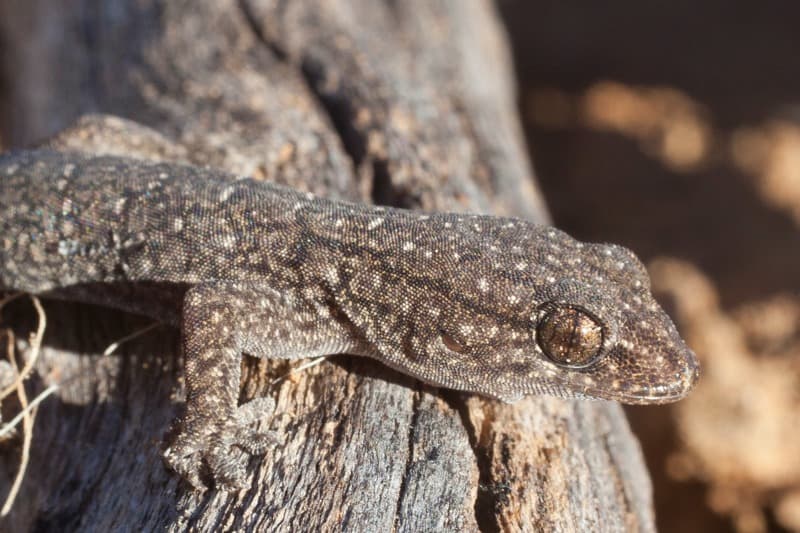
Gehyra variegata
Gehyra variegata, also known as the tree dtella, is a gecko species native to inland Australia. This lizard is characterized by its highly variable dorsal coloration, ranging from grey to brown with blotches or spots, and its ability to climb using specialized toe pads. It inhabits arid to sub-humid woodlands, shrublands, and rocky areas, demonstrating adaptability to disturbed land.
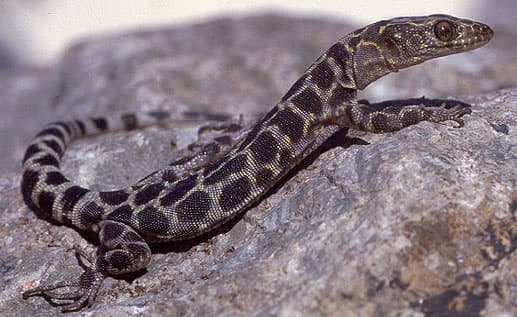
Xantusia henshawi
The granite night lizard (Xantusia henshawi) is a flat-bodied lizard endemic to North America, found in Baja California, Mexico, and southern California, USA. It is characterized by its soft skin, rounded dark dorsal spots on a pale background, large eyes with vertical pupils, and lack of eyelids. This species is often found in rocky slopes with boulders and crevices, and exhibits crepuscular and nocturnal activity.

Cordylidae
Cordylidae, commonly known as girdled lizards, spinytail lizards, or girdle-tail lizards, are a family of small to medium-sized lizards native to southern and eastern Africa. They are characterized by their flattened bodies, armored scales, and often spiny tails, which aid in defense and securing themselves in crevices. These diurnal and insectivorous lizards are primarily terrestrial, inhabiting rocky terrain, though some species may burrow or live in trees.