
Eumeces schneiderii
Eumeces schneiderii, commonly known as Schneider's skink, is a species of lizard found across Central Asia, Western Asia, and North Africa. It is characterized by its smooth scales, a moderately sized head with an obtuse snout, and a yellowish lateral streak. This oviparous species inhabits a variety of environments including rocky areas, grasslands, and shrublands.
Key Facts
- ›Endemic to Central Asia, Western Asia, and North Africa.
- ›Possesses smooth scales with a yellowish lateral streak from eye to hind limb.
- ›Can reach a snout-to-vent length of 16.5 cm, with a total length of up to 36.5 cm.
- ›Inhabits rocky areas, grassland, shrubland, and wetlands.
- ›Reproduces by laying eggs (oviparous).
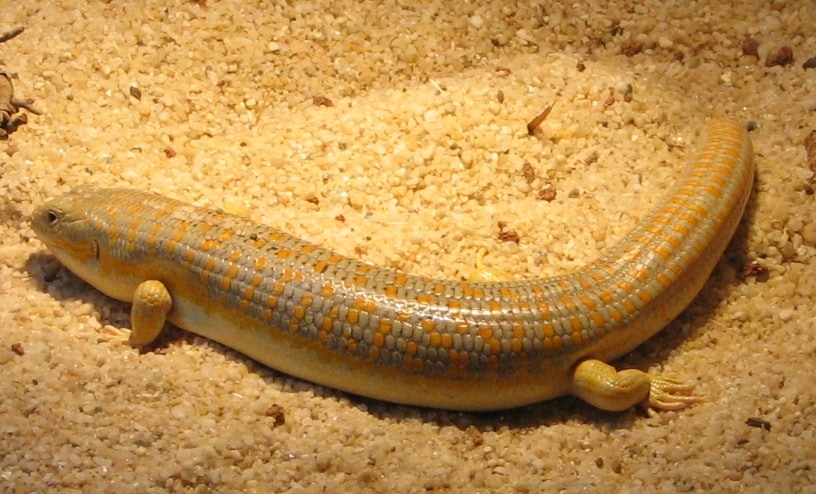
Schneider's Skink
Eastern Algeria, Tunisia, Libya, Egypt, Israel, Cyprus, Turkey, Western Syria, Lebanon, Jordan, Iran, Iraq, Saudi Arabia, Transcaucasia, Russia, Turkmenistan, Uzbekistan, Tajikistan, Eastern Georgia, Southern Armenia, Azerbaijan, Asia Minor, Afghanistan, Northern Pakistan, Northwestern India
- Head Moderate; Snout Short, Obtuse.
- Nasal Rather Large, Usually Divided, In Contact With the Two Anterior Upper Labials.
- 5 Supraoculars, the Three Anterior In Contact With the Frontal.
- Parietals Entirely Separated By the Interparietal.
- 4 Or 5 Pairs of Nuchals.
- Ear-Opening Rather Large, With 4 Or 5 Long Pointed Lobules Anteriorly.
- 2 Azygos Postmentals.
- 22 To 28 Scales Round the Middle of the Body, Perfectly Smooth, the Laterals Smallest.
- Median Dorsal Series Scales Very Broad and Larger Than the Ventrals.
- Hind Limb Length Is Contained 2.5 To 3 Times In the Length From Snout To Vent.
- When Pressed Against the Body, the Limbs Just Meet Or Fail To Meet.
- A Series of Transversely Enlarged Subcaudals.
- Coloration: Olive-Grey Or Brownish Above, Uniform Or With Irregular Golden-Yellow Spots Or Longitudinal Streaks.
- A Yellowish Lateral Streak, Extending From Below the Eye To the Hind Limb, Is Constant.
- Lower Surfaces Yellowish White.
About Eumeces schneiderii
Schneider's Skink (Eumeces schneiderii)
Schneider's skink, scientifically known as Eumeces schneiderii, is a species of lizard belonging to the family Scincidae. This species is widely distributed, with its natural range encompassing Central Asia, Western Asia, and North Africa, including countries such as Turkey, Iran, and parts of India.
Description and Characteristics
Eumeces schneiderii is recognized by its moderately sized head featuring a short, obtuse snout. Its body is covered in smooth scales, with 22 to 28 scales typically found around the mid-body. A notable characteristic is a yellowish lateral streak that runs consistently from below the eye to the hind limb, contrasting with its olive-grey or brownish dorsal coloration. This coloration may also include irregular golden-yellow spots or longitudinal streaks. The ventral side is generally yellowish-white. Adult skinks can reach a snout-to-vent length of approximately 16.5 cm, with their tails adding an additional 20 cm, for a total length of around 36.5 cm. The limbs are relatively short, with the hind limb length being 2.5 to 3 times the snout-to-vent length.
Habitat and Distribution
The preferred natural habitats for Schneider's skink include rocky areas, grasslands, shrublands, and wetlands. They can be found at elevations ranging from 150 to 1,800 meters. The species is composed of five recognized subspecies, each potentially having specific regional distributions within the broader geographic range.
Reproduction
Eumeces schneiderii is an oviparous species, meaning it reproduces by laying eggs. Further details regarding specific reproductive behaviors, clutch sizes, or incubation periods are not extensively documented in the primary records.
Taxonomy and Etymology
The specific name, schneiderii, and the common name, Schneider's skink, were chosen to honor the German zoologist Johann Gottlob Theaenus Schneider. One of its subspecies, E. s. barani, is named in tribute to the Turkish herpetologist İbrahim Baran.
Source: Wikipedia ↗
Frequently Asked Questions
What is Eumeces schneiderii commonly called?
Eumeces schneiderii is commonly known as Schneider's skink. This name honors the German zoologist Johann Gottlob Theaenus Schneider.
Where is Schneider's skink found?
Schneider's skink is found across a wide range, including Eastern Algeria, Tunisia, Libya, Egypt, Israel, Cyprus, Turkey, Syria, Lebanon, Jordan, Iran, Iraq, Saudi Arabia, Transcaucasia, Russia, Turkmenistan, Uzbekistan, Tajikistan, Georgia, Armenia, Azerbaijan, Asia Minor, Afghanistan, Pakistan, and northwestern India.
What do Eumeces schneiderii look like?
These skinks have olive-grey or brownish coloration above, which can be uniform or marked with irregular golden-yellow spots or streaks. A distinctive yellowish lateral streak extends from below the eye to the hind limb, and their lower surfaces are yellowish-white.
What kind of habitats does Schneider's skink prefer?
Schneider's skink prefers natural habitats such as rocky areas, grasslands, shrublands, and wetlands. They are found at altitudes ranging from 150 to 1,800 meters.
How does Eumeces schneiderii reproduce?
Eumeces schneiderii is oviparous, meaning it reproduces by laying eggs.
What are the physical characteristics of Eumeces schneiderii?
They have a moderate head with a short, obtuse snout. Their scales are perfectly smooth, with the lateral scales being the smallest. The hind limb length is about 2.5 to 3 times the snout-to-vent length.
Related Lizards
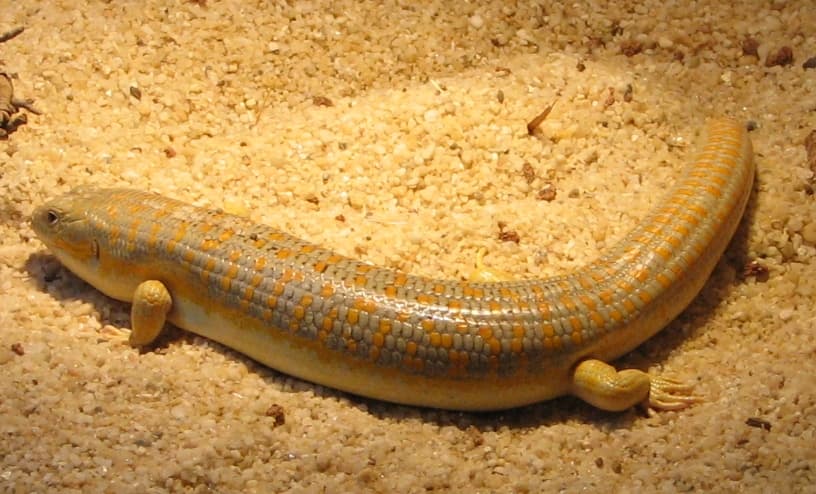
Schneider's skink
Schneider's skink (Eumeces schneiderii) is a species of lizard found across Central Asia, Western Asia, and North Africa. Characterized by smooth scales and a distinctive yellowish lateral streak, this skink inhabits rocky areas, grasslands, and shrublands. It is an oviparous species, meaning it reproduces by laying eggs.

Oplurus quadrimaculatus
Oplurus quadrimaculatus, also known as Duméril's Madagascar Swift or the Madagascar spotted spiny-tailed iguana, is a terrestrial lizard endemic to Madagascar. This species is characterized by its greyish coloration, spotted back and tail, and legs covered in enlarged, spinous scales. It inhabits a variety of environments across Madagascar, from arid spiny forests to humid rainforest margins.

Eremias przewalskii
Eremias przewalskii, commonly known as the Gobi racerunner, is a species of lizard belonging to the Lacertidae family. This reptile is endemic to Asia, inhabiting diverse environments ranging from deserts and shrublands to forests and wetlands. It is distinguished by its viviparous reproductive method.