
European copper skink
The European copper skink, also known as the European snake-eyed skink, is a small, slender lizard native to Eastern Europe and Southwestern Asia. It is characterized by its bronze coloration with dark sides and immovable eyelids. This shy species prefers dry, open habitats and is primarily active during twilight hours, feeding on insects and small snails.
Key Facts
- ›Small, slender lizard growing up to 15 cm in total length.
- ›Bronze-colored skin with dark sides.
- ›Features immovable eyelids, distinguishing it from many other skinks.
- ›Inhabits dry areas like south slopes, fields, and meadows, often under stones and leaves.
- ›Primarily active during twilight (crepuscular).
- ›Diet consists of insects and small snails.

European Copper Skink, European Snake-Eyed Skink, Juniper Skink, Snake-Eyed Skink
Greece, Aegean Islands, Romania, Bulgaria, Former Yugoslavia, Hungary, Albania, Slovakia, Caucasus, Turkey, Syria, Israel, Jordan, Lebanon, Sinai Peninsula, Iraq, Macedonia
- Small, Slender Lizard.
- Grows Up To 15 cm In Total Length, Including Tail.
- Bronze-Coloured Skin.
- Dark Sides.
- Immovable Eyelids.
Insects, Small Snails
Shy Species., Lives Under Stones and Leaves., Active During Twilight ., Hunts For Insects and Small Snails., Typical Ground Dweller., Dislikes Climbing.
About European copper skink
The European copper skink, scientifically known as Ablepharus kitaibelii, is a small lizard species native to Eastern Europe and Southwestern Asia. It is also recognized by common names such as the European snake-eyed skink, juniper skink, and snake-eyed skink. This species belongs to the subfamily Eugongylinae within the family Scincidae.
Description and Habitat
This lizard is characterized by its small, slender build, reaching a total length of up to 15 cm (5.9 inches). Its skin is a distinctive bronze color, often with darker coloration on its sides. A notable physical trait is its immovable eyelids, which differentiate it from many other skinks. The European copper skink is a shy creature that prefers dry, open habitats. It is commonly found living under stones and leaves in locations such as south-facing slopes, fields, and meadows. It is predominantly a ground dweller and shows little inclination for climbing.
Behavior and Diet
The European copper skink is most active during the twilight hours, exhibiting crepuscular behavior. During these periods, it actively hunts for its food. Its diet primarily consists of insects and small snails. The species is oviparous, meaning it reproduces by laying eggs.
Source: Wikipedia ↗
Frequently Asked Questions
What are the common names for Ablepharus kitaibelii?
Ablepharus kitaibelii is commonly known by several names, including the European copper skink, the European snake-eyed skink, the juniper skink, and the snake-eyed skink. These names reflect its appearance and geographical origin.
Where is the European copper skink found?
This species is native to a wide region encompassing Eastern Europe and Southwestern Asia. Its range includes countries such as Greece, Romania, Bulgaria, Hungary, Turkey, Syria, Israel, and Egypt's Sinai Peninsula, among others.
What does the European copper skink look like?
The European copper skink is a small and slender lizard, reaching up to 15 cm in total length. It has bronze-colored skin marked with dark sides. A distinctive feature is its immovable eyelids.
What kind of habitat does the European copper skink prefer?
This shy species prefers dry, open environments. It is typically found under stones and leaves in areas such as south-facing slopes, fields, and meadows. It is a ground dweller and avoids climbing.
When is the European copper skink most active?
The European copper skink is active during twilight hours, meaning it is crepuscular. During this time, it hunts for its food.
What does the European copper skink eat?
The diet of the European copper skink consists mainly of insects and small snails. It hunts these prey items during its active twilight periods.
How does the European copper skink reproduce?
The European copper skink is oviparous, meaning it reproduces by laying eggs. Specific details regarding clutch size or incubation periods are not provided in the available information.
Related Lizards

European snake-eyed skink
The European snake-eyed skink, also known as the European copper skink, is a small, slender lizard native to Eastern Europe and Southwestern Asia. It is characterized by its bronze coloration and immovable eyelids, a feature distinguishing it from many other skinks. This shy species inhabits dry, open areas, preferring to live under stones and leaves, and is primarily active during twilight hours.
Burmese glass lizard
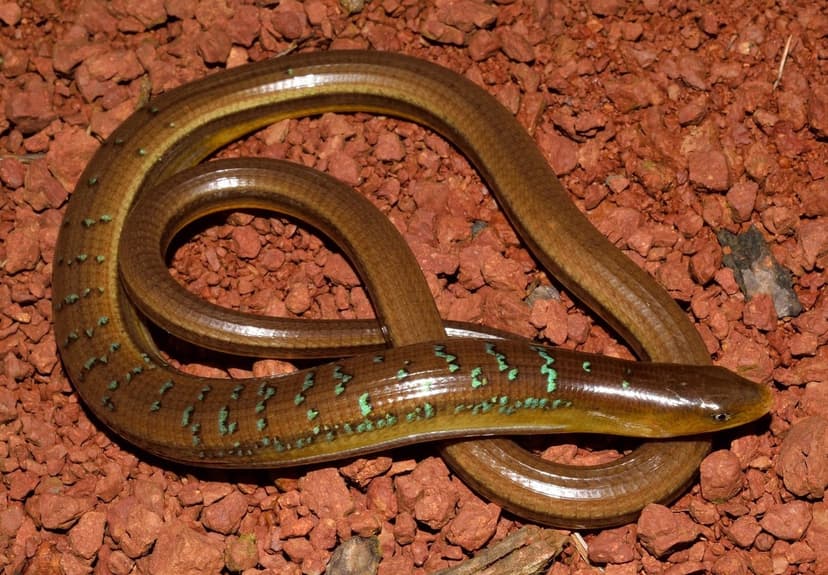
The Burmese glass lizard, also known as the Asian glass lizard or Indian glass snake, is a legless lizard species found across Southeast Asia and parts of South Asia. It is characterized by its smooth ventral scales, a slight keel on its dorsal scales, and a distinct lateral fold of skin that allows for expansion. This oviparous species likely inhabits dry areas and preys on small vertebrates.

Dopasia gracilis
Dopasia gracilis, commonly known as the Asian glass lizard or Indian glass snake, is a legless lizard species native to Asia. It is characterized by its absence of hind limbs and a distinct lateral fold of skin along its trunk, which aids in body expansion. This species inhabits dry areas and is likely an insectivore or feeds on small vertebrates.