
Fan-throated lizard (Sitana ponticeriana)
Ovoviviparity reported in some regions; oviparous (egg-laying) is implied by females digging holes for eggs.
The Fan-throated lizard (Sitana ponticeriana) is a species of agamid lizard found in eastern peninsular India. It is characterized by an enlarged projecting scale on the posterior side of its hind thigh and a distinctive, often tricolored, gular appendage (dewlap) in males, which is used in mating displays. This ground-dwelling lizard primarily inhabits open patches within thin forests.
Key Facts
- ›Found in eastern peninsular India along the Coromandel Coast.
- ›Distinguished by a projecting scale on the hind thigh and a colorful throat fan (dewlap) in males.
- ›Primarily insectivorous, feeding on ants, larvae, and termites.
- ›Males use their dewlap for mating displays and territorial defense.
- ›Lays eggs in small holes dug in soft soil.
- ›Plays a role in insect control and soil aeration within its ecosystem.
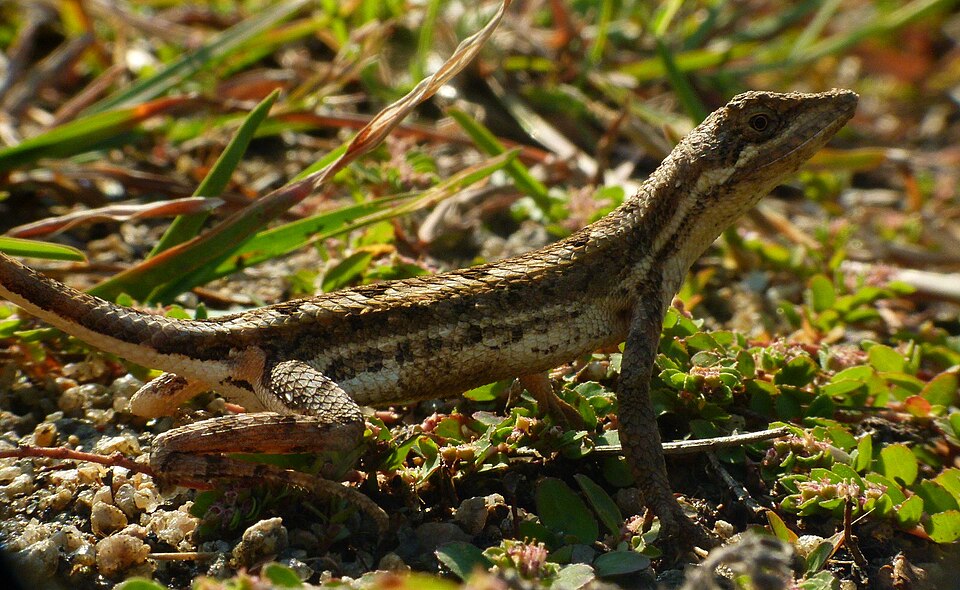
PondichéRy Fan-Throated Lizard
Eastern Peninsular India, Coromandel Coast, Sri Lanka
Open Ground Patches, Thin Forests, Grasslands, Scrublands
- Upper Head-Scales Are Small and Sharply Keeled.
- Canthus Rostralis and Supraciliary Edge Are Sharp With Enlarged Scales.
- Dorsal Scales Are Larger Than Ventrals and Sharply Keeled, Forming Straight Longitudinal Lines.
- Lateral Scales Are the Smallest and Uniform Or Mixed With Scattered Enlarged Ones.
- Fore Limb Does Not Extend To the Vent When Laid Backward; Hind Limb Reaches the Orbit When Laid Forward.
- Lower Thigh Is Shorter Than the Foot.
- Limbs Have Uniform, Strongly Keeled Scales.
- Coloration Is Typically Brown With A Series of Dark Spots Along the Middle of the Back, the Spot On the Neck Being the Darkest.
- A Whitish Band Is Present Along Each Side of the Back.
- the Gular Appendage Is Tricolored—Black, Blue, and Red In Males, More Developed During Breeding Season.
- Tail Is Round, Slender, 1.5 To 2 Times As Long As the Head and Body.
- Olive-Brown Above With Rhomboidal Spots Along the Back; A Light Band Along Each Side of the Back.
Insects, Formicidae, Lepidopteran Larvae, Termitidae, Beetles
- When Disturbed, Sometimes Runs With A Bipedal Gait.
- Males Engage In Mating Displays Involving Extending Their Colorful Throat Fan, Head Bobbing, and Chasing Rivals.
- Females Dig Small Holes In Soft Soil To Lay Eggs.
Birds, Snakes, Larger Reptiles
About Fan-throated lizard (Sitana ponticeriana)
What is the Fan-throated lizard?
The Fan-throated lizard (Sitana ponticeriana), also known as the Pondichéry fan-throated lizard, is a species of agamid lizard native to eastern peninsular India. This ground-dwelling reptile is characterized by a distinctive enlarged projecting scale on the posterior side of its hind thigh, a feature that distinguishes it from related genera. Males of the species are notable for their colorful gular appendage, or dewlap, which is typically tricolored with black, blue, and red, and becomes more prominent during the breeding season.
Habitat and Distribution
Sitana ponticeriana is primarily found in eastern parts of peninsular India, particularly along the Coromandel Coast. It inhabits open ground patches within thin forests and is also found in grassland and scrubland ecosystems. While its primary range is in India, there is a possibility that the species may also be distributed in parts of Sri Lanka.
Physical Description and Behavior
The lizard's scales are small and sharply keeled, with dorsal scales being larger than ventral scales. Coloration is generally brown, often featuring a series of dark spots along the middle of the back and a whitish band along each side. When threatened, the Fan-throated lizard may adopt a bipedal gait. During the breeding season, males engage in elaborate displays to attract females and ward off rivals, involving the extension of their colorful dewlap, head bobbing, and chasing competitors. After mating, females deposit their eggs in small holes dug in soft soil.
Diet and Ecological Role
The diet of Sitana ponticeriana consists mainly of insects, with ants, lepidopteran larvae, and termites being common prey items. By controlling insect populations, the lizard plays a crucial role in maintaining the ecological balance of its habitat, preventing potential overgrazing of plant life. Furthermore, its egg-laying behavior contributes to soil health by aiding in aeration, which facilitates water and nutrient penetration to plant roots. The Fan-throated lizard is an integral part of the food chain, serving as both a predator of insects and prey for various birds, snakes, and larger reptiles.
Source: Wikipedia ↗
Frequently Asked Questions
What are the key physical characteristics of the Fan-throated lizard?
The Fan-throated lizard has small, sharply keeled scales on its upper head. Its dorsal scales are larger and keeled, forming longitudinal lines, while lateral scales are smaller. Males possess a distinctive tricolored gular appendage (dewlap) that is black, blue, and red, which is more developed during the breeding season.
Where is the Fan-throated lizard found?
This species is primarily found in the eastern parts of peninsular India, along the Coromandel Coast. There is also a possibility of its distribution extending into parts of Sri Lanka.
What does the Fan-throated lizard eat?
The diet of the Fan-throated lizard consists mainly of insects. Commonly consumed prey includes ants (Formicidae), lepidopteran larvae, and termites (Termitidae).
How does the Fan-throated lizard reproduce?
Reproduction involves males displaying their colorful throat fan, head bobbing, and chasing rivals to attract females. After mating, females dig small holes in soft soil to lay their eggs, which then hatch after a few weeks.
What is the ecological role of the Fan-throated lizard?
The Fan-throated lizard is important for insect control, feeding on various insects that could otherwise damage plant life. Its egg-laying behavior also contributes to soil aeration, which helps water and nutrients reach plant roots.
What is the typical size of a Fan-throated lizard?
This species can reach a maximum length of about 8 inches (200 mm), with the tail accounting for approximately 5 inches (130 mm) of that length. The snout-to-vent length typically ranges from 3 to 5 inches (76–127 mm).
Related Lizards

Morethia boulengeri
Morethia boulengeri, commonly known as Boulenger's skink, is a small, insectivorous lizard endemic to Australia. It is characterized by its grey or brown dorsal coloration with darker flecks and a white ventral side, often featuring distinctive stripes. This adaptable species inhabits a variety of semi-arid and arid environments across the Australian mainland.

Sitana spinaecephalus
Sitana spinaecephalus, also known as the spiny-headed fan-throated lizard, is a species of agamid lizard found exclusively in India. This medium-sized lizard inhabits scrublands and forests in the west-central states of Gujarat, Rajasthan, Maharashtra, and Madhya Pradesh, primarily feeding on arthropods and using its dewlap for defense and communication.
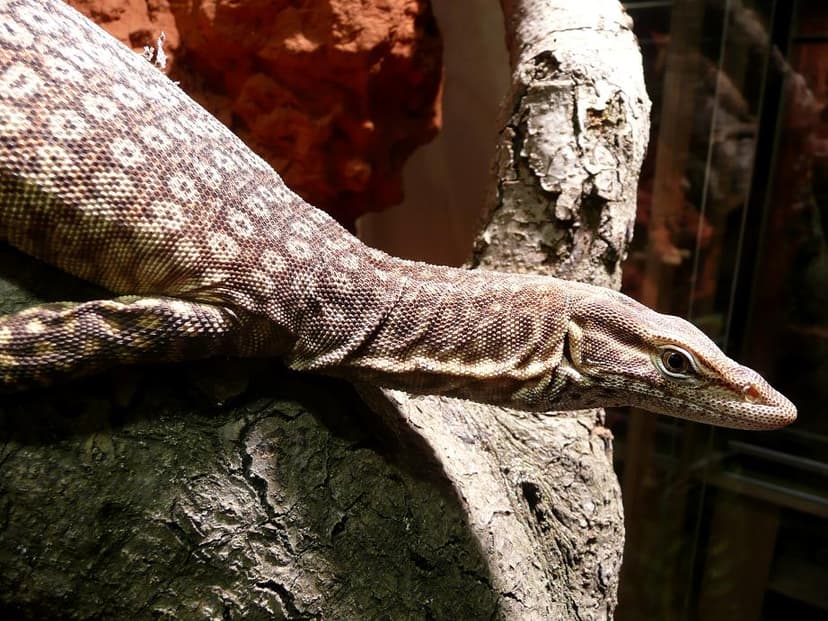
Varanus tristis
The black-headed monitor (Varanus tristis) is a relatively small monitor lizard found across mainland Australia and some northern islands. Known for its speed and ability to inhabit diverse environments from forests to deserts, this species exhibits distinct subspecies with variations in coloration and size. It is an opportunistic predator with a varied diet and a notable reproductive cycle.