
Gambelia copeii
Oviparous (implied by female breeding season coloration)
The Baja California leopard lizard (Gambelia copeii), also known as Cope's leopard lizard, is a species endemic to Baja California and southern California. It is characterized by its smoky gray coloration with darker dorsal spots, a distinct large head, and a purplish-black mouth lining. These lizards are powerful bipedal runners and prefer chaparral habitats with open understories.
Key Facts
- ›Endemic to Baja California and adjacent southern California.
- ›Smoky gray body with darker, mottled dorsal spots edged in lighter shades.
- ›Possesses a large head distinct from the neck and a purplish-black mouth and throat lining.
- ›Known for its powerful bipedal running ability.
- ›Prefers chaparral habitats with an open understory.
- ›Adults can inflict a painful bite.
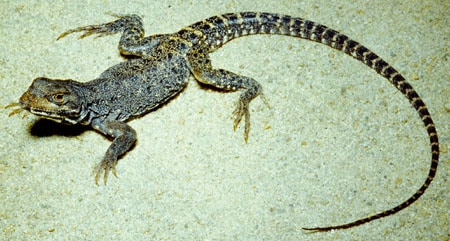
Cope's Leopard Lizard, Baja California Leopard Lizard
Baja California, Southern California
Chaparral, Open Understory
- Snout-To-Vent Length Between 8 and 14 cm .
- Smoky Gray Dorsal Coloration With Darker Gray Or Black Dorsal Spots, Often Edged In A Lighter Shade.
- Dorsal Pattern Appears Mottled Or Ocellated.
- Light Crossbars Present On the Dorsum.
- Ventral Side Is Light Gray Or White.
- Possesses Small Granular Scales.
- Large Head Is Distinct From the Neck.
- Lining of the Mouth and Throat Is Purplish-Black.
- Juveniles Have More Distinct Banding On the Dorsum Compared To Adults.
- Females Develop Red-Orange Blotches On the Ventral Side During the Breeding Season.
- Males Have Femoral Pores.
Insects, Other Prey
Powerful Bipedal Runner, Can Inflict A Painful Bite
About Gambelia copeii
Baja California Leopard Lizard (Gambelia copeii)
The Baja California leopard lizard, scientifically known as Gambelia copeii and also commonly referred to as Cope's leopard lizard, is a striking species of lizard found exclusively in the Baja California peninsula and adjacent southern California. Its name honors the American herpetologist Edward Drinker Cope.
Physical Characteristics
This lizard typically measures between 8 and 14 centimeters in snout-to-vent length. Its coloration is a distinctive smoky gray, adorned with darker gray or black dorsal spots that often have lighter edges, creating a mottled or ocellated pattern. Light crossbars are visible along its back, while its underside is a lighter gray or white. A notable feature is its large head, which is clearly set apart from its neck, and the unusual purplish-black hue lining its mouth and throat. While juveniles resemble adults, they exhibit more pronounced banding across their backs. During the breeding season, females develop characteristic red-orange blotches on their ventral surfaces.
Habitat and Behavior
Gambelia copeii is an uncommon species that thrives in chaparral habitats, particularly those with an open understory. It is recognized for its powerful ability to run swiftly on its hind legs. While generally not aggressive, adult Baja California leopard lizards are capable of delivering a painful bite.
Taxonomy
The species belongs to the family Crotaphytidae, a group known for its distinctive features and behaviors. Early classifications sometimes placed it within the genus Crotaphytus, with one historical description referring to it as Crotaphytus copeii.
Source: Wikipedia ↗
Frequently Asked Questions
What is the scientific name for the Baja California leopard lizard?
The scientific name for the Baja California leopard lizard is Gambelia copeii. It was historically classified under the genus Crotaphytus, with one early description listing it as Crotaphytus copeii.
What does the Baja California leopard lizard look like?
Gambelia copeii has a smoky gray coloration with darker gray or black dorsal spots that create a mottled or ocellated pattern. It has light crossbars on its back and is lighter on its underside. The lizard features small granular scales, a large head that is clearly separated from its neck, and a distinctive purplish-black lining in its mouth and throat.
Where can the Baja California leopard lizard be found?
This species is native to the Baja California peninsula and the adjacent southern regions of California. It is considered endemic to these areas.
What kind of habitat does Gambelia copeii prefer?
The Baja California leopard lizard favors chaparral environments. Specifically, it thrives in areas of chaparral that have an open understory, allowing for easier movement and hunting.
Are Baja California leopard lizards dangerous to humans?
Adult Baja California leopard lizards are capable of inflicting a painful bite. While not considered aggressive, caution is advised when encountering them in their natural habitat.
How does the Baja California leopard lizard move?
Gambelia copeii is a powerful runner and is known for its ability to move swiftly on its hind legs. This bipedal locomotion aids in its hunting and escape from predators.
Related Lizards
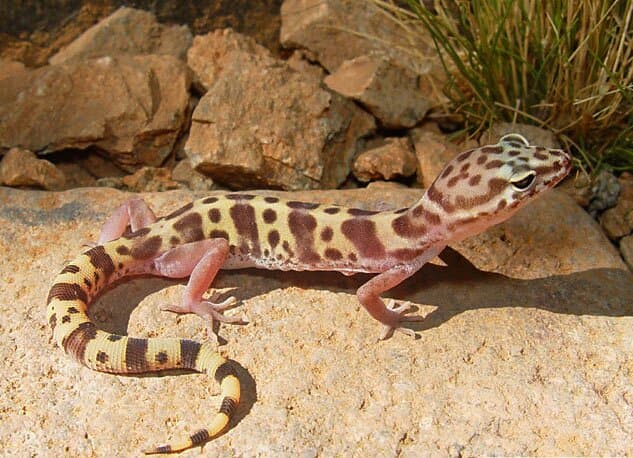
Coleonyx variegatus
The western banded gecko (Coleonyx variegatus) is a small, terrestrial lizard native to the southwestern United States and northwestern Mexico. It is characterized by its sandy coloration with dark crossbands, silky skin texture, and prominent eyes with movable lids. This nocturnal species inhabits arid deserts, woodlands, and grasslands, preying on invertebrates and occasionally small scorpions.

Elgaria multicarinata
The southern alligator lizard (Elgaria multicarinata) is a common reptile native to the Pacific coast of North America, found from Washington to Baja California. This lizard inhabits a variety of environments, including grasslands, chaparral, forests, and urban areas, often seeking out moist locations or proximity to streams in drier climates. It is characterized by its keeled scales, a long, prehensile tail, and a variable coloration that can include brown, gray, green, or yellowish hues with distinct crossbands.

Sceloporus magister
The Sceloporus magister, commonly known as the desert spiny lizard, is a species found in the Chihuahuan and Sonoran Deserts of North America. Adult males display striking blue/violet patches on their underside, while females and juveniles have less vibrant coloring. This lizard is primarily arboreal and known for its thermoregulatory behavior of changing skin color.