
Gekko kuhli
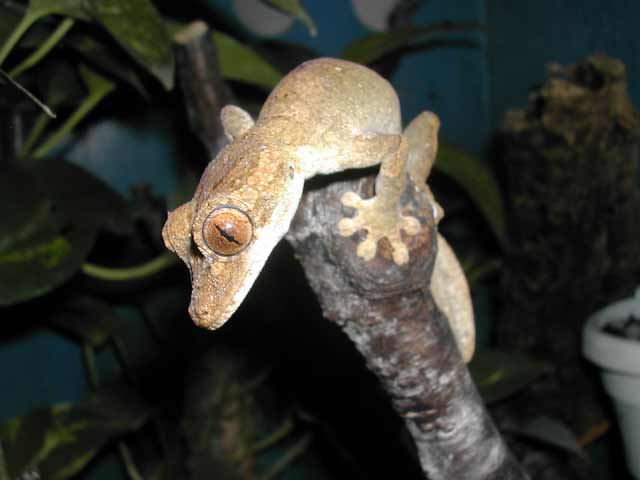
Gekko kuhli, also known as Kuhl's flying gecko, is a gliding lizard species native to Southeast Asia. It is characterized by skin flaps along its sides, webbed feet, and a flattened tail that enable it to glide. This species exhibits remarkable camouflage, with its flaps helping it blend into tree bark, and has adapted internally to protect its organs from increased UV exposure despite being nocturnal.
Key Facts
- ›Possesses skin flaps, webbed feet, and a flattened tail for gliding.
- ›Features remarkable camouflage, making it difficult to distinguish from tree bark.
- ›Has pigmented internal organs for UV protection, a notable adaptation for a nocturnal species.
- ›Found in forests across Southeast Asia, including the Malay Peninsula and Greater Sunda Islands.
- ›Requires careful handling due to delicate skin.

Kuhl's Flying Gecko, Kuhl's Parachute Gecko, Gliding Gecko
Malay Peninsula, Southern Thailand, Malaysia, Singapore, Greater Sunda Islands, Sumatra, Java, Borneo, Sulawesi
- Possesses Flaps of Skin On Either Side of Its Body.
- Has Webbed Feet.
- Features A Flattened Tail.
- Remarkable Camouflage, With Skin Flaps Aiding In Blending With Tree Bark.
- Eyes Are Often the Most Distinguishable Feature.
- Intricate Toe Pads With Microscopic Hairs For Adhesion.
- Pigmented Internal Organs For Uv Protection.
- Glides Over Short Distances.
- Exhibits Remarkable Camouflage.
- Nocturnal.
- Heliothermic .
- Requires Careful Handling Due To Fragile Skin.
About Gekko kuhli
Gekko kuhli: The Gliding Gecko of Southeast Asia
Gekko kuhli, commonly known as Kuhl's flying gecko, Kuhl's parachute gecko, or the gliding gecko, is a fascinating lizard species belonging to the Gekkonidae family. This species is native to the lush forests of Southeast Asia, making its home in regions such as the Malay Peninsula and the Greater Sunda Islands. Its most striking feature is its remarkable adaptation for gliding, which allows it to traverse short distances between trees.
Physical Adaptations for Gliding and Camouflage
The gliding ability of Gekko kuhli is facilitated by several key physical characteristics. It possesses flaps of skin along the sides of its body, webbed feet, and a flattened tail. These structures work in concert to enable controlled descent through the air. Complementing its gliding capabilities is its exceptional camouflage. The skin flaps not only aid in gliding but also help the gecko blend seamlessly with tree bark, making it incredibly difficult to spot against its natural backdrop. Often, only its eyes are visible, a testament to its effective concealment.
Nocturnal Life and UV Protection
Despite being a nocturnal species, Gekko kuhli is considered heliothermic. This means it benefits from sun exposure, likely during its resting periods. This extended sun exposure has led to a unique adaptation: pigmented internal organs. These specialized organs are thought to protect the lizard's vital internal structures from potential damage caused by increased ultraviolet (UV) radiation. This intricate balance of nocturnal activity and sun adaptation highlights the species' remarkable evolutionary journey.
Habitat and Distribution
Gekko kuhli thrives in forest environments, where its camouflage and gliding abilities are most advantageous. Its geographic range extends across the Malay Peninsula, including southern Thailand, Malaysia, and Singapore, as well as numerous adjacent islands. It is also found in the Greater Sunda Islands, encompassing large landmasses like Sumatra, Java, Borneo, and Sulawesi, along with many smaller islands. While its presence in Myanmar and the Nicobar Islands is unconfirmed, its established distribution highlights its prevalence in these Southeast Asian forest ecosystems.
As a Pet
When kept as a pet, Gekko kuhli requires specific care, emphasizing minimal handling due to the delicate nature of its skin. A terrarium of at least 20 gallons, with a preference for height over length, is recommended to accommodate its arboreal lifestyle and gliding potential. The intricate toe pads, common to many gecko species, allow them to adhere to various surfaces, including glass, further contributing to their unique characteristics.
Source: Wikipedia ↗
Frequently Asked Questions
What is Gekko kuhli commonly known as?
Gekko kuhli is commonly referred to as Kuhl's flying gecko, Kuhl's parachute gecko, or the gliding gecko. These names highlight its distinctive ability to glide.
How does Gekko kuhli glide?
It glides using adaptations such as flaps of skin along its body, webbed feet, and a flattened tail. These features allow it to glide over short distances.
Where is Gekko kuhli found geographically?
This species is found in Southeast Asia, specifically in the Malay Peninsula (including southern Thailand, Malaysia, and Singapore), adjacent islands, and the Greater Sunda Islands like Sumatra, Java, Borneo, and Sulawesi. Its presence in Myanmar and the Nicobar Islands is not confirmed.
What is the habitat of Gekko kuhli?
The preferred natural habitat for Gekko kuhli is forest environments. Its camouflage adaptations are well-suited for this arboreal setting.
Why does Gekko kuhli have pigmented internal organs?
Gekko kuhli has pigmented internal organs to protect its vital organs from damage caused by increased UV exposure. This is an adaptation despite the species being nocturnal and heliothermic.
How should Gekko kuhli be handled if kept as a pet?
If kept as a pet, Gekko kuhli should be handled as little as possible to avoid potential damage to its delicate skin. A terrarium of at least 20 gallons, preferably tall, is recommended.
Related Lizards

Uroplatus fimbriatus
The common flat-tail gecko (Uroplatus fimbriatus) is a large, nocturnal gecko native to the tropical rainforests of eastern Madagascar and its surrounding islands. It is distinguished by its flattened tail and fringed skin, adaptations that aid in camouflage against tree bark. This species possesses highly sensitive eyes, allowing for color vision even in low light conditions.

Cyrtodactylus adleri
Cyrtodactylus adleri is a species of bent-toed gecko native to the Nicobar Islands of India. It is distinguished from similar species by its dark spots on the dorsum, specific scale arrangements, and the presence of a pre-anal groove. This nocturnal and arboreal lizard prefers forest habitats.
Uroplatus guentheri
Günther's flat-tail gecko (Uroplatus guentheri) is a nocturnal lizard endemic to Madagascar, known for its remarkable camouflage. It inhabits forests, roosting and foraging on small trees and bushes, where it mimics dead branches and bark to avoid detection during the day. This species is oviparous, laying spherical eggs in leaf litter.