
Giant fringe-fingered lizard
The giant fringe-fingered lizard (Acanthodactylus grandis) is a species of lizard belonging to the family Lacertidae, native to Western Asia. This oviparous species is found across several countries in the region, inhabiting arid and semi-arid environments.
Key Facts
- ›Endemic to Western Asia.
- ›Found in Iran, Iraq, Jordan, Lebanon, Saudi Arabia, and Syria.
- ›Reproduces by laying eggs (oviparous).
- ›Belongs to the family Lacertidae.
- ›Its scientific name is Acanthodactylus grandis.
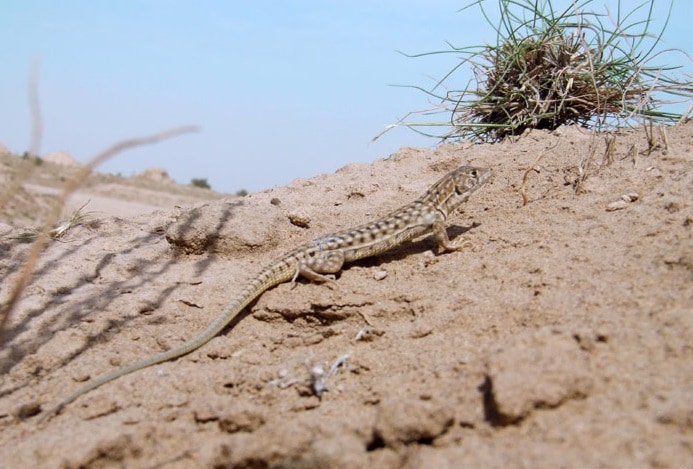
Giant Fringe-Fingered Lizard
Iran, Iraq, Jordan, Lebanon, Saudi Arabia, Syria
About Giant fringe-fingered lizard
The Giant Fringe-Fingered Lizard
The giant fringe-fingered lizard, scientifically known as Acanthodactylus grandis, is a species of lizard native to Western Asia. It belongs to the family Lacertidae, a group of agile, often ground-dwelling lizards. This species is primarily found within arid and semi-arid regions across several Middle Eastern countries.
Geographic Range and Habitat
Acanthodactylus grandis has a documented distribution that spans across Iran, Iraq, Jordan, Lebanon, Saudi Arabia, and Syria. Its natural habitat consists of environments characterized by dryness, including deserts and semi-arid landscapes, where it has adapted to survive.
Reproduction
In terms of reproduction, the giant fringe-fingered lizard is oviparous. This means that females of the species lay eggs as their method of reproduction, a trait shared by many reptiles. Specific details regarding clutch size, incubation periods, or breeding seasons are not elaborated upon in available records.
Source: Wikipedia ↗
Frequently Asked Questions
What is the scientific name of the giant fringe-fingered lizard?
The scientific name of the giant fringe-fingered lizard is Acanthodactylus grandis. This binomial nomenclature helps scientists identify and classify the species.
Where is the giant fringe-fingered lizard found?
The giant fringe-fingered lizard is endemic to Western Asia. Its geographic range includes Iran, Iraq, Jordan, Lebanon, Saudi Arabia, and Syria.
How does the giant fringe-fingered lizard reproduce?
The giant fringe-fingered lizard is oviparous, meaning it reproduces by laying eggs. This is a common reproductive strategy among many lizard species.
What family does the giant fringe-fingered lizard belong to?
The giant fringe-fingered lizard belongs to the family Lacertidae. This family comprises many species of agile, ground-dwelling lizards.
Related Lizards

Ctenophorus fordi
The Mallee dragon (Ctenophorus fordi) is a small lizard native to the arid regions of southern Australia, characterized by its reddish-orange coloration and pale, black-bordered stripes. It inhabits shrubland and hummock grass environments, particularly in Mallee woodlands and spinifex areas, often near vegetated sand dunes. This species is primarily an ant specialist, employing a sit-and-wait strategy to ambush its prey.

Eurylepis taeniolatus
Eurylepis taeniolata, also known as the ribbon-sided skink, is a species found across Central, South, and West Asia. This skink is characterized by its elongated body, slender limbs, and a distinctive color pattern of gray-brown with pale dorsolateral stripes that become more prominent anteriorly, and brown rectangular spots posteriorly. It inhabits a variety of arid and semi-arid environments.
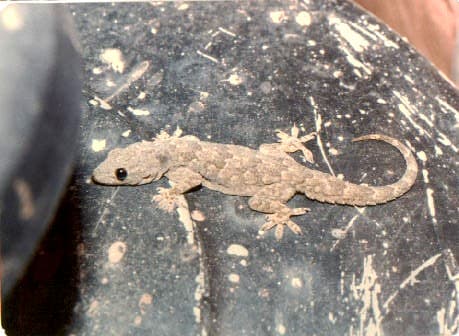
Hemidactylus flaviviridis
Hemidactylus flaviviridis, commonly known as the yellow-belly gecko or northern house gecko, is a widespread gecko species found across parts of Africa, the Middle East, and the Indian subcontinent. These geckos are typically found in human-modified habitats and are known for their adaptability.