
Hart's glass lizard
Hart's glass lizard is a limbless species of lizard native to southeastern Asia, found in countries like China, Taiwan, and Vietnam. It prefers forest habitats but can also be found in farmland. Females guard their eggs, indicating parental care.
Key Facts
- ›Hart's glass lizard is a limbless reptile.
- ›It is found in south-eastern Asia, including China, Taiwan, and northern Vietnam.
- ›Preferred habitats include forests at moderate to high altitudes and farmland.
- ›Females lay clutches of 4-13 eggs and guard them.
- ›The species is terrestrial and fossorial, meaning it lives on the ground and burrows.
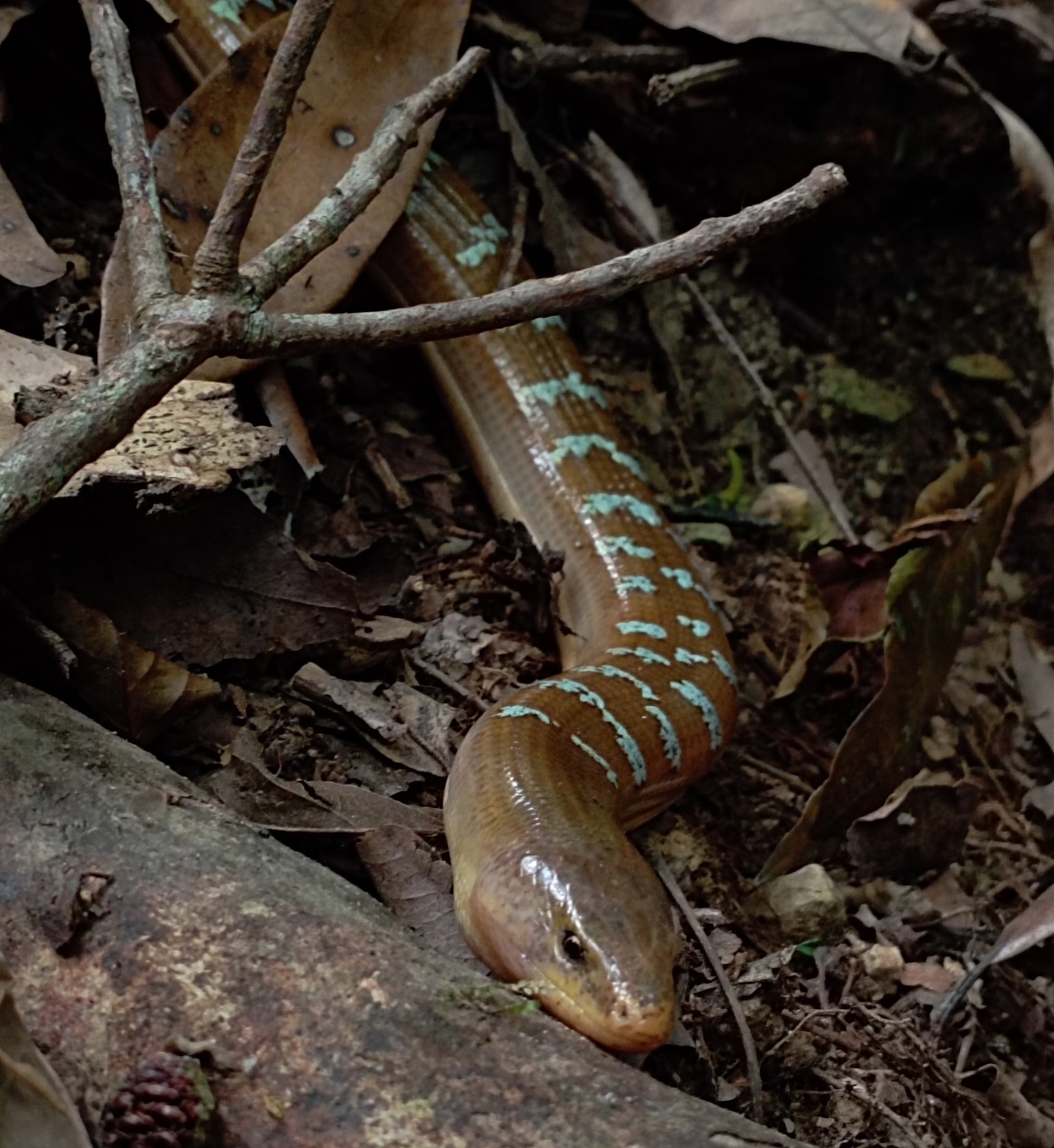
Chinese Glass Lizard
China, Taiwan, Vietnam
Limbless
Terrestrial, Fossorial, Oviparous, Maternal Care
About Hart's glass lizard
Hart's glass lizard, also known by its scientific name Dopasia harti and commonly as the Chinese glass lizard, is a unique reptile belonging to the Anguidae family.
Distribution and Habitat
This species is native to southeastern Asia, with documented populations in southern China, Taiwan, and northern Vietnam. Its preferred natural habitat consists of forests, where it can be found at altitudes ranging from 400 to 2,600 meters (approximately 1,300 to 8,500 feet). While forests are its primary environment, Hart's glass lizard has also been observed in farmland areas.
Physical Characteristics and Behavior
A striking feature of Hart's glass lizard is its limbless form, which contributes to its serpentine appearance. It is primarily a terrestrial creature, meaning it lives on the ground, and is also fossorial, indicating it is adapted for burrowing and living beneath the surface. This combination of traits influences its movement and interaction with its environment.
Reproduction
Hart's glass lizard reproduces oviparously, laying eggs. The breeding season typically occurs between June and September. During this period, a female may lay a clutch of 4 to 13 eggs, often depositing them under leaf litter or rocks. Notably, the female exhibits parental care by staying with and guarding the eggs until they hatch.
Source: Wikipedia ↗
Frequently Asked Questions
What is Hart's glass lizard?
Hart's glass lizard, scientifically known as Dopasia harti, is a limbless species of lizard belonging to the family Anguidae. It is native to southeastern Asia.
Where is Hart's glass lizard found?
This lizard species is distributed across southern China, Taiwan, and northern Vietnam. Its range extends through southeastern Asia.
What kind of habitat does Hart's glass lizard prefer?
The preferred natural habitat for Hart's glass lizard is forest, typically at altitudes ranging from 400 to 2,600 meters. It has also been observed in farmland areas.
How does Hart's glass lizard reproduce?
Hart's glass lizard is oviparous, meaning it lays eggs. Between June and September, females can lay a clutch of 4 to 13 eggs, which they then guard.
What does 'limbless' mean for this lizard?
Being limbless means that Hart's glass lizard lacks external limbs, appearing more like a snake. Despite this, it is classified as a lizard.
What is the behavior of Hart's glass lizard?
Hart's glass lizard is described as terrestrial, spending its life on the ground, and fossorial, meaning it is adapted for burrowing and living underground.
Related Lizards

Podarcis siculus
The Italian wall lizard, or Podarcis siculus, is a common lizard species native to southern and southeastern Europe, known for its adaptability to various environments, from natural habitats to human-modified landscapes. It exhibits significant subspecies variation, often displaying a green or brown back with a white or green belly, and males can be distinguished by larger heads and stronger jaws. This species is oviparous, laying multiple clutches of eggs annually, and its generalized diet contributes to its widespread distribution and success.

Trioceros cristatus
The crested chameleon (Trioceros cristatus) is a species native to Central African forests and semi-open wooded areas. Females are typically larger than males, reaching up to 28 cm in total length. This species is currently classified as Least Concern by the IUCN due to its widespread distribution and ability to tolerate disturbed habitats.
Chalcides ocellatus
The ocellated skink, scientifically known as Chalcides ocellatus, is a agile lizard species found across the Mediterranean and parts of Asia. Adults typically reach 15 to 30 cm in length and are characterized by their cylindrical bodies, small heads, and distinctive ocelli (eye-like spots) which contribute to a wide variety of coloration patterns. Primarily insectivorous, they inhabit diverse environments from farmland to gravel deserts and are known for their 'sand-swimming' ability, though their limbs are not highly adapted for burrowing.