
Chalcides ocellatus
The ocellated skink, scientifically known as Chalcides ocellatus, is a agile lizard species found across the Mediterranean and parts of Asia. Adults typically reach 15 to 30 cm in length and are characterized by their cylindrical bodies, small heads, and distinctive ocelli (eye-like spots) which contribute to a wide variety of coloration patterns. Primarily insectivorous, they inhabit diverse environments from farmland to gravel deserts and are known for their 'sand-swimming' ability, though their limbs are not highly adapted for burrowing.
Key Facts
- ›Adults typically measure 15-30 cm in length.
- ›They possess a cylindrical body, small head, and five toes on each foot.
- ›Ocellated skinks are primarily insectivorous but will also consume small lizards and plant matter.
- ›Females give birth to live young (viviparity), typically 2-6 offspring.
- ›Their escape tactic often involves running behind vegetation due to limited speed.
- ›They are capable of 'sand-swimming' but are not highly fossorial.
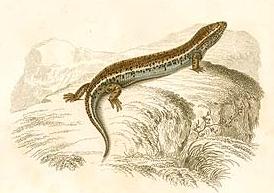
Ocellated Skink, Eyed Skink, Gongilo
Greece, Southern Italy, Malta, Lebanon, Uae, Israel, Palestine, Northern Africa, Pakistan, India, Sri Lanka
Arid Areas, Farmland, Gravel Deserts, Mediterranean Coast
Adult Length: 15-30 cm, Adult Weight: 22-39 g, Small Head, Cylindrical Body, Five Toes On Each Foot, Presence of Ocelli, Wide Variety of Coloration Patterns, Smooth Scales
Insects, Small Lizards, Tails of Young Lizards, Plant Matter, Commercial Diets, Wet Cat/Dog Food
- Agile
- Escape Tactic: Run Behind Vegetation
- Capable of 'Sand-Swimming' Behavior
- Limbs Not Specifically Adapted For Fossorial Movement
About Chalcides ocellatus
Chalcides ocellatus: The Ocellated Skink
The ocellated skink, identified by the scientific name Chalcides ocellatus and also known as the eyed skink or gongilo, is a species of lizard noted for its adaptability and widespread distribution across diverse geographical regions. Its natural range extends from southern Europe, including Greece, Italy, and Malta, through North Africa, and eastward into the Middle East, Pakistan, India, and Sri Lanka. This species is characterized by its agility, a small head, a distinctly cylindrical body, and the presence of five toes on each of its feet.
Physical Characteristics and Habitat
Adult ocellated skinks typically measure between 15 to 30 centimeters (6 to 12 inches) in length, with a weight ranging from 22 to 39 grams. A key distinguishing feature of Chalcides ocellatus is the presence of ocelli, which are eye-like spots that contribute to its wide array of coloration patterns, making each individual potentially unique in appearance. Despite having smooth scales and the ability to perform 'sand-swimming' in loose substrates, their limbs are not highly specialized for burrowing. They are often found in arid environments such as gravel deserts and are also known to inhabit farmland, particularly in areas around the Mediterranean coast.
Diet and Behavior
The diet of the ocellated skink is primarily insectivorous, with recorded prey including a variety of insects like locusts, crickets, ants, beetles, spiders, and centipedes, as well as insect larvae. They are also opportunistic feeders, known to consume small lizards, including their own young, and the tails of juvenile lizards are frequently found in their stomach contents. In captivity, their diet can be supplemented with certain commercial reptile foods and even occasional wet pet food. They have also been observed to consume small amounts of plant matter, such as chopped greens, flowers, and fruits. When threatened, their primary escape tactic is to retreat behind vegetation, as they are not particularly fast runners. Females reproduce through viviparity, giving birth to 2 to 6 live young.
Source: Wikipedia ↗
Frequently Asked Questions
What is the ocellated skink?
The ocellated skink, scientifically named Chalcides ocellatus, is a species of skink recognized for its distinctive eye-like spots (ocelli) and varied coloration. It is found across a wide geographic range including parts of Europe, Africa, and Asia.
What is the typical size of an ocellated skink?
As adults, ocellated skinks generally reach a length of 15 to 30 cm (6 to 12 inches) and weigh between 22 to 39 grams. They have a slender, cylindrical body and a small head.
What do ocellated skinks eat?
Ocellated skinks are primarily insectivorous, feeding on a variety of insects such as locusts, ants, beetles, and spiders, as well as insect larvae. They are also known to consume small lizards, including their own young, and will occasionally eat small amounts of plant matter.
How do ocellated skinks reproduce?
Females of the ocellated skink species reproduce through viviparity, meaning they give birth to live young. A litter typically consists of 2 to 6 offspring.
What kind of habitats do ocellated skinks prefer?
Chalcides ocellatus is a generalist species that inhabits a wide range of environments. They are commonly found in arid areas, including farmland and gravel deserts, particularly around the Mediterranean coast.
Are ocellated skinks good at burrowing?
While ocellated skinks are capable of 'sand-swimming' behavior in loose sand or soil, their limbs are not specifically adapted for extensive fossorial (burrowing) movement. Their primary escape tactic is to run behind vegetation.
Related Lizards

Italian wall lizard
The Italian wall lizard (Podarcis siculus), also known as the ruin lizard, is a common and adaptable lizard native to southern and southeastern Europe. It is characterized by a green or brown back and a white or green belly, with variations across its numerous subspecies. This species is a habitat and dietary generalist, capable of thriving in diverse environments and consuming a wide range of invertebrates and plant matter, contributing to its extensive geographic distribution.
Podarcis siculus
The Italian wall lizard, or Podarcis siculus, is a common lizard species native to southern and southeastern Europe, known for its adaptability to various environments, from natural habitats to human-modified landscapes. It exhibits significant subspecies variation, often displaying a green or brown back with a white or green belly, and males can be distinguished by larger heads and stronger jaws. This species is oviparous, laying multiple clutches of eggs annually, and its generalized diet contributes to its widespread distribution and success.

Ctenophorus caudicinctus
The Ctenophorus caudicinctus, commonly known as the ring-tailed dragon, is a vibrantly colored agamid lizard native to the rocky ranges and outcrops of Australia, particularly the Pilbara region of Western Australia. These lizards are recognized for their distinctive banding around the tail, a line of spines curving beneath the eyes, and pronounced sexual dimorphism, with males displaying brighter colors. They are diurnal insectivores adapted to arid environments, utilizing unique scale structures for water absorption and thermoregulation.