
Hemidactylus garnotii
The Indo-Pacific gecko, scientifically known as Hemidactylus garnotii, is a species of gecko native to South and Southeast Asia, Polynesia, and the east coast of Australia. These geckos are distinguished by their ability to change skin color and possess unique rows of large, spiny scales along the sides of their tails. They reproduce asexually through parthenogenesis, with all individuals being female.
Key Facts
- ›Native to South and Southeast Asia, Polynesia, and Australia's east coast.
- ›Adults typically measure 10–13 cm (4–5 in) in length.
- ›Can change skin color from dark in daylight to pale at night.
- ›Features distinctive rows of large, spiny scales on the lateral edges of the tail.
- ›Reproduces solely through parthenogenesis, with all individuals being female.
- ›Considered an invasive species in parts of the United States (Hawaii, Florida, Georgia) and New Zealand.

Indo-Pacific Gecko, Garnot's House Gecko, Fox Gecko, Assam Greyish-Brown Gecko
South Asia, Southeast Asia, Polynesia, Australia, New Zealand, Hawaii, Fiji, Seychelles, Bahamas, Florida, Georgia
- Native Habitats Likely Include Tropical and Subtropical Regions.
- Often Found In Association With Human Dwellings.
- Introduced Populations Can Be Found In Various Environments Within Their New Ranges.
- Adult Length: 10–13 cm .
- Ability To Change Skin Color: Dark Gray Or Brown With Light Markings In Daylight, Pale and Translucent At Night.
- Belly Color: Usually Pale Yellow Or Orange.
- Distinguishing Feature: Two Rows of Large, Spiny Scales On the Lateral Edges of the Tail.
- These Tail Scales Are Soft and Match the Tail's Color.
- Likely Insectivorous, Feeding On Small Invertebrates.
- Exhibit Ability To Change Skin Color.
- Their Purpose For the Spiny Tail Scales Is Unknown.
- Considered An Invasive Species In Several Introduced Regions, Which Can Impact Native Ecosystems.
About Hemidactylus garnotii
Hemidactylus garnotii: The Indo-Pacific Gecko
The Indo-Pacific gecko, scientifically classified as Hemidactylus garnotii, is a widespread gecko species recognized by several common names, including Garnot's house gecko, fox gecko, and the Assam greyish-brown gecko. Its native range spans South and Southeast Asia, extending to Polynesia and the eastern coast of Australia. This species shares a close evolutionary relationship with Hemidactylus frenatus, often being mistaken for it, but H. garnotii generally grows larger and exhibits more pronounced dorsal markings.
Key Characteristics
A notable characteristic of Hemidactylus garnotii is its remarkable ability to alter its skin coloration. During the day, it typically displays dark gray or brown with lighter markings, which transforms into a pale, translucent hue at night. The belly of this gecko is usually a pale yellow or orange. Perhaps its most distinctive physical feature is the presence of two prominent rows of large, spiny scales along the sides of its tail; the function of these soft, similarly colored scales remains a subject of speculation.
Reproduction and Distribution
Hemidactylus garnotii reproduces exclusively through parthenogenesis, meaning all individuals are female and capable of laying fertile eggs without male fertilization. This reproductive strategy allows the species to establish populations effectively. While native to a broad Asian and Australasian region, the Indo-Pacific gecko has been introduced to numerous other areas. It is now found in places such as New Zealand, Hawaii, Fiji, the Seychelles, the Bahamas, and parts of the southeastern United States, where it is often considered an invasive species due to its adaptability and successful establishment.
Source: Wikipedia ↗
Frequently Asked Questions
What are the common names for Hemidactylus garnotii?
Hemidactylus garnotii is also known by several common names, including the Indo-Pacific gecko, Garnot's house gecko, fox gecko, and the Assam greyish-brown gecko. The name 'fox gecko' refers to its long, narrow snout, resembling that of a fox.
How large do Indo-Pacific geckos get?
Adult Indo-Pacific geckos typically grow to lengths of about 10 to 13 centimeters (4 to 5 inches). They are noted to be larger than their close relative, Hemidactylus frenatus, and often have more prominent markings on their backs.
What is unique about the tail of Hemidactylus garnotii?
A distinguishing feature of Hemidactylus garnotii is the presence of two large, spiny rows of scales along each side of its tail. These soft scales are the same color as the tail, and their specific purpose remains unknown.
How do Indo-Pacific geckos reproduce?
Indo-Pacific geckos reproduce exclusively through parthenogenesis, meaning all individuals are female and can produce offspring without male fertilization. Like other reptiles, they lay eggs, which can hatch without being fertilized.
Where are Hemidactylus garnotii found?
This species is native to South and Southeast Asia, Polynesia, and the east coast of Australia. They have also been introduced to areas such as New Zealand, Hawaii, Fiji, Seychelles, the Bahamas, and parts of the United States, where they are sometimes considered invasive.
What is the difference between Hemidactylus garnotii and Hemidactylus frenatus?
While similar, Hemidactylus garnotii individuals tend to be larger than Hemidactylus frenatus, with more noticeable markings on their backs. Both species can change color, but H. garnotii has unique spiny scales on its tail edges that H. frenatus lacks.
Related Lizards

Aspidoscelis inornata heptagramma
The little striped whiptail (Aspidoscelis inornatus) is a small lizard found in the southwestern United States and northern Mexico. Characterized by its slender body, it typically displays black coloration with yellow or white stripes running from head to tail, and a light blue underside, which is more pronounced in males. These lizards inhabit a variety of environments, from grasslands to rocky slopes, and are known for their wary, energetic, and fast-moving nature.

Blainville's horned lizard
Blainville's horned lizard, also known as the San Diego horned lizard, is a flat-bodied lizard native to Southern California and northern Baja California, Mexico. Characterized by its distinctive spiky horns on its head and body, it typically inhabits sandy areas with low vegetation near ant hills. This species plays a crucial role in its ecosystem, primarily feeding on ants, and exhibits a unique defense mechanism of squirting blood from its eyes.
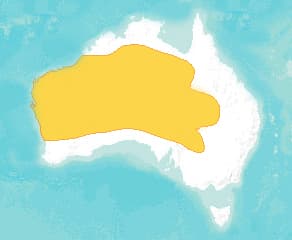
Central Netted Dragon
The Central Netted Dragon is a medium-sized lizard native to arid and semi-arid regions of Australia, characterized by a distinctive net-like pattern on its reddish-brown to orange-brown body. It is a diurnal, terrestrial species known for its burrowing behavior and a diet that includes insects and vegetation. These dragons are popular pets and are commonly found in zoos.