
Hemiergis peronii
The four-toed earless skink (Hemiergis peronii) is a viviparous reptile endemic to southern Australia. It is characterized by its earless appearance and typically measures around 8 cm in snout-vent length. This species inhabits coastal and subcoastal regions across Western Australia, South Australia, and western Victoria.
Key Facts
- ›Viviparous earless skink native to southern Australia.
- ›Found in coastal and subcoastal areas of Western Australia, South Australia, and western Victoria.
- ›Average snout-vent length is approximately 8 cm (3.1 inches).
- ›Named in honor of French naturalist François Péron.
- ›Also known by common names such as Péron's earless skink, lowlands earless skink, and four-toed mulch skink.

PéRon's Earless Skink, Lowlands Earless Skink, Four-Toed Mulch Skink
Western Australia, South Australia, Victoria
Coastal, Subcoastal
Earless Skink, Average Snout-Vent Length of 8 cm
About Hemiergis peronii
Hemiergis peronii: The Four-Toed Earless Skink
The four-toed earless skink, scientifically known as Hemiergis peronii, is a distinct reptile species native to southern Australia. This viviparous lizard is characterized by its earless appearance, a feature that contributes to its common name. It is also recognized by several other common names, including Péron's earless skink, the lowlands earless skink, and the four-toed mulch skink.
Geographic Range and Habitat
Hemiergis peronii is primarily found in the coastal and subcoastal regions of southern Australia. Its natural distribution encompasses parts of Western Australia, South Australia, and extends into western Victoria. These environments provide the necessary conditions for its survival and reproduction.
Physical Characteristics
Adult individuals of Hemiergis peronii typically measure around 8 centimeters (approximately 3.1 inches) in snout-to-vent length. While detailed descriptions of its coloration and scale patterns are not extensively documented in available records, its designation as an earless skink highlights a notable anatomical feature. The specific name, peronii, was chosen to honor François Péron, a significant French naturalist and explorer.
Biology and Behavior
As a viviparous species, Hemiergis peronii gives birth to live young, a reproductive strategy that differs from many egg-laying reptiles. Further details regarding its diet, specific behavioral traits, lifespan, and conservation status are not readily available in the provided information, indicating areas for further scientific study and documentation.
Source: Wikipedia ↗
Frequently Asked Questions
Where is the four-toed earless skink found?
The four-toed earless skink is found in coastal and subcoastal areas of southern Australia. This includes the Australian states of Western Australia, South Australia, and western Victoria.
What does 'peronii' in its scientific name signify?
The specific name, peronii, is in honor of François Péron. He was a notable French naturalist and explorer whose work contributed to the understanding of Australia's fauna.
What is the typical size of Hemiergis peronii?
Hemiergis peronii has an average snout-vent length of about 8 cm (3.1 inches). This measurement refers to the length from the tip of its snout to the vent.
Are there other common names for Hemiergis peronii?
Yes, besides the four-toed earless skink, it is also commonly known as Péron's earless skink, the lowlands earless skink, or the four-toed mulch skink.
Related Lizards

Chalarodon madagascariensis
Chalarodon madagascariensis is a terrestrial lizard species native to Madagascar, primarily found in coastal, semi-arid to arid regions with sandy soil. It is an insectivore that occasionally consumes plant matter. A key distinguishing feature is its keeled gular and ventral scales.
Iguana iguana melanoderma
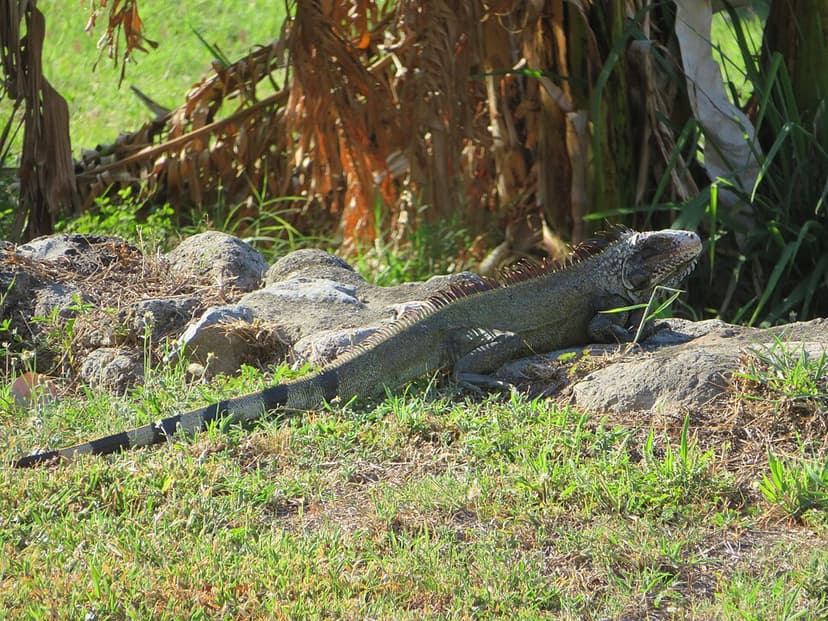
The Saban black iguana (Iguana iguana melanoderma) is a distinct subspecies or species of green iguana, characterized by its darker coloration, black dewlap, and a noticeable black patch between the eye and tympanum. It is primarily found on the islands of Saba and Montserrat, with evidence suggesting a wider distribution across the Caribbean and potentially northern Venezuela. This reptile faces threats from overharvesting for consumption and the pet trade, as well as competition from non-native iguanas.
Sierra curlytail lizard
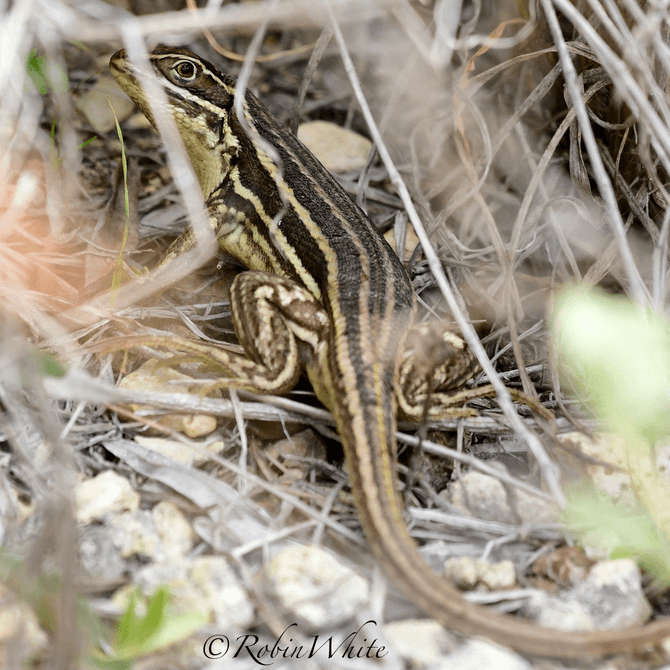
The Sierra curlytail lizard (*Leiocephalus onaneyi*) is a critically endangered species endemic to the Guantánamo Province of Cuba. This medium-sized lizard is characterized by a distinctive chocolate-brown dorsal stripe bordered by darker lines, with multiple alternating stripes extending along its back. Its habitat is a xeric environment with limestone karst topography near the coast.