
Holbrookia propinqua
The keeled earless lizard (Holbrookia propinqua) is a species of phrynosomatid lizard found in the Tamaulipan mezquital ecoregion of south Texas and northeastern Mexico. Characterized by its small, pointed, and keeled dorsal scales, this lizard inhabits sandy areas within various vegetation zones, including grasslands and coastal dunes. Adults typically reach a snout-to-vent length of up to 62 mm.
Key Facts
- ›Dorsal scales are small, pointed, and keeled.
- ›Found in sandy habitats within the Tamaulipan mezquital ecoregion.
- ›Occurs in south Texas and northeastern Mexico, particularly along coastal dunes.
- ›Adults can reach a snout-to-vent length of up to 62 mm.
- ›Three subspecies are recognized: H. p. propinqua, H. p. piperata, and H. p. stonei.
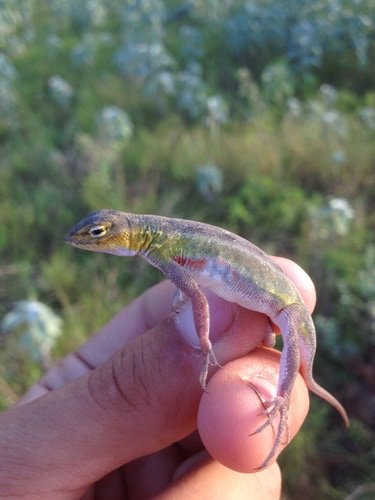
Keeled Earless Lizard
South Texas, Northeastern Mexico
Sandy Outcrops, Sandy Stream-Side Deposits, Loose and Shifting Sands, Beaches, Barrier Islands, Coastal Sand Plain, Mixed Oak Forest, Mesquite Brush-Lands, Cleared Fields, Coastal Prairie, Grasslands
- Dorsal Scales Are Small, Pointed, and Keeled.
- Lateral Scales Are Similar To Dorsal Scales But Smaller.
- Ventral Scales Are Flat, Smooth, and 3-4 Times Larger Than Dorsal Scales.
- Adults Can Attain A Snout To Vent Length of 62 mm .
- Adults Can Attain A Total Length of 140 mm .
About Holbrookia propinqua
Holbrookia propinqua: The Keeled Earless Lizard
The keeled earless lizard, scientifically known as Holbrookia propinqua, is a species belonging to the phrynosomatid family of lizards. This reptile is distinguished by its physical characteristics, particularly its scales, which give it its common name.
Physical Description
The dorsal scales of Holbrookia propinqua are small, pointed, and possess a keeled texture. The scales along the sides of its body are similar in appearance but are smaller than the dorsal scales. In contrast, the ventral scales are significantly larger, being three to four times the size of the dorsal scales, and are flat and smooth. Adult keeled earless lizards can reach a snout-to-vent length of up to 62 mm (approximately 2.5 inches), with a total length, including the tail, extending to about 140 mm (approximately 5.5 inches).
Geographic Range and Habitat
Holbrookia propinqua is found within the Tamaulipan mezquital ecoregion. Its natural distribution spans parts of south Texas in the United States and extends into northeastern Mexico, primarily in the states of Tamaulipas and southward towards the vicinity of Veracruz. The species favors habitats characterized by sandy substrates, including Tertiary sand outcrops and sandy stream-side deposits. While it can be found in various vegetation zones such as mixed oak forests, mesquite brush-lands, cleared fields, coastal prairies, and grasslands, it is most frequently encountered in the loose sands of beaches, barrier islands, and the Coastal Sand Plain.
Subspecies
Three subspecies of the keeled earless lizard are recognized, reflecting regional variations within its range:
- Holbrookia propinqua propinqua (northern keeled earless lizard)
- Holbrookia propinqua piperata (southern keeled earless lizard)
- Holbrookia propinqua stonei (Stone's keeled earless lizard)
Source: Wikipedia ↗
Frequently Asked Questions
What are the distinguishing physical features of the keeled earless lizard?
The keeled earless lizard is named for its dorsal scales, which are small, pointed, and distinctly keeled. Its lateral scales are similar but smaller, while its ventral scales are much larger, flat, and smooth.
Where is the keeled earless lizard found geographically?
This species is primarily found in the Tamaulipan mezquital ecoregion. Its range extends across south Texas and into northeastern Mexico, specifically along coastal beaches, peninsulas, and barrier islands.
What types of habitats do keeled earless lizards prefer?
Keeled earless lizards are strongly associated with sandy substrates. They inhabit various vegetation zones, including mixed oak forests, mesquite brush-lands, cleared fields, coastal prairies, and grasslands, as long as sandy outcrops or deposits are present.
How large do keeled earless lizards get?
Adult keeled earless lizards can reach a snout-to-vent length of up to 62 mm (approximately 2.5 inches). Their total length, including the tail, can extend to about 140 mm (approximately 5.5 inches).
Are there different types of keeled earless lizards?
Yes, there are three recognized subspecies of Holbrookia propinqua. These are the northern keeled earless lizard (H. p. propinqua), the southern keeled earless lizard (H. p. piperata), and Stone's keeled earless lizard (H. p. stonei).
Related Lizards
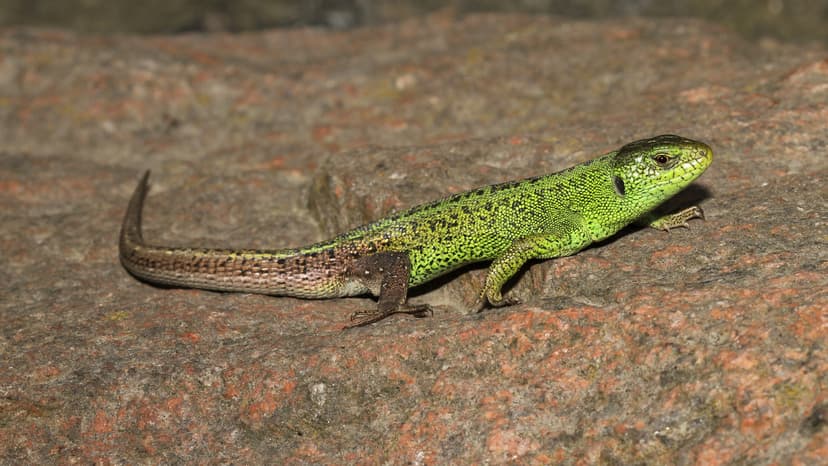
Sand lizard
The sand lizard (Lacerta agilis) is a sexually dimorphic lacertid lizard found across much of Europe and into Russia. Males are known for their vibrant green coloration during the mating season and aggressive territorial behavior, while females are typically a more subdued brown or grey. They inhabit dry, open areas and rely on warm sand for thermoregulation and egg incubation, facing threats from habitat loss and degradation.
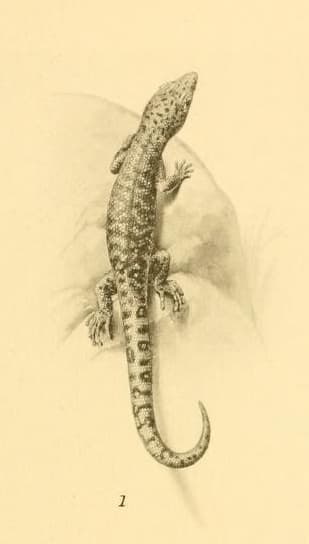
Sphaerodactylus fantasticus
The fantastic least gecko (Sphaerodactylus fantasticus) is a medium-sized gecko species found in the Caribbean, specifically on the islands of Dominica, Montserrat, and the Guadeloupe archipelago. This species exhibits sexual dichromatism in its coloration, with dorsal scales being keeled and ranging from brown to ochre, often mottled with light and dark scales. They are terrestrial and inhabit a variety of coastal environments, including forests, beaches, and human dwellings.

Ablepharus
Ablepharus, commonly known as snake-eyed skinks, are small lizards distinguished by fused eyelids that prevent blinking, similar to snakes. They inhabit dry fields, hills, and rocky areas, often concealed within leaf litter. These skinks possess shiny, bronze scales and a characteristic dark stripe along their sides, feeding primarily on small insects and mollusks.