
Sphaerodactylus fantasticus
The fantastic least gecko (Sphaerodactylus fantasticus) is a medium-sized gecko species found in the Caribbean, specifically on the islands of Dominica, Montserrat, and the Guadeloupe archipelago. This species exhibits sexual dichromatism in its coloration, with dorsal scales being keeled and ranging from brown to ochre, often mottled with light and dark scales. They are terrestrial and inhabit a variety of coastal environments, including forests, beaches, and human dwellings.
Key Facts
- ›Found in the Caribbean islands of Dominica, Montserrat, and Guadeloupe.
- ›Medium-sized gecko belonging to the genus Sphaerodactylus.
- ›Dorsal scales are keeled, and coloration is sexually dichromatic.
- ›Inhabits coastal areas such as mesic and xeric forests, beaches, and hillsides.
- ›Often found active on piles of organic debris and leaf litter during the day.
- ›Nine subspecies have been described, each with a restricted range and variations.
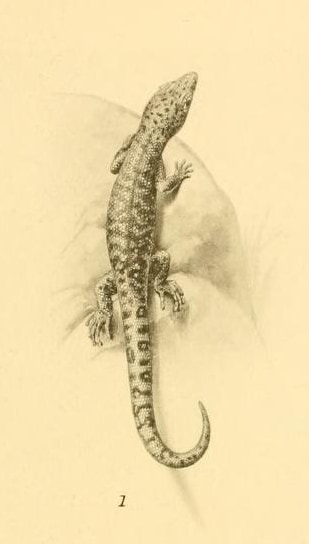
Fantastic Least Gecko, Fantastic Sphaero
Dominica, Montserrat, Guadeloupe Archipelago, Lesser Antilles
Mesic Forests, Xeric Forests, Beaches, Hillsides, Human Dwellings, Coastal Areas
- Medium-Sized Gecko.
- Dorsal Scales Are Keeled, Acute To Cycloid In Shape, and Slightly Imbricate.
- Color Pattern Is Sexually Dichromatic.
- Dorsal Ground Color Is Brown To Ochre.
- Head Color Varies, May Have Dark Stripes Broken Into Spots Or Spots That Fuse Into A Dark Head With Light Stripes.
- No Dark Scapular Patch Or Ocelli.
- Dorsal Coloration Is Mottled With Light and Dark Scales.
- Tail May Contain Dark-Edged Light Ocelli.
- Throat Is Grayish and Distinctly Lineate.
- Venter Is Uniformly White Or With Dark Spackling.
- Terrestrial.
- Active On Piles of Organic Debris and Leaf Litter During the Day.
- Hides Under Stones, Logs, and Piles of Debris.
About Sphaerodactylus fantasticus
The Fantastic Least Gecko (Sphaerodactylus fantasticus)
The fantastic least gecko, scientifically known as Sphaerodactylus fantasticus, is a species of gecko native to the Caribbean. It is found on the islands of Dominica, Montserrat, and within the Guadeloupe archipelago. This medium-sized gecko belongs to the Sphaerodactylus genus and is characterized by its keeled dorsal scales and a color pattern that varies significantly between subspecies and sexes.
Morphology and Variation
The dorsal scales of Sphaerodactylus fantasticus are described as keeled, with shapes ranging from acute to cycloid and slight imbrication. A notable feature is its sexual dichromatism, meaning males and females exhibit different coloration. The base dorsal color for both sexes is typically brown to ochre, often appearing mottled with a mix of light and dark scales. The head coloration can also vary, sometimes displaying dark stripes broken into small spots, or conversely, spots that merge to form a dark head with light stripes. Unlike some related species, S. fantasticus typically lacks a dark scapular patch or ocelli. The tail may feature irregularly arranged dark-edged light ocelli along its dorsal surface. The throat is generally grayish and distinctly lined, with lines extending backward from the tip of the snout, while the venter is either uniformly white or speckled with dark markings.
Distribution and Habitat
Sphaerodactylus fantasticus is endemic to the Lesser Antilles. Its distribution encompasses Guadeloupe, including satellite islands like Marie Galante and La Desirade, as well as Montserrat and the western coastal regions of Dominica. On Dominica, specific subspecies like S. fantasticus fuga are confined to the western coast. Genetic studies suggest that some populations on Dominica may be relatively recent colonizers from Guadeloupe.
This species is terrestrial and occupies a variety of coastal habitats. These environments include mesic and xeric forests, beaches, hillsides, and even areas around human habitations. During the day, they are often observed active on piles of organic debris and leaf litter, particularly in shaded locations. They also seek refuge by hiding under stones, logs, and other debris accumulations.
Source: Wikipedia ↗
Frequently Asked Questions
What are the common names for Sphaerodactylus fantasticus?
Sphaerodactylus fantasticus is commonly known as the fantastic least gecko or the fantastic sphaero. These names reflect its species name and its diminutive size within the Sphaerodactylus genus.
Where is Sphaerodactylus fantasticus found?
This species is endemic to the Lesser Antilles, with its native range including Guadeloupe (and its satellites like Marie Galante and La Desirade), Montserrat, and the western coast of Dominica.
What kind of habitats does the fantastic least gecko prefer?
The fantastic least gecko is a terrestrial species that prefers habitats near the coast. These include mesic and xeric forests, beaches, hillsides, and even human houses. They are often found in shaded situations within piles of organic debris and leaf litter.
How does the coloration of Sphaerodactylus fantasticus vary?
The color pattern of Sphaerodactylus fantasticus is sexually dichromatic, meaning males and females can differ in appearance. The dorsal ground color for both sexes is brown to ochre, and the head color can vary with or without markings. The dorsal surface is typically mottled with light and dark scales, and the tail may display dark-edged light ocelli.
Are there different types of Sphaerodactylus fantasticus?
Yes, nine subspecies of Sphaerodactylus fantasticus have been described. Each subspecies generally has a very restricted geographic range and exhibits variations in coloration and other physical characteristics.
What is the typical behavior of Sphaerodactylus fantasticus during the day?
During daylight hours, the fantastic least gecko is often found to be active on piles of organic debris and leaf litter, especially in shaded areas. They also seek shelter under stones, logs, and other debris.
Related Lizards
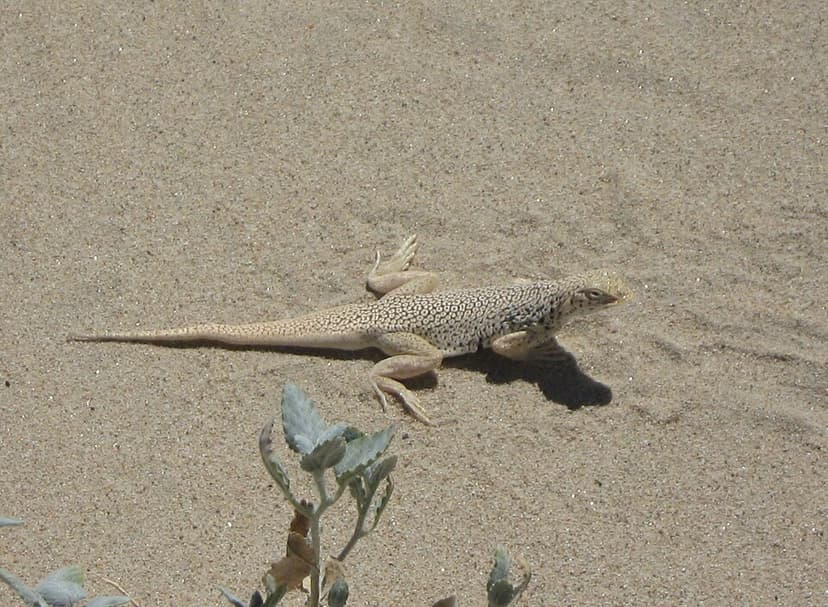
Uma scoparia
The Mojave fringe-toed lizard (Uma scoparia) is a medium-sized, diurnal lizard adapted to arid desert environments, particularly sand dunes. It is distinguished by unique fringed scales on its hind toes, which aid in locomotion across loose sand, and by its coloration, which camouflages it against its environment. This species exhibits distinct territorial behaviors in males and a diet that shifts seasonally between invertebrates and plant matter.
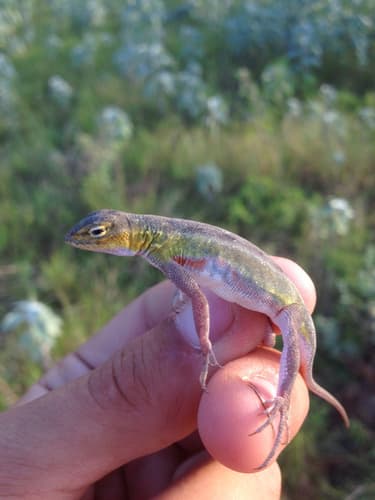
Holbrookia propinqua
The keeled earless lizard (Holbrookia propinqua) is a species of phrynosomatid lizard found in the Tamaulipan mezquital ecoregion of south Texas and northeastern Mexico. Characterized by its small, pointed, and keeled dorsal scales, this lizard inhabits sandy areas within various vegetation zones, including grasslands and coastal dunes. Adults typically reach a snout-to-vent length of up to 62 mm.
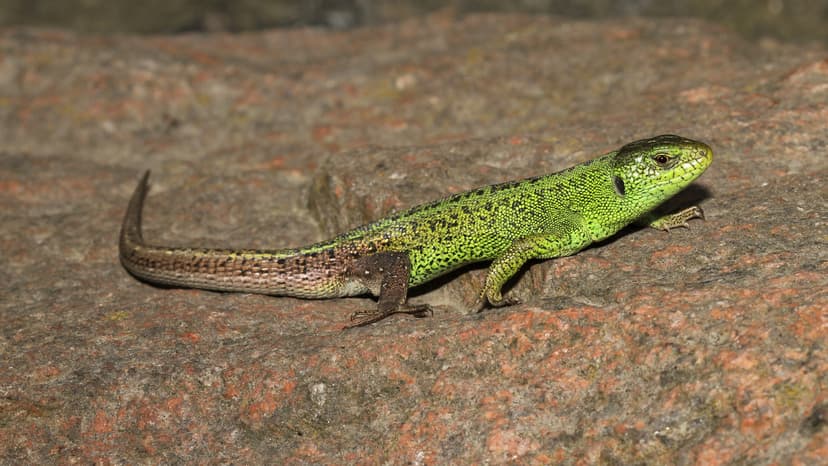
Sand lizard
The sand lizard (Lacerta agilis) is a sexually dimorphic lacertid lizard found across much of Europe and into Russia. Males are known for their vibrant green coloration during the mating season and aggressive territorial behavior, while females are typically a more subdued brown or grey. They inhabit dry, open areas and rely on warm sand for thermoregulation and egg incubation, facing threats from habitat loss and degradation.