
Indian chameleon
The Indian chameleon (Chamaeleo zeylanicus) is a slow-moving, arboreal lizard native to South Asia, including India, Sri Lanka, and Pakistan. It is characterized by its long, sticky tongue for catching prey, independently moving eyes, and the remarkable ability to change skin color, primarily for communication and thermoregulation rather than camouflage. Its unique physical features include a bony casque on its head, bifurcated feet, and a prehensile tail.
Key Facts
- ›Arboreal species that moves slowly with a bobbing or swaying motion.
- ›Possesses a long, sticky tongue to capture insects from a distance.
- ›Features independently moving eyes, bifurcated feet, and a prehensile tail.
- ›Changes skin color for communication (mating, submission) and temperature control, not primarily for camouflage.
- ›Found in India, Sri Lanka, and southeasternmost Pakistan.
- ›Adults can reach up to 7 inches in snout-to-vent length with an 8-inch tail.

Common Chameleon
India, Sri Lanka, Pakistan
- Body Is Compressed, Neck Is Very Short.
- Head Features A Bony Casque, Ornamented With Crests Or Tubercles.
- Eyes Are Large, Covered By Thick, Granular Lids With A Small Central Opening For the Pupil.
- No Tympanum Or External Ear Is Present.
- Limbs Are Long, Raising the Body.
- Digits Are Arranged In Bundles of Two and Three, Forming Tongs-Like Grips.
- Tail Is Prehensile.
- Head and Body Are Covered With Granules Or Tubercles.
- Males Have A Tarsal Process Or Spur and A Longer Tail Than Head and Body.
- Gular-Ventral Crest and Mouth Commissure Are White.
- From Snout To Vent, It Is Up To 7 Inches Long.
- Prehensile Tail Is Up To 8 Inches Long.
Insects
- Moves Slowly With A Bobbing Or Swaying Movement, Mimicking Swaying Branches.
- Primarily Arboreal.
- Uses An Extremely Long and Sticky Tongue To Catch Insects.
- Independent Eye Movement.
- Ability To Rapidly Change Skin Coloring and Patterns For Communication and Thermoregulation.
- Color Changes Are Used To Signify Receptiveness To Mating, Submissiveness, Anger, Or Desire For Solitude.
- Changes To Darker Colors To Absorb Heat and Lighter Colors To Cool Down.
About Indian chameleon
The Indian Chameleon
The Indian chameleon, scientifically known as Chamaeleo zeylanicus, is a distinctive reptile found across parts of South Asia, including India, Sri Lanka, and Pakistan. This species is recognized for its slow, deliberate movements, often characterized by a bobbing or swaying motion that helps it blend with its arboreal environment. Its most notable adaptations include an exceptionally long and sticky tongue, which it uses to capture insects from a distance, and independently controlled eyes that allow for a wide field of vision.
Physical Characteristics and Adaptations
Physically, the Indian chameleon possesses a compressed body, a very short neck, and long limbs. Its digits are uniquely arranged in tongs-like bundles of two and three, facilitating a strong grip on branches, and it has a prehensile tail. A prominent bony casque adorns its head, often featuring crests or tubercles. The skin is covered in granules or tubercles, and males can be identified by a tarsal process or spur and a proportionally longer tail. Adults typically reach up to 7 inches in snout-to-vent length, with a tail adding another 8 inches.
Color Change and Communication
One of the most fascinating aspects of the Indian chameleon is its ability to rapidly change skin color and patterns. Contrary to popular belief, these changes are not primarily for camouflage or matching the background. Instead, color shifts serve crucial roles in communication, such as signaling receptiveness to mating with brighter patterns or indicating submission, anger, or a desire for solitude with darker hues. Additionally, color changes aid in thermoregulation, with darker shades absorbing heat and lighter shades reflecting it to cool the body.
Distribution and Habitat
The Indian chameleon inhabits areas south of the Ganga River in India, extends into southeasternmost Pakistan, and is found in parts of Sri Lanka. This distribution is geographically separated from most other chameleon species, which are native to Africa and the Arabian Peninsula. Its preferred habitat is arboreal, meaning it lives in trees and shrubs, where its slow movement and color-changing abilities help it navigate and interact within its environment.
Source: Wikipedia ↗
Frequently Asked Questions
What is the primary reason for an Indian chameleon's color change?
Indian chameleons change their skin color primarily for communication with other chameleons. Brighter patterns can signal receptiveness to mating, while darker hues may indicate submission, anger, or a desire for solitude. Color changes also help them regulate their body temperature, becoming darker to absorb heat and lighter to cool down.
Where are Indian chameleons found?
The Indian chameleon is found throughout much of India south of the Ganga River, southeasternmost Pakistan, and parts of Sri Lanka. This distribution makes them geographically distinct from most other chameleon species, which are primarily found in Africa and the Middle East.
How does the Indian chameleon catch its prey?
The Indian chameleon uses its extremely long and sticky tongue to catch insects. This specialized tongue can be extended rapidly from a considerable distance to ensnare prey.
What are the distinctive physical features of the Indian chameleon?
Key physical characteristics include a bony casque on the head, often ornamented with crests or tubercles. They have large eyes with a small central opening for the pupil, no external ear, and a compressed body with a very short neck. Their limbs are long, and their digits are arranged in bundles of two and three, forming tongs-like grips, complemented by a prehensile tail.
Is the Indian chameleon camouflaged by its color changes?
Contrary to common belief, Indian chameleons do not change color primarily for camouflage or to match their surroundings. Their color shifts are mainly for communicating social signals and for thermoregulation, and they may not even perceive color differences in their environment.
What is the size of an adult Indian chameleon?
Adult Indian chameleons typically measure up to 7 inches from snout to vent. They also possess a prehensile tail that can be up to 8 inches long.
Related Lizards
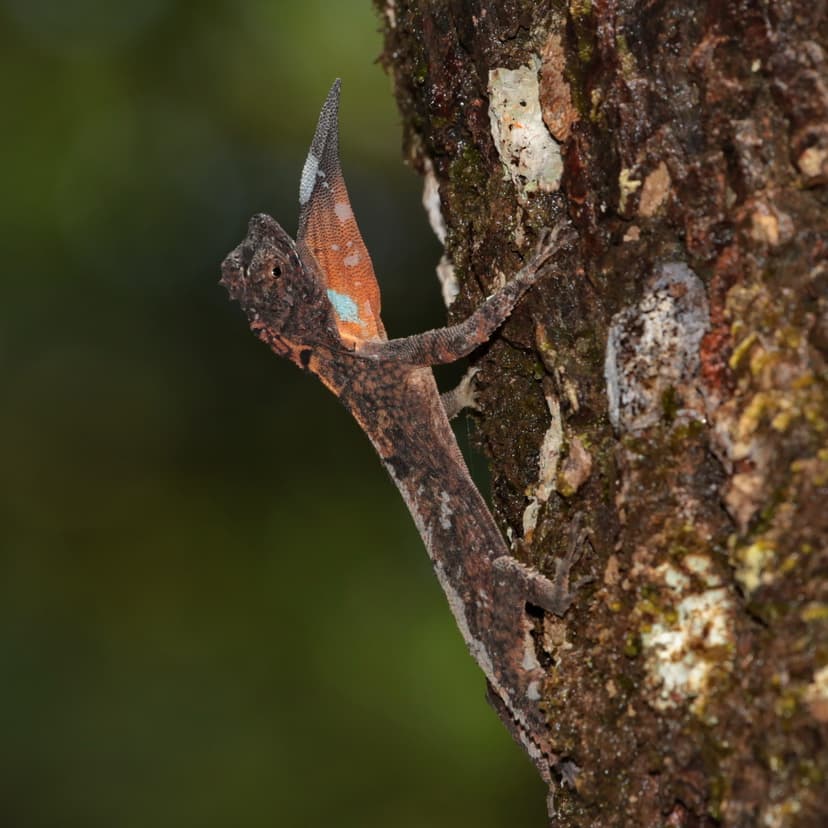
Spotted flying dragon
The spotted flying dragon, scientifically known as *Draco maculatus*, is a species of agamid lizard found in Southeast Asia, notable for its ability to glide between trees. It is characterized by its small head, a prominent gular appendage in males, and a body adorned with dark markings and small black spots on its wing membranes. This arboreal species inhabits forests and is an insectivore, playing a role in its ecosystem.

Lophognathus longirostris
Gowidon longirostris, also known as the long-snouted lashtail or long-nosed water dragon, is an arboreal lizard belonging to the Agamidae family. This species is distinguished by its elongated snout and is found across various regions of Australia and New Guinea. It was initially described as Lophognathus longirostris before being transferred to the genus Gowidon.
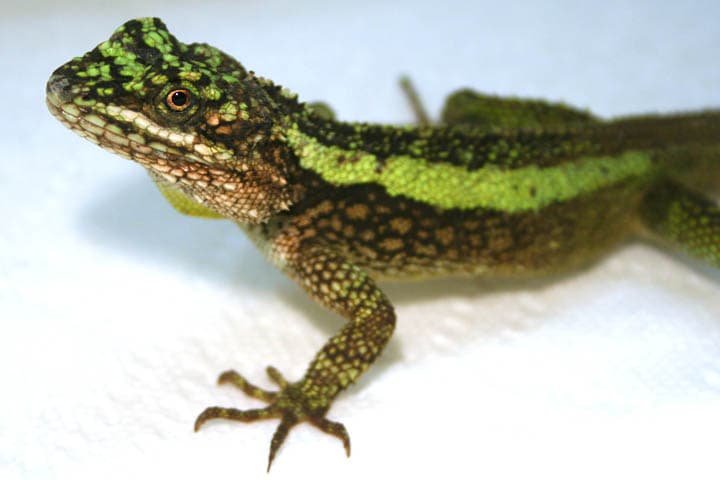
Japalura tree dragon
The Japalura tree dragon (Diploderma splendidum) is an agamid lizard native to the Yangtze River Basin of southwestern China, known for its green striped appearance and its popularity as an international pet. This species inhabits temperate, humid lowland jungles and has a diet that is primarily insectivorous, though it may occasionally consume plant matter. Its distinctive physical characteristics include rugose scales, a nuchal crest, and a coloration often featuring yellow spots and streaks on a dark brown head and body.