
Lebanese thin-toed gecko
The Lebanese thin-toed gecko, scientifically known as Mediodactylus amictopholis, is a species of lizard belonging to the Gekkonidae family. It is native to elevated rocky regions in Lebanon, Syria, and Israel. The primary threat to this species is habitat loss.
Key Facts
- ›Native to Lebanon, Syria, and Israel.
- ›Inhabits elevated rocky areas.
- ›Belongs to the Gekkonidae family.
- ›Threatened by habitat loss.

Lebanon, Syria, Israel
Rocky Areas, Elevated Habitats
Habitat Loss
About Lebanese thin-toed gecko
The Lebanese thin-toed gecko, scientifically classified as Mediodactylus amictopholis, is a species of lizard that belongs to the Gekkonidae family. This gecko is naturally found within the geographic regions of Lebanon, Syria, and Israel. Its preferred habitat consists of elevated rocky areas, which likely provide essential shelter and suitable environmental conditions for survival.
Conservation Concerns
Unfortunately, the Lebanese thin-toed gecko faces a significant threat from habitat loss. This ongoing issue poses a risk to the species' populations by diminishing the available suitable environments necessary for its existence and reproduction. Further details regarding its specific physical characteristics, diet, behavior, and lifespan are not extensively documented in available records.
Source: Wikipedia ↗
Frequently Asked Questions
What is the scientific name of the Lebanese thin-toed gecko?
The scientific name of the Lebanese thin-toed gecko is Mediodactylus amictopholis. This binomial nomenclature is used to classify it within the scientific community.
Where can the Lebanese thin-toed gecko be found?
The Lebanese thin-toed gecko is naturally found in Lebanon, Syria, and Israel. These countries form its native geographic distribution.
What kind of habitat does the Lebanese thin-toed gecko prefer?
This gecko species prefers elevated rocky areas for its natural habitat. These environments likely provide suitable shelter and foraging grounds.
What are the main threats to the Lebanese thin-toed gecko?
The primary threat to the Lebanese thin-toed gecko is habitat loss. This can lead to a reduction in suitable living spaces and resources for the species.
Related Lizards

Algyroides nigropunctatus
The blue-throated keeled lizard (Algyroides nigropunctatus), also known as the Dalmatian algyroides, is distinguished by its keeled V-shaped scales and the striking blue throat of the males during the mating season. This species inhabits a range of environments across Italy and the Balkans, from Mediterranean shrubland to urban areas. Its diet consists primarily of insects and other small invertebrates.
Archaeolacerta bedriagae
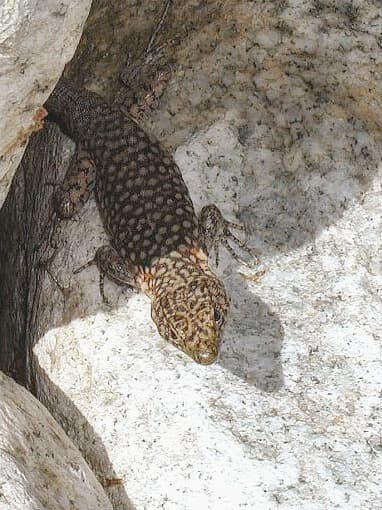
Bedriaga's rock lizard, scientifically known as Archaeolacterta bedriagae, is a species endemic to the islands of Corsica and Sardinia. This lizard is characterized by its brownish-grey coloration with a net pattern, which changes during the mating season, and juveniles are identifiable by their bright blue tails. It inhabits a variety of environments, including rocky areas, Mediterranean shrubland, and rural gardens, and is known for its ability to climb vertical surfaces and jump to catch flying insects.

Iberolacerta aurelioi
Aurelio's rock lizard is a small lizard species endemic to the Iberian Peninsula, specifically found in a limited region where Andorra, Spain, and France converge. It inhabits temperate grasslands, rocky terrains, and pasturelands at high altitudes. This oviparous species is characterized by its small size, with a potential snout-to-vent length of up to 6 cm.