
Leposternon microcephalum
Leposternon microcephalum, commonly known as the smallhead worm lizard, is a species of amphisbaenian native to South America. It is characterized by its fossorial habits, which offer protection from predators. This oviparous reptile is found across several South American countries.
Key Facts
- ›Endemic to South America, with a range including southern Brazil, Bolivia, Paraguay, Uruguay, and northern Argentina.
- ›Belongs to the family Amphisbaenidae within the order Squamata.
- ›Primarily a fossorial (burrowing) species, which aids in predator avoidance.
- ›Reproduction is oviparous, meaning it lays eggs.
- ›Some snake species have been documented as predators.

Smallhead Worm Lizard
Southern Brazil, Bolivia, Paraguay, Uruguay, Northern Argentina
- the Common Name "Smallhead Worm Lizard" Suggests A Small Head, Though Detailed Descriptions Are Not Provided In the Text.
Fossorial Habits, Powerful Bite, Defensive Tactics
Snakes
About Leposternon microcephalum
What is known about Leposternon microcephalum
Leposternon microcephalum, commonly known as the smallhead worm lizard, is a species of amphisbaenian that inhabits South America. This reptile belongs to the family Amphisbaenidae and is part of the order Squamata.
Geographic Range and Habitat
The species is endemic to South America, with its natural distribution spanning southern Brazil, Bolivia, Paraguay, Uruguay, and northern Argentina. It has been recorded in areas such as Itatiaia National Park, located between Rio de Janeiro and Minas Gerais in Brazil. Leposternon microcephalum is characterized by its fossorial habits, meaning it lives primarily underground or in burrows. This lifestyle is a significant factor in its ecological interactions.
Ecology and Reproduction
Amphisbaenians, including Leposternon microcephalum, generally face few predators due to their subterranean existence, potent bite, and defensive behaviors. However, certain snake species have been identified as predators of amphisbaenians. The reproduction method of Leposternon microcephalum is oviparous, indicating that it reproduces by laying eggs.
Source: Wikipedia ↗
Frequently Asked Questions
What is Leposternon microcephalum?
Leposternon microcephalum is a species of amphisbaenian, commonly referred to as the smallhead worm lizard. It is a reptile belonging to the family Amphisbaenidae and is native to South America.
Where is the smallhead worm lizard found?
The smallhead worm lizard is distributed across southern Brazil, Bolivia, Paraguay, Uruguay, and northern Argentina. It can be found in specific areas such as Itatiaia National Park in Brazil.
What kind of habitat does Leposternon microcephalum prefer?
As an amphisbaenian, Leposternon microcephalum has fossorial habits, indicating it lives primarily underground or in burrows. This lifestyle helps it avoid predators.
How does the smallhead worm lizard reproduce?
Leposternon microcephalum reproduces by laying eggs, classifying it as oviparous. This is a common reproductive strategy among many reptile species.
Are there any known predators of Leposternon microcephalum?
While amphisbaenians generally have few predators due to their underground lifestyle and strong bite, some snake species have been known to prey on Leposternon microcephalum.
Related Lizards
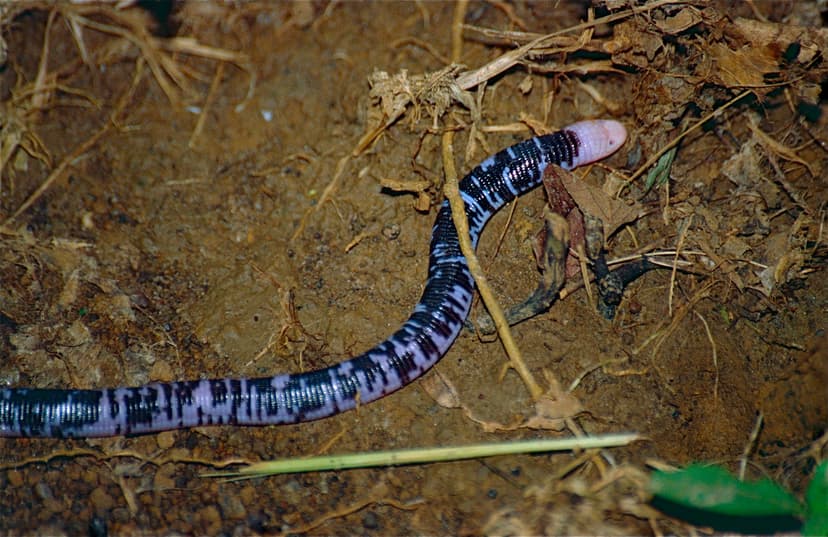
Amphisbaena fuliginosa
Amphisbaena fuliginosa, commonly known as the black-and-white worm lizard, is a fossorial species distinguished by its striking white and black mosaic pattern. It inhabits Amazonian forest areas in northern South America and is a burrowing, nocturnal predator of invertebrates and occasionally small vertebrates. This oviparous species plays a role in Yanomami mythology, where it is associated with warriors and the underworld.

Mole skink
The mole skink (Plestiodon egregius) is a small, cylindrical lizard found in the Southeastern United States, known for its shiny, brownish appearance and tendency to burrow. Juveniles often sport a distinctive blue tail, which may turn pinkish in adults or when regenerated. This species is of conservation concern, particularly certain subspecies, due to habitat loss.
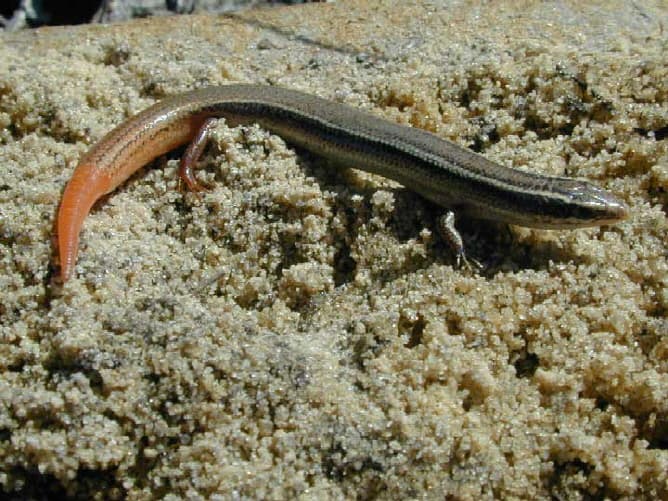
Plestiodon egregius
The mole skink (Plestiodon egregius) is a small, shiny lizard found in the Southeastern United States, known for its ability to burrow and its distinctive blue tail in juveniles. It inhabits sandy environments like sandhills and scrub, often burying itself in the upper layers of pocket gopher mounds. Several subspecies exist, with some facing conservation concerns due to habitat loss.