
Lerista bougainvillii
Oviparous or viviparous
Bougainville's skink (Lerista bougainvillii) is a species of skink found in south-eastern Australia, including Tasmania and Bass Strait islands. It is characterized by its very reduced limbs, which allow it to move in a snake-like manner, and it typically inhabits forests and shrublands. This skink spends much of its life concealed beneath leaf litter, sand, or stones, and its reproduction mode can be either oviparous or viviparous depending on the population.
Key Facts
- ›Found in south-eastern Australia, Tasmania, and Bass Strait islands.
- ›Possesses very reduced limbs, enabling snake-like locomotion.
- ›Prefers forest and shrubland habitats.
- ›Spends most of its time hidden under leaf litter, sand, or stones.
- ›Reproduction can be oviparous (egg-laying) or viviparous (live-bearing).

Bougainville's Skink, South-Eastern Slider, Bougainville's Lerista
South-Eastern Australia, Tasmania, Bass Strait Islands
Very Reduced Limbs, Moves In A Snake-Like Manner
- Spends Much of Its Life Beneath Leaf-Litter, Loose Sand, and Thin Stone Slabs
- Moves In A Snake-Like Manner
About Lerista bougainvillii
Bougainville's Skink (Lerista bougainvillii)
Bougainville's skink, scientifically known as Lerista bougainvillii, is a species of skink belonging to the family Scincidae. This lizard is also recognized by common names such as the south-eastern slider and Bougainville's lerista. Its specific name, bougainvillii, honors French naval officer Hyacinthe de Bougainville.
Geographic Range and Habitat
The natural distribution of Lerista bougainvillii is primarily in south-eastern Australia, encompassing north-eastern Tasmania and a multitude of islands within the Bass Strait. Its preferred natural habitats include forests and shrublands. However, this species is rarely observed due to its habit of spending most of its life concealed beneath leaf litter, loose sand, or thin stone slabs, making it a secretive inhabitant of its environment.
Physical Characteristics and Behavior
A key distinguishing feature of Bougainville's skink is its very reduced limbs, which facilitate a distinctive snake-like mode of locomotion. This adaptation likely aids in its ability to move through and beneath its preferred substrate.
Reproduction
The reproductive strategy of Lerista bougainvillii is notably variable. Depending on the specific population, the species can be either oviparous, meaning it reproduces by laying eggs, or viviparous, giving birth to live young. This adaptability in reproduction may contribute to its success across different environmental conditions within its range.
Source: Wikipedia ↗
Frequently Asked Questions
What are the common names for Lerista bougainvillii?
Lerista bougainvillii is commonly known as Bougainville's skink and also referred to as the south-eastern slider or Bougainville's lerista.
Where is Bougainville's skink found?
This species is native to south-eastern Australia, which includes north-eastern Tasmania and numerous islands in the Bass Strait.
What are the distinctive physical features of Bougainville's skink?
Bougainville's skink is notable for its significantly reduced limbs, which contribute to its ability to move with a snake-like motion.
What kind of environment does Bougainville's skink prefer?
Its preferred natural habitats are forests and shrublands. However, it is a secretive species, spending much of its life concealed beneath leaf litter, loose sand, or thin stone slabs.
How does Bougainville's skink reproduce?
The reproductive method of Lerista bougainvillii varies among its populations. Some groups are oviparous, meaning they lay eggs, while others are viviparous, giving birth to live young.
Related Lizards

Anolis leachii
Anolis leachii, also known as the Antigua Bank tree anole or Leach's anole, is a lizard species endemic to the Caribbean, specifically Antigua and Barbuda. This arboreal species is characterized by its bright green coloration that fades to greyish-brown on its tail, and a grey to brown head with yellowish-orange dewlaps. It inhabits various environments, from forests and shrublands to human-disturbed areas like pastures and farms, provided vertical perching surfaces are available.
Boettger's lizard
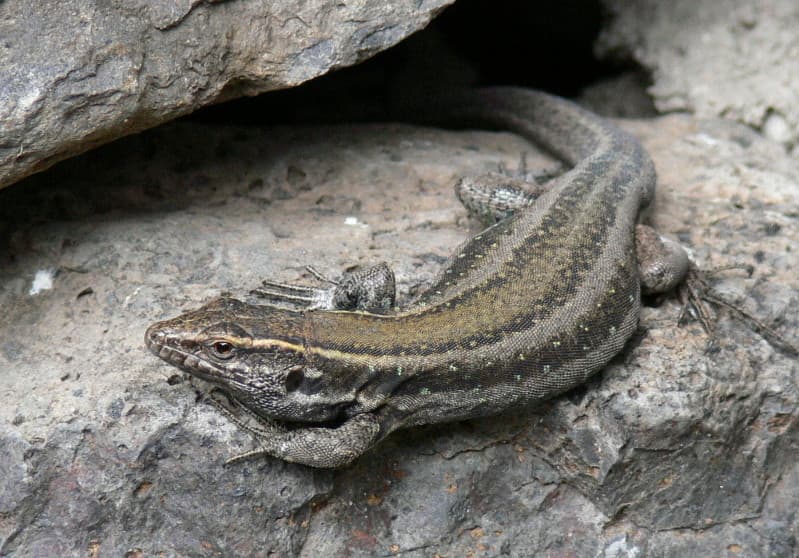
Boettger's lizard (Gallotia caesaris) is a species of wall lizard endemic to the western Canary Islands, specifically El Hierro and La Gomera. This oviparous reptile inhabits rocky areas, shrubland, and forests, and is known for its capacity to lay multiple clutches of eggs per year. It is closely related to the Gallotia galloti species found on neighboring islands.
Canyon Spotted Whiptail
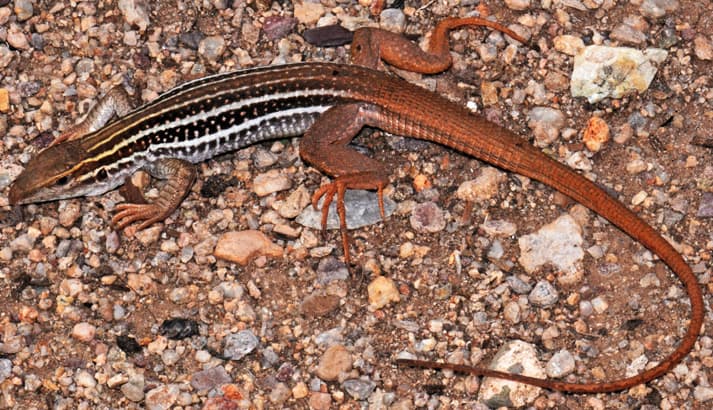
The Canyon Spotted Whiptail, also known as el huico manchado de cañón, is a lizard species found in northwestern Mexico and the southwestern United States. It inhabits forests, shrublands, and rocky areas, and is oviparous, laying eggs as its primary method of reproduction.