
Leschenault's leaf-toed gecko
Leschenault's leaf-toed gecko is a species of gecko native to South Asia and parts of West Asia, often found inhabiting homes. This lizard is characterized by its moderate body size, granulated head, and distinctly dilated digits. Its coloration typically features grey with darker markings that can form cross-bars, spots, or bands, against a white underside.
Key Facts
- ›Native to South Asia and parts of West Asia.
- ›Often found inside human dwellings.
- ›Possesses dilated digits with lamellae for climbing.
- ›Coloration includes grey with darker cross-bars, spots, or bands.
- ›Arboreal in its behavior.
- ›Oviparous reproduction method.
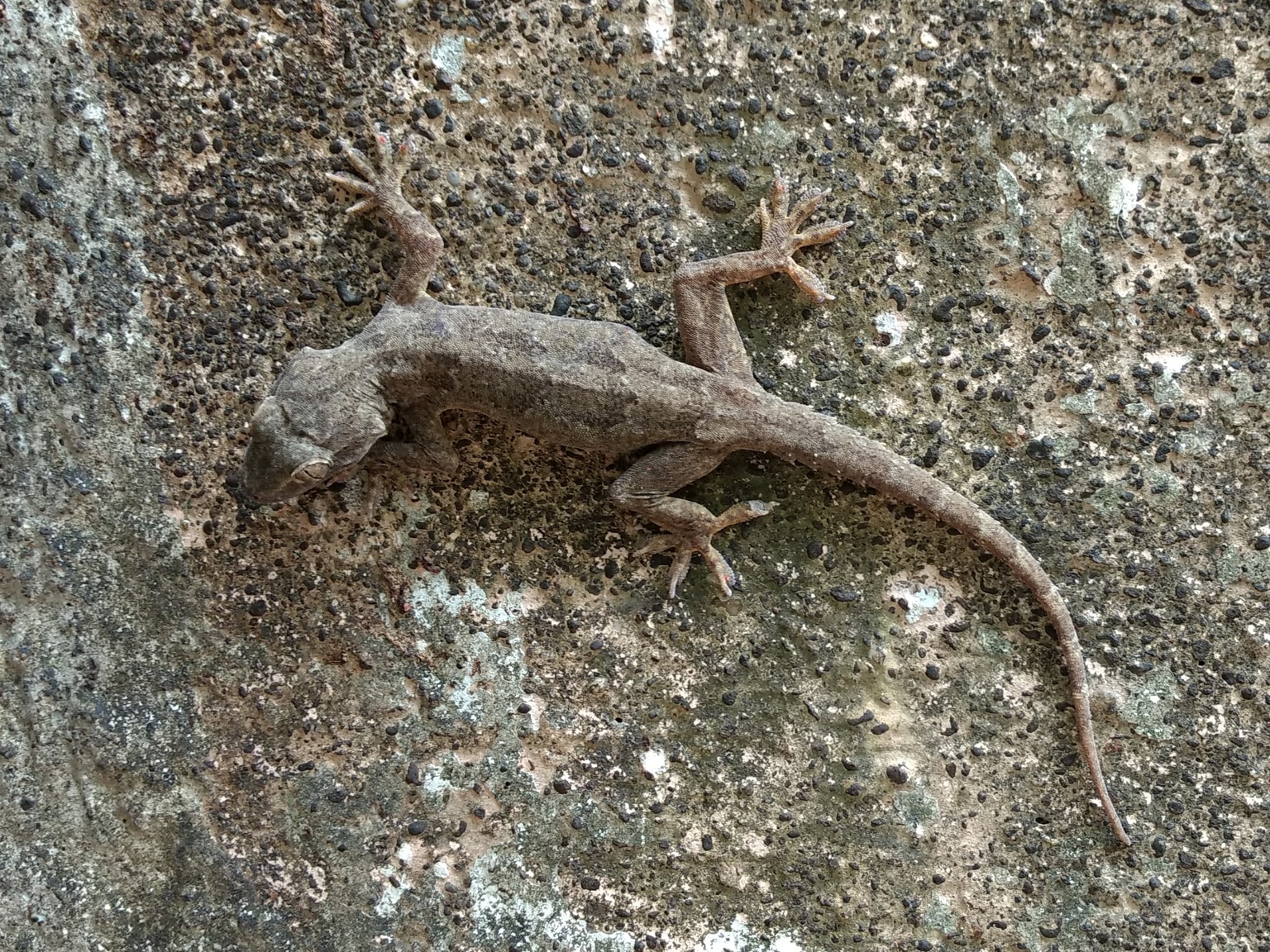
Southern India, Sri Lanka, Pakistan, Oman
- Snout Longer Than the Distance Between the Eye and Ear-Opening.
- Forehead Concave With Prominent Supraorbital Ridges In Adults.
- Ear-Opening Is Rather Large, Oval, and Vertical.
- Body and Limbs Are Moderate In Size.
- A Slight Fold of Skin On the Side of the Belly From Axilla To Groin.
- Digits Are Free and Strongly Dilated.
- 6 Or 7 Lamellae Under the Inner Digits, 9 To 11 Under the Median Digits.
- Head Covered With Minute Granules Posteriorly and Larger Ones Anteriorly.
- Rostral Is Four-Sided, Not Twice As Broad As Deep, With A Median Cleft Above.
- Nostril Pierced Between the Rostral, Three Nasals, and Generally the First Labial.
- 10 To 12 Upper Labials and 8 Or 9 Lower Labials.
- Mental Is Large, Triangular Or Pentagonal.
- Two Pairs of Chin-Shields, the Inner Pair Is Larger and In Contact Behind the Mental.
- Upper Surface of the Body Is Covered With Small Granules, Uniform Or Intermixed With Scattered Round Tubercles.
- Abdominal Scales Are Moderate, Cycloid, and Imbricate.
- Males Have A Series of Femoral Pores Interrupted In the Preanal Region, With 12 To 16 Pores On Each Side.
- Tail Is Depressed and Flat Below.
- Tail Covered Above With Small Smooth Scales and Six Longitudinal Series of Conical Tubercles.
- Tail Underside Has A Median Series of Transversely Dilated Plates.
- Coloration Is Grey Above With Darker Markings Forming Undulating Cross-Bars, Rhomboidal Spots On the Middle of the Back, Or Regular Longitudinal Bands.
- A Dark Band Extends From the Eye To the Shoulder.
- Lower Surfaces Are White.
Arboreal, Often Found Inside Homes
About Leschenault's leaf-toed gecko
Leschenault's leaf-toed gecko, scientifically known as Hemidactylus leschenaultii, is a species of gecko native to the regions of South Asia and parts of West Asia. It is a member of the Gekkonidae family and is frequently encountered within human dwellings, indicating a degree of synanthropy. The species' scientific name honors the French botanist Jean Baptiste Leschenault de la Tour.
Description and Characteristics
The physical attributes of H. leschenaultii include a snout that is longer than the distance between its eye and ear-opening, with a concave forehead and prominent supraorbital ridges in mature specimens. Its ear-opening is notably large, oval, and vertically oriented. The body and limbs are of moderate proportions, and a subtle fold of skin runs along the side of the belly from the axilla to the groin. The digits are free and significantly dilated, featuring well-developed inner digits and typically 6 to 7 lamellae under the inner digits and 9 to 11 under the median digits, aiding in climbing. The head is covered in minute granules posteriorly and larger ones anteriorly. The rostral scale is four-sided and not twice as broad as deep, with a median cleft above. The nostril is positioned between the rostral scale, three nasals, and generally the first labial scale. Upper and lower labial counts range from 10 to 12 and 8 or 9, respectively. The mental scale is large and triangular or pentagonal, flanked by two pairs of chin-shields, with the inner pair being larger and contacting behind the mental. The dorsal surface of the body is adorned with small granules, which are either uniform or interspersed with numerous scattered round tubercles. Abdominal scales are moderate, cycloid, and imbricate. Adult males exhibit a series of femoral pores, interrupted in the preanal region, with 12 to 16 pores present on each side. The tail is depressed and flat underneath, covered above with small, smooth scales and six longitudinal series of conical tubercles, while the underside features a median series of transversely dilated plates.
Coloration and Size
The coloration of Leschenault's leaf-toed gecko typically consists of a grey upper surface marked with darker patterns. These markings can manifest as undulating cross-bars, rhomboidal spots along the middle of the back, or regular longitudinal bands. A distinctive dark band stretches from the eye to the shoulder. The lower surfaces are a contrasting white. In terms of size, specimens measure approximately 8.1 cm from snout to vent, with the tail measuring around 8.3 cm.
Geographic Distribution and Habitat
H. leschenaultii is found in southern India, Sri Lanka, Pakistan, and Oman. The preferred natural habitat for this species includes forests, with observations recorded at altitudes ranging from sea level up to 1,000 meters (3,280 feet).
Behavior and Reproduction
Leschenault's leaf-toed gecko is characterized by its arboreal lifestyle, meaning it primarily lives in trees. The species is oviparous, reproducing by laying eggs.
Source: Wikipedia ↗
Frequently Asked Questions
What is Leschenault's leaf-toed gecko?
Leschenault's leaf-toed gecko is a species of gecko belonging to the Gekkonidae family. It is a lizard native to South Asia and parts of West Asia and is commonly found in human homes.
What does Leschenault's leaf-toed gecko look like?
It has a moderate body and limb size, with a head covered in granules and notably dilated digits. The upper surface is typically grey with darker markings like cross-bars or bands, while the lower surfaces are white.
Where is Leschenault's leaf-toed gecko found?
This gecko species is distributed across southern India, Sri Lanka, Pakistan, and Oman. Its natural habitat includes forests, ranging from sea level up to 1,000 meters in altitude.
How large is Leschenault's leaf-toed gecko?
The snout-to-vent length of Leschenault's leaf-toed gecko is approximately 8.1 cm, with the tail measuring about 8.3 cm.
What is the typical behavior of this gecko?
Leschenault's leaf-toed gecko is arboreal, meaning it spends most of its time in trees. It is also frequently observed inside human dwellings.
How does Leschenault's leaf-toed gecko reproduce?
This species is oviparous, which means it reproduces by laying eggs.
Related Lizards

Mabuya tytleri
Eutropis tytleri, commonly known as Tytler's mabuya, is a large skink species endemic to the Andaman Islands, India. It inhabits forests, agricultural fields, and areas around human dwellings, adapting well to human-modified landscapes. This species is characterized by its bronzish-brown dorsal coloration and a light yellow underside, with the tail being significantly longer than its body.
Gehyra variegata
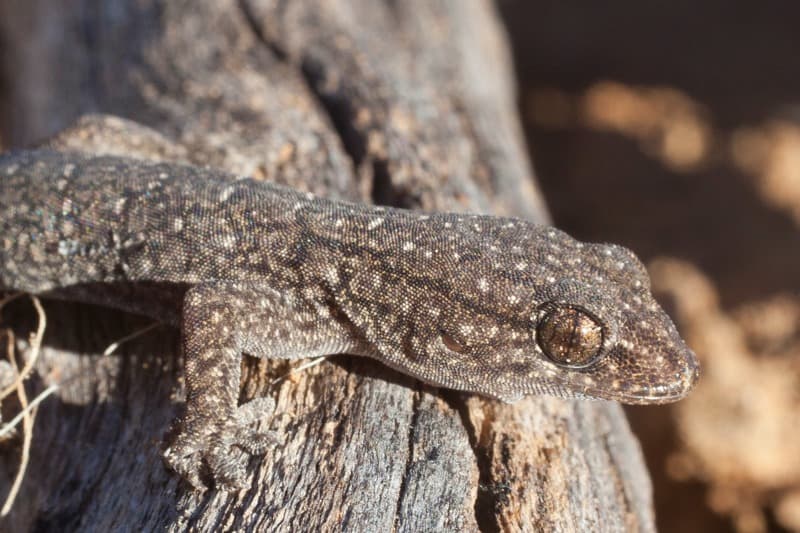
Gehyra variegata, also known as the tree dtella, is a gecko species native to inland Australia. This lizard is characterized by its highly variable dorsal coloration, ranging from grey to brown with blotches or spots, and its ability to climb using specialized toe pads. It inhabits arid to sub-humid woodlands, shrublands, and rocky areas, demonstrating adaptability to disturbed land.

Hemidactylus depressus
Hemidactylus depressus, also known as the Sri Lanka leaf-nosed gecko or Kandyan gecko, is a species of gecko found exclusively on the island of Sri Lanka. This arboreal lizard is characterized by its large head, depressed tail with serrated edges, and distinctive dorsal markings. It inhabits trees, boulders, caves, and sometimes human dwellings, feeding primarily on insects.