
Mesalina olivieri
Mesalina olivieri, also known as Olivier's sand lizard, is a species of sand-dwelling lizard native to North Africa and the Middle East. Primarily inhabiting desert, grassland, and shrubland environments, this terrestrial and diurnal species feeds mainly on ants and other small arthropods. It reproduces by laying two to four eggs per clutch, with sexually mature females laying at least two clutches annually.
Key Facts
- ›Native to North Africa and the Middle East.
- ›Inhabits desert, grassland, and shrubland environments.
- ›Primarily feeds on ants and other small arthropods.
- ›Reproduction is oviparous, with clutch sizes of two to four eggs.
- ›Females lay at least two clutches per year.
- ›Named in honor of French entomologist Guillaume-Antoine Olivier.

Olivier's Sand Lizard
Algeria, Egypt, Iraq, Israel, Jordan, Libya, Morocco, Saudi Arabia, Tunisia, Western Sahara
Ants, Other Small Arthropods
Terrestrial, Diurnal
About Mesalina olivieri
What is Mesalina olivieri?
Mesalina olivieri, commonly referred to as Olivier's sand lizard, is a species of lizard belonging to the family Lacertidae. This species is characterized by its sand-dwelling nature and its native range across North Africa and the Middle East.
Habitat and Distribution
The preferred natural habitats for Mesalina olivieri include desert, grassland, and shrubland environments. These lizards are found at altitudes ranging from sea level up to 1,000 meters. Their geographic distribution is extensive, encompassing countries such as Algeria, Egypt, Iraq, Israel, Jordan, Libya, Morocco, Saudi Arabia, Tunisia, and Western Sahara.
Behavior and Diet
Mesalina olivieri is a terrestrial species, meaning it lives and moves primarily on the ground. It is also diurnal, indicating that it is most active during daylight hours. The diet of Olivier's sand lizard consists predominantly of ants, supplemented by other small arthropods.
Reproduction
This species reproduces oviparously, laying eggs. A sexually mature female Mesalina olivieri typically lays two to four eggs in a clutch. Furthermore, each mature female is capable of laying at least two clutches within a single year, ensuring the continuation of the species.
Source: Wikipedia ↗
Frequently Asked Questions
What is Mesalina olivieri known as?
Mesalina olivieri is commonly known as Olivier's sand lizard. It is a species of sand-dwelling lizard.
Where is Mesalina olivieri found?
This species is native to North Africa and the Middle East. Its geographic distribution includes countries such as Algeria, Egypt, Morocco, Tunisia, Saudi Arabia, Iraq, Jordan, and Israel.
What kind of habitat does Olivier's sand lizard prefer?
Mesalina olivieri prefers natural habitats like desert, grassland, and shrubland. These areas are typically found at altitudes ranging from 0 to 1,000 meters.
What does Mesalina olivieri eat?
The diet of Mesalina olivieri consists predominantly of ants. It also preys on other small arthropods.
How does Mesalina olivieri reproduce?
Mesalina olivieri is oviparous, meaning it reproduces by laying eggs. Each sexually mature female typically lays two to four eggs per clutch and produces at least two clutches per year.
Is Mesalina olivieri active during the day or night?
Mesalina olivieri is a diurnal species, meaning it is active during the daytime.
Related Lizards

Agama anchietae
Agama anchietae, commonly known as Anchieta's agama or the western rock agama, is a species of lizard native to southern Africa. It is characterized by its cryptic coloration, a wider head and longer tail in males due to sexual dimorphism, and a diet primarily consisting of insects, particularly ants. This species inhabits diverse environments including deserts, shrublands, and grasslands, and it reproduces by laying eggs.
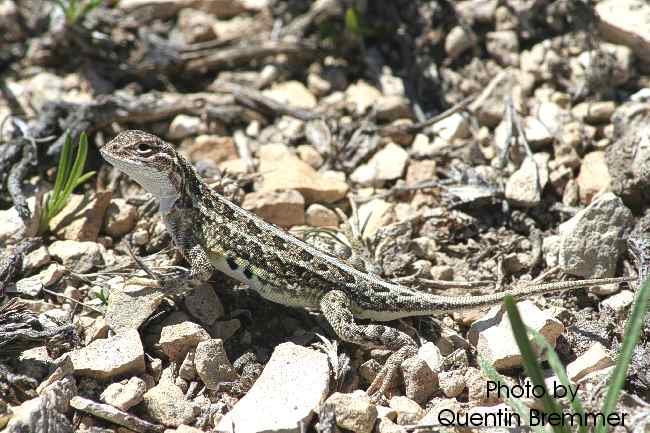
Lesser earless lizard
The lesser earless lizard (Holbrookia maculata) is a small reptile native to the southwestern and central United States and northern Mexico. Adults typically reach a total length of 4 to 5 inches, characterized by smooth, granular dorsal scales and the absence of external ear openings. This species primarily inhabits shrubland, grassland, and desert environments.
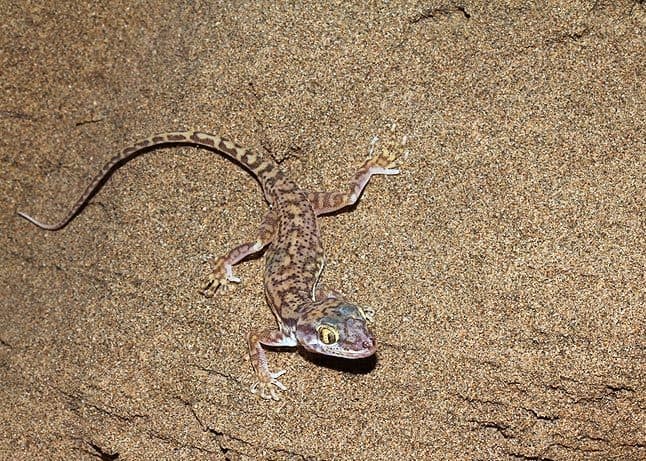
Crossobamon eversmanni
Crossobamon eversmanni, commonly known as the comb-toed gecko, is a species of Asian gecko found in desert, grassland, and shrubland habitats across Iran, Pakistan, and Central Asia. This terrestrial and nocturnal lizard is characterized by its burrowing behavior and oviparous reproduction, with females laying one to two eggs per clutch.