
Lygodactylus blanci
Blanc's dwarf gecko, scientifically known as Lygodactylus blanci, is a species of lizard native to central Madagascar. It is characterized by its relatively large size for its genus, reaching up to 4 cm in snout-to-vent length, and possesses whorled tails. This species is oviparous and is known to inhabit large rocks, buildings, and tall trees, demonstrating adaptability to human environments.
Key Facts
- ›Native to central Madagascar.
- ›Reaches a snout-to-vent length of almost 4 cm.
- ›Possesses whorled tails.
- ›Inhabits large rocks, buildings, and tall trees.
- ›Is oviparous, laying eggs.
- ›One of eleven gecko species protected in Madagascar.

Blanc's Dwarf Gecko
Madagascar
- May Attain A Snout-To-Vent Length of Almost 4 cm.
- Possesses Whorled Tails.
- Throat Is Usually Spotted, Which Can Lead To the Formation of Longitudinal Lines.
- Appears To Be Most Active During the Month of October.
- Adapted To Human Environments.
Mining, Logging, Wood Harvesting, Habitat Changes
About Lygodactylus blanci
Blanc's Dwarf Gecko (Lygodactylus blanci)
Blanc's dwarf gecko, scientifically classified as Lygodactylus blanci, is a species of lizard belonging to the Gekkonidae family. This species is endemic to the central region of Madagascar and is recognized as one of the least documented among the dwarf geckos found on the island. Its conservation is a priority, as it is one of eleven gecko species protected in Madagascar, necessitating a permit for collection.
Habitat and Distribution
The preferred natural habitat for Lygodactylus blanci consists of large rock formations. However, these geckos have demonstrated a notable adaptability to human-altered environments, frequently utilizing buildings and tall trees for shelter, particularly in proximity to freshwater wetlands. This behavioral trait suggests a degree of resilience in the face of changing landscapes.
Physical Characteristics
As a relatively large species within its genus, Lygodactylus blanci can reach a snout-to-vent length of nearly 4 centimeters (approximately 1.6 inches). A distinctive feature of this gecko is its whorled tail. Additionally, the throat of Lygodactylus blanci is typically spotted, a characteristic that can sometimes evolve into longitudinal lines, contributing to its unique appearance.
Reproduction and Activity
Lygodactylus blanci is an oviparous species, meaning it reproduces by laying eggs. Local observations in Madagascar indicate that the species exhibits peak activity during October. The laying of eggs has been noted to occur in January and February, suggesting a seasonal reproductive cycle.
Threats and Conservation
The continued existence of Blanc's dwarf gecko is challenged by several significant threats. These include the impacts of mining, logging operations, wood harvesting, and broader habitat alterations. The protected status of this species underscores the need for ongoing conservation efforts to mitigate these pressures and ensure the long-term survival of Lygodactylus blanci.
Source: Wikipedia ↗
Frequently Asked Questions
What is the scientific name for Blanc's dwarf gecko?
The scientific name for Blanc's dwarf gecko is Lygodactylus blanci. This binomial nomenclature is used to classify it within the scientific community.
Where is Lygodactylus blanci found?
Lygodactylus blanci is native to central Madagascar. It has been observed to inhabit large rocks, buildings, and tall trees, often near freshwater wetlands.
What are the physical characteristics of Lygodactylus blanci?
Blanc's dwarf geckos are a relatively large species for their genus, with a snout-to-vent length of up to nearly 4 cm. They are distinguished by their whorled tails, and their throats are typically spotted, which can sometimes form longitudinal lines.
How does Lygodactylus blanci reproduce?
Lygodactylus blanci is oviparous, meaning it reproduces by laying eggs. Observations suggest that egg-laying occurs in January and February, and the geckos are most active in October.
What are the main threats to Blanc's dwarf gecko?
Blanc's dwarf geckos face several threats to their survival. These include mining, logging, wood harvesting, and general habitat changes, all of which impact their ability to sustain their existence.
Is Lygodactylus blanci a protected species?
Yes, Lygodactylus blanci is one of eleven gecko species that are protected in Madagascar. Collecting them requires an appropriate permit, highlighting their conservation status.
Related Lizards

Agama
Agama are a genus of small to moderate-sized, long-tailed lizards native to Africa, particularly sub-Saharan regions. Known for their insectivorous diet and ability to adapt to various habitats, including human settlements, they display striking color changes based on mood and gender. These diurnal reptiles are characterized by powerful hind legs for swift movement and are recognized by their common names, some referencing their head-bobbing displays.
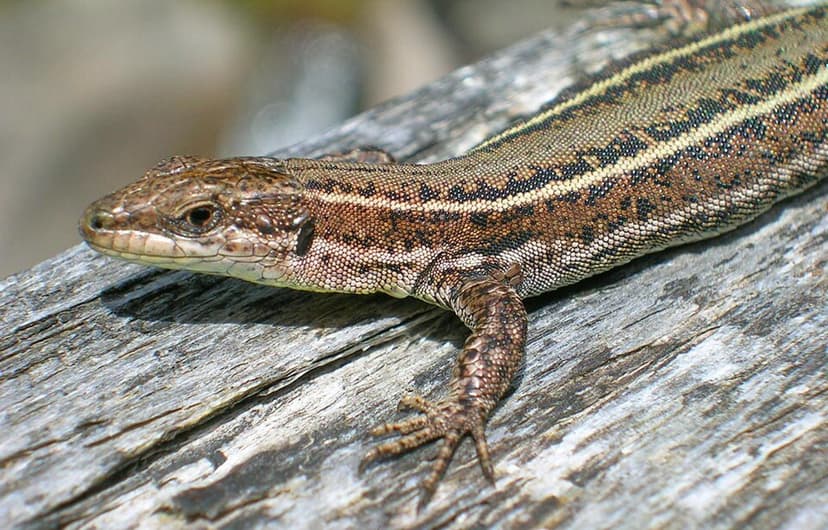
Podarcis hispanicus
The Iberian wall lizard (Podarcis hispanicus) is a small, agile lizard found across the Iberian Peninsula, parts of northwestern Africa, and coastal France. Characterized by its brown or grey-brown coloration with darker spots and a slender, flattened body, it is known for its territorial behavior, especially among males. This species is oviparous, laying clutches of eggs that hatch after approximately eight weeks, and has a lifespan of about four years.

Lacertilia
Lizards are a diverse group of reptiles, encompassing over 7,000 species found on every continent except Antarctica. They exhibit a wide range of sizes, from tiny chameleons to the massive Komodo dragon, and possess characteristics like scales, four limbs (though some are legless), and long tails. Lizards inhabit nearly every environment, from deserts to rainforests, and play crucial roles as both predators and prey within their ecosystems.