
Ophisops jerdonii
Ophisops jerdonii, commonly known as Jerdon's cabrita, is a species of lizard found in South Asia. This small lizard is characterized by its coppery-brown coloration, often adorned with pale golden lateral streaks bordered with black, and its strongly keeled dorsal scales. It inhabits arid and semi-arid regions, where it is an oviparous species.
Key Facts
- ›Native to India, Pakistan, and eastern Afghanistan.
- ›Characterized by coppery-brown dorsal coloration with pale golden, black-bordered lateral streaks.
- ›Possesses strongly keeled, imbricate dorsal scales.
- ›Hind limb length varies between males and females.
- ›Reproduction is oviparous, meaning it lays eggs.

Jerdon's Cabrita, Jerdon's Snake-Eye, Punjab Snake-Eyed Lacerta
India, Pakistan, Afghanistan
- Head Is Moderate and Feebly Depressed.
- Upper Head-Shields Are Rugose, Keeled, and Striated.
- Dorsal Scales Are Large, Strongly Keeled, and Much Imbricate.
- Coloration Is Coppery-Brown Above With Two Pale Golden Lateral Streaks Bordered With Black.
- A Series of Large Black Spots May Be Present Between the Lateral Streaks.
- Lower Surfaces Are Yellowish White.
- Tail Is 1.5 To 2 Times the Length of the Head and Body.
- Hind Limb Reaches the Shoulder Or Halfway To the Ear In Males, Not To the Axilla In Females.
- Snout To Vent Length Up To 42 mm, Tail Length Up To 81 mm.
Insects, Other Small Invertebrates
- Active During the Day Implied By Habitat and Typical Lizard Behavior.
- Likely Terrestrial, Given Habitat Descriptions.
About Ophisops jerdonii
Ophisops jerdonii: Jerdon's Cabrita
Ophisops jerdonii, commonly referred to as Jerdon's cabrita, Jerdon's snake-eye, or the Punjab snake-eyed lacerta, is a species of lizard belonging to the family Lacertidae. This species is indigenous to the South Asian region, with its natural distribution encompassing India, Pakistan, and extending into eastern Afghanistan.
Physical Characteristics and Habitat
The lizard is characterized by a moderate, somewhat flattened head, and its upper head-shields are notably rugose, keeled, and striated. A distinctive feature is its dorsal coloration: coppery-brown above, often accentuated by two pale golden lateral streaks that are narrowly bordered with black. Frequently, a line of substantial black spots can be observed situated between these two lateral streaks. The underside of the lizard is typically a yellowish-white. Its dorsal scales are robust, heavily keeled, and imbricate, meaning they overlap significantly. The tail is notably long, measuring between one and a half to twice the combined length of the head and body. There is a discernible difference in hind limb development between sexes; in males, the hind limb extends to the shoulder or midway to the ear, while in females, it does not reach the axilla. The recorded measurements indicate a body length from snout to vent of up to 4.2 cm, with a tail length of up to 8.1 cm.
Reproduction and Ecology
Ophisops jerdonii is an oviparous species, signifying that it reproduces by laying eggs. Its habitat is generally described as arid and semi-arid environments, where it likely navigates the terrain in search of its prey, which would typically consist of insects and other small invertebrates.
Etymology
The specific name, jerdonii, was chosen to honor the British biologist Thomas C. Jerdon, recognizing his contributions to the field of natural history.
Source: Wikipedia ↗
Frequently Asked Questions
What are the common names for Ophisops jerdonii?
Ophisops jerdonii is known by several common names, including Jerdon's cabrita, Jerdon's snake-eye, and the Punjab snake-eyed lacerta. These names reflect its physical characteristics and its native region.
Where is Ophisops jerdonii found?
This species is native to South Asia. Its geographic range includes India, Pakistan, and eastern Afghanistan.
What does Ophisops jerdonii look like?
It has a coppery-brown upper body, typically featuring two pale golden lateral streaks bordered with black. Its dorsal scales are large, strongly keeled, and imbricate. The tail is also about one and a half to twice the length of the head and body.
How does the hind limb size differ between male and female Ophisops jerdonii?
The hind limb of the male Ophisops jerdonii typically reaches the shoulder or halfway between the shoulder and the ear. In females, the hind limb does not reach the axilla (armpit).
What is the reproductive method of Ophisops jerdonii?
Ophisops jerdonii is oviparous, which means that it reproduces by laying eggs.
What are the specific markings on Ophisops jerdonii?
The upper body is coppery-brown, often featuring two pale golden lateral streaks. These streaks are bordered with black, and a series of large black spots may be present between them.
Related Lizards
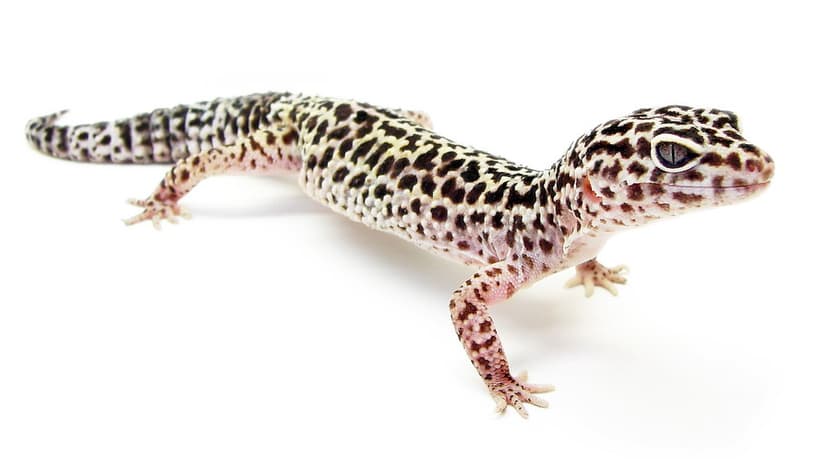
Common leopard gecko
The common leopard gecko (Eublepharis macularius) is a ground-dwelling lizard native to the arid regions of South Asia, including Afghanistan, Pakistan, India, and Nepal. Known for its distinctive spotted patterns and thick, fat-storing tail, it is a popular pet, often considered the first domesticated lizard species. These geckos are primarily nocturnal and opportunistic predators, feeding on invertebrates and small vertebrates.
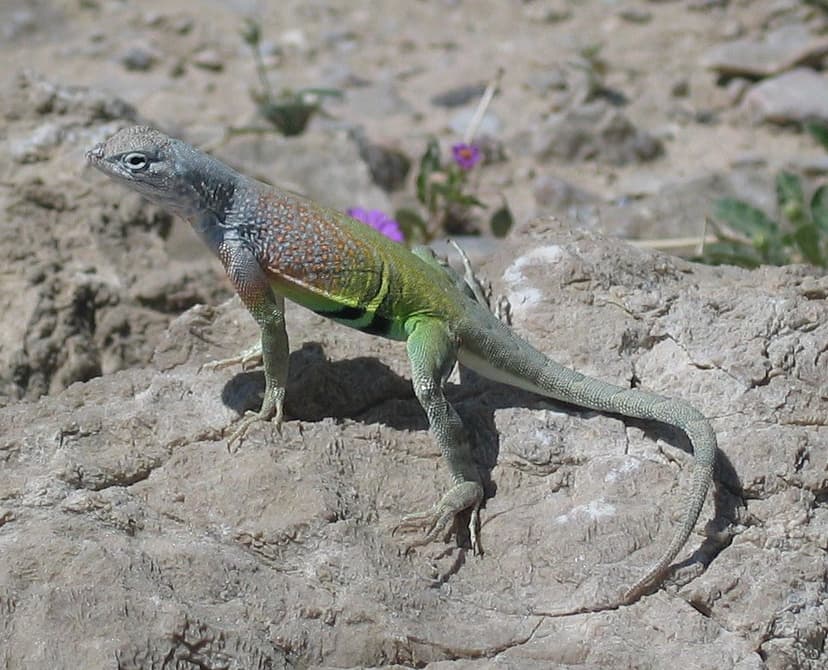
Cophosaurus texanus
The greater earless lizard (Cophosaurus texanus) is a medium-sized lizard native to arid and semi-arid regions of the southwestern United States and northern Mexico. It is distinguished by its lack of external ear openings, an adaptation for burrowing, and exhibits notable sexual dimorphism, with males being larger and more vibrantly colored than females. These lizards are primarily insectivores and rely on camouflage and speed to evade predators.

Desert monitor
The desert monitor (Varanus griseus) is a large carnivorous lizard found across North Africa and Central and South Asia. It exhibits varied coloration from light brown to grey and can reach up to 2 meters in length. Known for its adaptability, the desert monitor inhabits arid and semi-arid regions, preying on a wide range of vertebrates and invertebrates.