
Podarcis lilfordi
Lilford's wall lizard, scientifically known as Podarcis lilfordi, is a species of lizard native to the Gymnesian Islands of Spain. This robust, streamlined lizard typically measures up to 8 cm in snout-to-vent length and inhabits rocky areas, shores, and Mediterranean-type shrubland. While originally found on the larger islands of Mallorca and Menorca, it is now primarily confined to smaller, uninhabited islets, where numerous subspecies have evolved.
Key Facts
- ›Endemic to the Gymnesian Islands, part of the Balearic Islands, Spain.
- ›Characterized by smooth, unkeeled scales and a tail approximately 1.8 times its body length.
- ›Feeds opportunistically on insects, arthropods, snails, and vegetable matter, including flowers, fruits, nectar, and pollen.
- ›Plays a role in pollinating several endemic plants of the Gymnesian Islands.
- ›Oviparous, with females laying clutches of 1-4 eggs that hatch in about eight weeks.
- ›Listed as 'Endangered' by the IUCN due to significant population decline and habitat loss.

Lilford's Wall Lizard
Gymnesian Islands, Balearic Islands, Spain
- Robust, Streamlined Body With A Short Head.
- Smooth, Unkeeled Scales.
- Maximum Snout-To-Vent Length of 8 cm, Adults Usually Smaller.
- Tail Is Approximately 1.8 Times the Body Length.
- Dorsal Surface Typically Greenish Or Brownish, Varying By Island Population.
- Often Features A Pale Dorso-Lateral Stripe; May Have Dark Streaks Or Three Dark Lines Along the Spine.
- Flanks Can Be Slightly Reticulated.
- Underside Is White, Cream, Or Pinkish.
- Throat May Be Blotched With Darker Color.
- Juveniles Sometimes Possess A Blue Tail.
Insects, Spiders, Other Arthropods, Snails, Vegetable Matter, Flowers, Fruits, Nectar, Pollen, Scraps of Food From Bird Nests, Remains of Prey From Eleonora's Falcon Nests, Juveniles of Its Own Species, Tails of Other Lizards of Its Own Species
Relatively Tame and Easy To Approach., Ground-Dwelling., Opportunistic Feeding Behavior., Contributes To Plant Pollination., Occasionally Cannibalistic.
Cats, False Smooth Snake, Weasel
Habitat Loss, Introduction of Alien Species, Proliferation of Cats, Other Introduced Predators
About Podarcis lilfordi
Lilford's Wall Lizard (Podarcis lilfordi)
Lilford's wall lizard, scientifically classified as Podarcis lilfordi, is a species of lizard native to the Gymnesian Islands, the easternmost portion of Spain's Balearic Islands. This species is notable for its adaptation to a variety of Mediterranean habitats, including shrubland, rocky areas, and coastal shores. Characterized by a robust, streamlined body and smooth scales, it typically reaches a snout-to-vent length of up to 8 cm, though adults are often smaller. Its coloration varies, but it usually displays a greenish or brownish dorsal surface with a pale stripe along the side, and its tail is about 1.8 times its body length.
Distribution and Habitat
Originally found across the Gymnesian Islands, including Mallorca and Menorca, Podarcis lilfordi has been significantly impacted by the introduction of alien species, a process that began with Roman times. Consequently, it has been extirpated from the main islands and is now primarily confined to the numerous uninhabited islets surrounding them. On many of these islets, distinct local subspecies have evolved, showcasing remarkable adaptive radiation. The species inhabits low altitudes and is mainly ground-dwelling, preferring rocky terrain and scrubland, though it can be found in woodland environments on the island of Cabrera.
Behavior and Diet
Lilford's wall lizard is known for its relatively tame disposition, allowing it to be approached easily. Its diet is opportunistic and varied, encompassing insects, spiders, other arthropods, and snails, supplemented by vegetable matter such as flowers, fruits, nectar, and pollen. Interestingly, this lizard plays a role in the pollination of several endemic plants within the Gymnesian Islands. It also scavenges opportunistically, feeding on scraps near bird nests, particularly those of Eleonora's falcon, and has been known to exhibit cannibalistic behavior, preying on juveniles and tails of its own species.
Reproduction and Conservation
Podarcis lilfordi is oviparous, meaning it reproduces by laying eggs. Breeding occurs during the summer, with females laying one to four eggs per clutch, which hatch after approximately eight weeks. The emerging young measure about 3 to 3.5 cm from snout to vent. The population of this lizard is in decline, leading the International Union for Conservation of Nature (IUCN) to list it as 'Endangered'. Threats include significant habitat loss and the impact of introduced predators like cats, weasels, and certain snake species. The total area occupied by the species across all its remaining island habitats is less than 500 km².
Source: Wikipedia ↗
Frequently Asked Questions
What is Lilford's wall lizard?
Lilford's wall lizard (Podarcis lilfordi) is a species of lizard belonging to the Lacertidae family. It is native to the Gymnesian Islands in Spain and is distinguished by its streamlined body and smooth scales.
Where does Podarcis lilfordi live?
This lizard is endemic to the Gymnesian Islands, which include Mallorca, Menorca, and the surrounding uninhabited islets. Historically, it was present on the main islands but is now largely restricted to these smaller islets due to the introduction of alien species.
What does Lilford's wall lizard eat?
Lilford's wall lizard has a varied diet consisting mainly of insects, spiders, other arthropods, and snails. It also consumes vegetable matter, including flowers, fruits, nectar, and pollen, and has been observed scavenging around bird nests.
What is the conservation status of Podarcis lilfordi?
The conservation status of Lilford's wall lizard is listed as 'Endangered' by the IUCN. Its population is in decline, primarily due to habitat loss and the impact of introduced predators on the larger islands.
How does this lizard reproduce?
Podarcis lilfordi is oviparous, meaning it reproduces by laying eggs. Females typically lay one to four eggs per clutch during the summer, which hatch after approximately eight weeks.
Are there different types of Lilford's wall lizards?
Yes, there are 27 recognized subspecies of Podarcis lilfordi. Many of these subspecies are found on only a single island or islet, reflecting a process of local adaptation and diversification.
Related Lizards

Lilford's wall lizard
Lilford's wall lizard is a species endemic to the Gymnesian Islands of Spain, known for its robust, streamlined body and smooth scales. Originally found on the larger islands of Mallorca and Menorca, it has since been confined to numerous smaller, uninhabited islets due to the introduction of alien species. This lizard plays a role in pollinating several endemic plants and is characterized by its relative tameness and varied coloration.
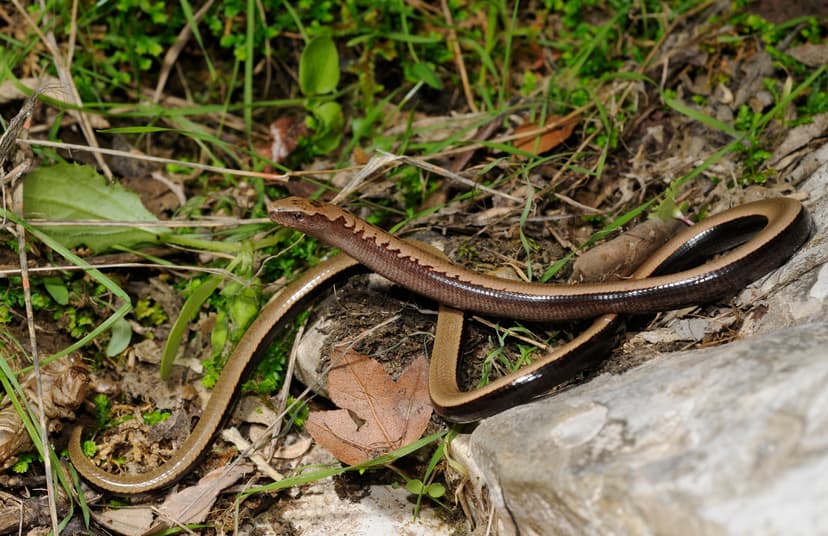
Peloponnese slowworm
The Peloponnese slow worm (Anguis cephallonica) is a legless lizard endemic to specific regions of Greece, including the Peloponnese peninsula and the Ionian islands of Cephalonia, Ithaca, and Zakynthos. This species is distinguished by a higher number of scale rows around its body and a unique chocolate-brown lateral stripe, and it gives birth to live young.

Podarcis bocagei
Bocage's wall lizard (Podarcis bocagei) is a species endemic to the Iberian Peninsula, characterized by its grey or yellowish-brown dorsal surface with dark markings, and white, yellow, pink, or orange underparts. It inhabits diverse environments including temperate forests, shrubland, coastal areas, and urban gardens. The species is oviparous and considered of 'least concern' by the IUCN due to its stable population and lack of specific threats.