
Richard's banded sphaero
Richard's banded sphaero, scientifically known as Sphaerodactylus richardi, is a small gecko species endemic to Cuba. It is characterized by its large, non-overlapping dorsal scales and a distinct pattern of bold dark crossbands on its body. This species inhabits forests, shrublands, and marine intertidal zones.
Key Facts
- ›Endemic to Cuba.
- ›Possesses large, non-overlapping dorsal scales, with a granular MID-dorsal zone.
- ›Adults display 5-6 bold dark crossbands on their body.
- ›Inhabits forest, shrubland, and marine intertidal environments.
- ›Reproduction is oviparous (egg-laying).
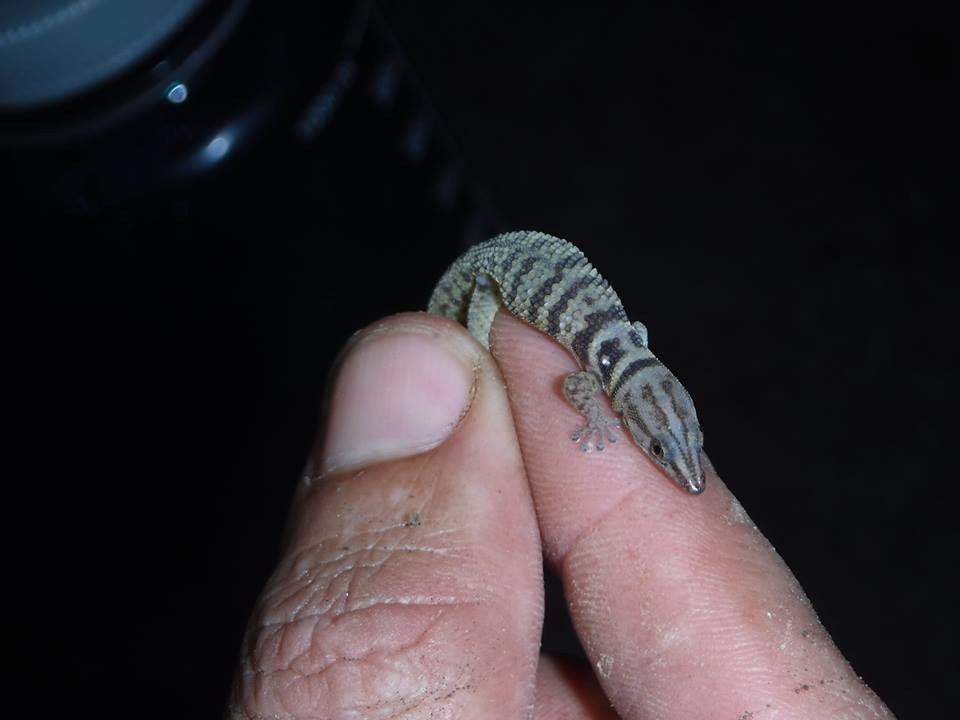
Richard's Banded Sphaero, Zapata Big-Scaled Sphaero
Cuba
- May Attain A Snout-To-Vent Length of Up To 31.1 mm .
- Has Large Non-Overlapping Dorsal Scales, With A Mid-Dorsal Granular Scale Zone That Is Three Scales Wide.
- Adults Exhibit A Dorsal Color Pattern of 5-6 Bold Dark Crossbands On the Body.
About Richard's banded sphaero
Richard's banded sphaero, scientifically identified as Sphaerodactylus richardi, is a small gecko species endemic to the island of Cuba. This lizard belongs to the Sphaerodactylidae family and is part of the scaber species group within its genus. It is also known by the common name Zapata big-scaled sphaero.
Physical Characteristics
The species is distinguished by its size and scale structure. Adult Richard's banded sphaeros can reach a snout-to-vent length of approximately 31.1 millimeters (1.22 inches). A notable physical trait is its large, non-overlapping dorsal scales, with the exception of a specific zone along the middle of its back, which is composed of granular scales and is three scales wide. The adult coloration features a distinctive pattern of 5 to 6 bold, dark crossbands that extend across its body.
Habitat and Distribution
Richard's banded sphaero has a restricted geographic range, being found only in Cuba. Its preferred habitats are diverse, encompassing forests, shrubland areas, and even marine intertidal zones, suggesting an adaptability to various environmental conditions within its native island.
Reproduction
Regarding its reproductive strategy, Sphaerodactylus richardi is oviparous, meaning it reproduces by laying eggs. Further details concerning its reproductive cycle, such as clutch size or incubation periods, are not extensively documented in available records.
Source: Wikipedia ↗
Frequently Asked Questions
What is the scientific name for Richard's banded sphaero?
The scientific name for Richard's banded sphaero is Sphaerodactylus richardi. It is also sometimes referred to as the Zapata big-scaled sphaero.
Where is Richard's banded sphaero found?
Richard's banded sphaero is found exclusively in Cuba. It is endemic to this island nation.
What are the preferred habitats of this gecko species?
Sphaerodactylus richardi prefers a variety of habitats including forests, shrublands, and marine intertidal areas.
How does Richard's banded sphaero reproduce?
This species reproduces by laying eggs, meaning it is oviparous. Specific details about clutch size or incubation periods are not provided.
What are the distinctive physical features of Sphaerodactylus richardi?
Richard's banded sphaero has large, non-overlapping dorsal scales, except for a three-scale-wide zone of granular scales along the middle of its back. Adults are distinguished by 5-6 bold, dark crossbands across their body.
Related Lizards

Pholidoscelis plei
The Anguilla Bank ameiva (Pholidoscelis plei) is a lizard species found across several Caribbean islands including Anguilla, Saint Martin, and Saint Barthélemy. Its appearance varies significantly between island populations, with adults often exhibiting gray-brown or green-brown coloration and distinct spotting or striping. This oviparous species inhabits forests and marine intertidal zones.

Anolis leachii
Anolis leachii, also known as the Antigua Bank tree anole or Leach's anole, is a lizard species endemic to the Caribbean, specifically Antigua and Barbuda. This arboreal species is characterized by its bright green coloration that fades to greyish-brown on its tail, and a grey to brown head with yellowish-orange dewlaps. It inhabits various environments, from forests and shrublands to human-disturbed areas like pastures and farms, provided vertical perching surfaces are available.
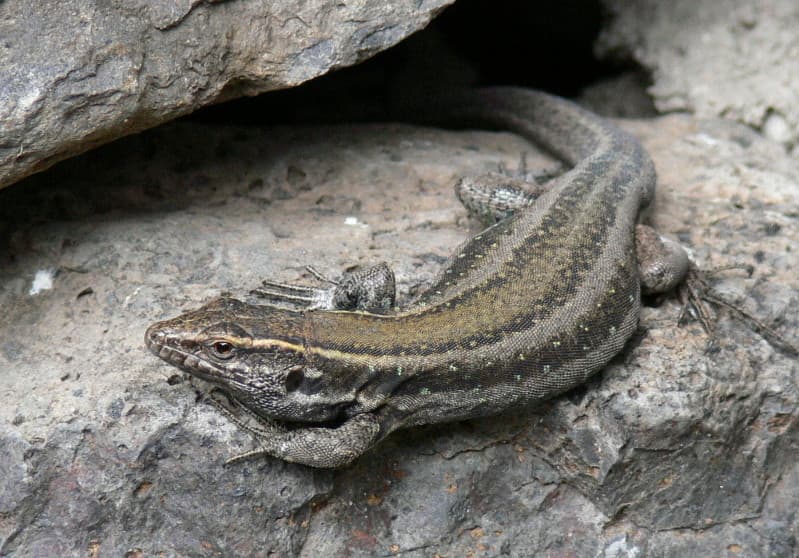
Boettger's lizard
Boettger's lizard (Gallotia caesaris) is a species of wall lizard endemic to the western Canary Islands, specifically El Hierro and La Gomera. This oviparous reptile inhabits rocky areas, shrubland, and forests, and is known for its capacity to lay multiple clutches of eggs per year. It is closely related to the Gallotia galloti species found on neighboring islands.