
Sceloporus cowlesi
The southwestern fence lizard (Sceloporus cowlesi) is a species of spiny lizard native to the Chihuahuan Desert in the southwestern United States and north-central Mexico. Originally classified as a subspecies of the eastern fence lizard, it was later recognized as a distinct species based on genetic studies. It is distinguished by its spiny scales and its adaptation to arid desert environments.
Key Facts
- ›Native to the Chihuahuan Desert in the southwestern United States and north-central Mexico.
- ›Originally described as a subspecies of the eastern fence lizard (Sceloporus undulatus).
- ›Elevated to species status following DNA studies.
- ›Named in honor of American herpetologist Raymond Bridgman Cowles.
- ›Belongs to the spiny lizard group within the family Iguanidae.

Cowles' Prairie Lizard, White Sands Prairie Lizard, White Sands Swift
Southwestern United States, North-Central Mexico
A Species of Spiny Lizard., Characterized By Spiny Scales.
About Sceloporus cowlesi
The Southwestern Fence Lizard
The southwestern fence lizard, scientifically known as Sceloporus cowlesi, is a reptile native to the arid landscapes of the Chihuahuan Desert. This species is found across parts of the southwestern United States and extends into north-central Mexico. It belongs to the family Iguanidae, a diverse group of lizards known for their spiny scales.
Taxonomy and Discovery
Sceloporus cowlesi was first described in 1956, initially classified as a subspecies of the more widespread eastern fence lizard, Sceloporus undulatus. However, subsequent genetic and DNA studies have provided sufficient evidence to elevate the southwestern fence lizard to its own distinct species status. The specific epithet, "cowlesi," was chosen in honor of the prominent American herpetologist Raymond Bridgman Cowles, recognizing his contributions to the field of herpetology.
Common Names and Identification
In addition to its scientific name, Sceloporus cowlesi is known by several common names, including Cowles' prairie lizard, the White Sands prairie lizard, and the White Sands swift. These names often reflect its geographic range or its characteristic quick movements. As a spiny lizard, it possesses scales that are rough and pointed, a common adaptation for protection and thermoregulation in its desert habitat.
Source: Wikipedia ↗
Frequently Asked Questions
What is the scientific name of the southwestern fence lizard?
The scientific name of the southwestern fence lizard is Sceloporus cowlesi. It was originally described in 1956 as a subspecies of the eastern fence lizard.
Where does the southwestern fence lizard live?
This species is native to the Chihuahuan Desert, covering parts of the southwestern United States and north-central Mexico. It is well-adapted to arid desert conditions.
What is the origin of the name 'cowlesi'?
The specific name, cowlesi, honors the American herpetologist Raymond Bridgman Cowles. This designation was established when the lizard was first described.
How was Sceloporus cowlesi classified historically?
Historically, Sceloporus cowlesi was described in 1956 as a subspecies of the eastern fence lizard, known as Sceloporus undulatus cowlesi. Later genetic research led to its recognition as a separate species.
Related Lizards
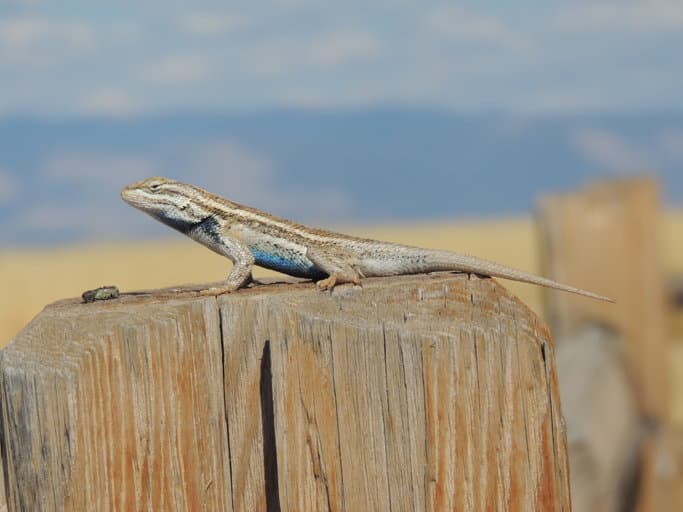
Southwestern fence lizard
The Southwestern fence lizard (Sceloporus cowlesi) is a species of spiny lizard native to the Chihuahuan Desert in the southwestern United States and north-central Mexico. Previously considered a subspecies of the eastern fence lizard, it was elevated to species status based on DNA studies. This lizard is characterized by its spiny scales and inhabits arid environments.
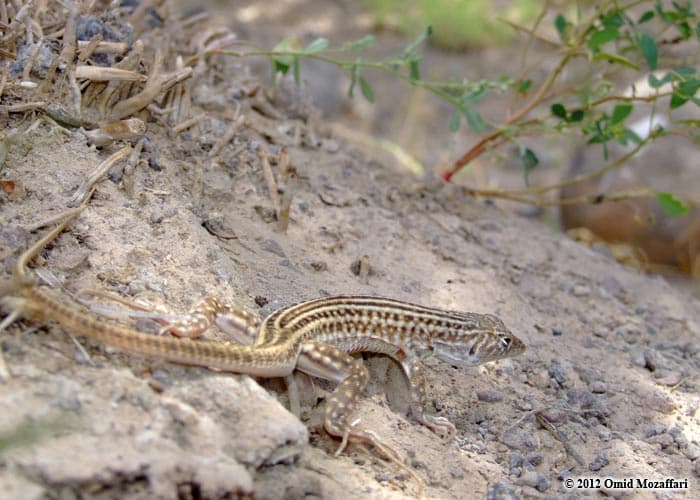
Acanthodactylus cantoris
The Indian fringe-fingered lizard (Acanthodactylus cantoris) is a terrestrial species endemic to Asia, primarily found in sandy desert and shrubland habitats. It is characterized by its acutely pointed snout, keeled dorsal scales, and strong digital denticulations. This oviparous lizard burrows in the sand for protection and its young have distinctive white longitudinal lines on a blackish background.
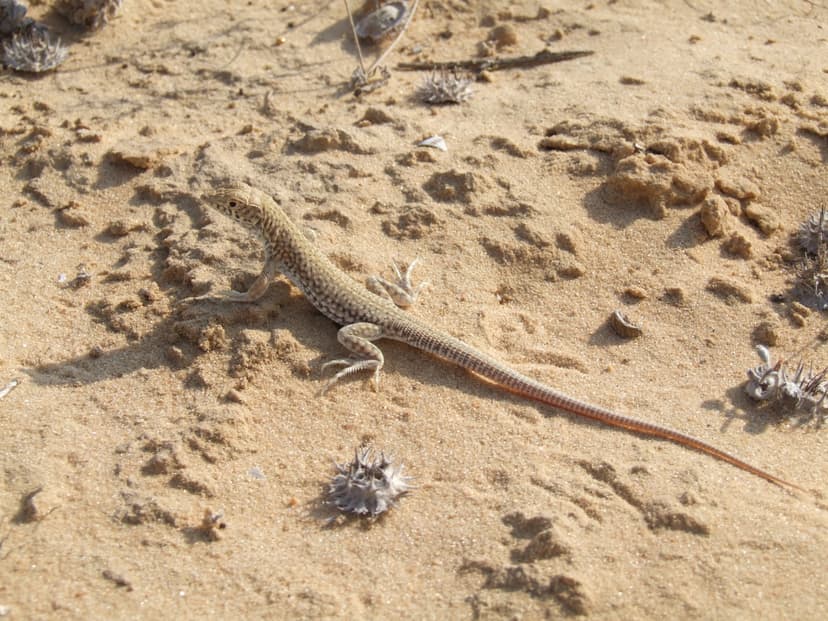
Acanthodactylus scutellatus
The Acanthodactylus scutellatus, commonly known as the Nidua fringe-fingered lizard, is a small lizard species endemic to northern Africa and the Middle East. It is recognized by its unique ventral scale arrangement and its adeptness at burrowing in loose sand for shelter. This diurnal species breeds in late winter, with females laying clutches of 3-6 eggs in the spring.