
Southwestern fence lizard
Sceloporus cowlesi·Iguanidae
The Southwestern fence lizard (Sceloporus cowlesi) is a species of spiny lizard native to the Chihuahuan Desert in the southwestern United States and north-central Mexico. Previously considered a subspecies of the eastern fence lizard, it was elevated to species status based on DNA studies. This lizard is characterized by its spiny scales and inhabits arid environments.
Key Facts
- ›Native to the Chihuahuan Desert.
- ›Found in the southwestern United States and north-central Mexico.
- ›Originally described as a subspecies of the eastern fence lizard.
- ›Elevated to species status due to DNA studies.
- ›Belongs to the family Iguanidae.
- ›Named in honor of herpetologist Raymond Bridgman Cowles.
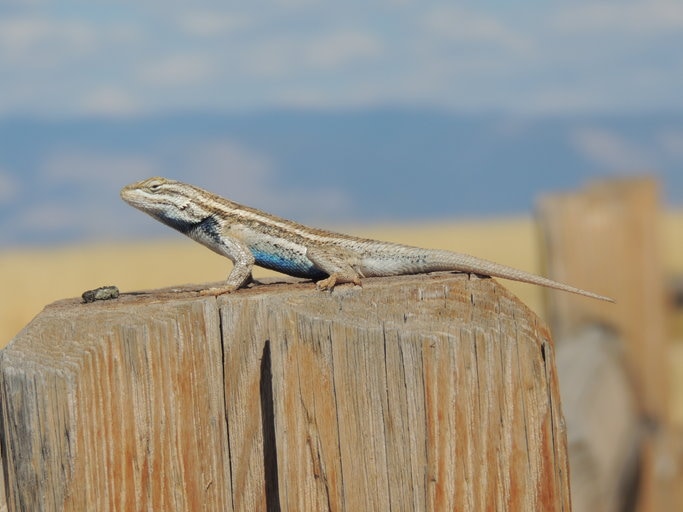
Cowles' Prairie Lizard, White Sands Prairie Lizard, White Sands Swift
Southwestern United States, North-Central Mexico
Species of Spiny Lizard.
About Southwestern fence lizard
The Southwestern fence lizard, scientifically known as Sceloporus cowlesi, is a species of spiny lizard native to the Chihuahuan Desert. This arid region spans across the southwestern United States and into north-central Mexico.
Taxonomy and Classification
Originally described in 1956, the Southwestern fence lizard was initially classified as a subspecies of the eastern fence lizard, designated as Sceloporus undulatus cowlesi. However, subsequent genetic research, specifically DNA studies, led to its reclassification as a distinct species. This elevation in status is a testament to the advancements in understanding reptile evolutionary relationships through molecular data.
Etymology
The specific epithet, cowlesi, honors the American herpetologist Raymond Bridgman Cowles. His contributions to the field of herpetology likely influenced the naming of this species.
Distribution and Habitat
The natural range of the Southwestern fence lizard is confined to the Chihuahuan Desert. This ecosystem is characterized by its arid and semi-arid conditions, supporting specialized flora and fauna adapted to scarce water resources. The lizard's presence in this region highlights its resilience and adaptation to harsh environments.
Source: Wikipedia ↗
Frequently Asked Questions
What is the scientific name of the Southwestern fence lizard?
The scientific name of the Southwestern fence lizard is *Sceloporus cowlesi*. It was initially described in 1956 as a subspecies of the eastern fence lizard.
Where does the Southwestern fence lizard live?
This species is native to the Chihuahuan Desert, found in the southwestern United States and north-central Mexico. Its habitat is characteristic of arid and semi-arid regions.
What is the taxonomic family of the Southwestern fence lizard?
The Southwestern fence lizard belongs to the family Iguanidae. This family includes a diverse group of lizards known for their varied adaptations.
Why was the Southwestern fence lizard reclassified?
The Southwestern fence lizard was reclassified from a subspecies to its own species status following subsequent DNA studies. These studies revealed distinct genetic differences from the eastern fence lizard.
Who is the Southwestern fence lizard named after?
The specific name, *cowlesi*, is in honor of the American herpetologist Raymond Bridgman Cowles. He was a notable figure in the study of reptiles.
Related Lizards

Sceloporus cowlesi
The southwestern fence lizard (Sceloporus cowlesi) is a species of spiny lizard native to the Chihuahuan Desert in the southwestern United States and north-central Mexico. Originally classified as a subspecies of the eastern fence lizard, it was later recognized as a distinct species based on genetic studies. It is distinguished by its spiny scales and its adaptation to arid desert environments.

Ctenophorus fordi
The Mallee dragon (Ctenophorus fordi) is a small lizard native to the arid regions of southern Australia, characterized by its reddish-orange coloration and pale, black-bordered stripes. It inhabits shrubland and hummock grass environments, particularly in Mallee woodlands and spinifex areas, often near vegetated sand dunes. This species is primarily an ant specialist, employing a sit-and-wait strategy to ambush its prey.

Eurylepis taeniolatus
Eurylepis taeniolata, also known as the ribbon-sided skink, is a species found across Central, South, and West Asia. This skink is characterized by its elongated body, slender limbs, and a distinctive color pattern of gray-brown with pale dorsolateral stripes that become more prominent anteriorly, and brown rectangular spots posteriorly. It inhabits a variety of arid and semi-arid environments.