
Sceloporus merriami
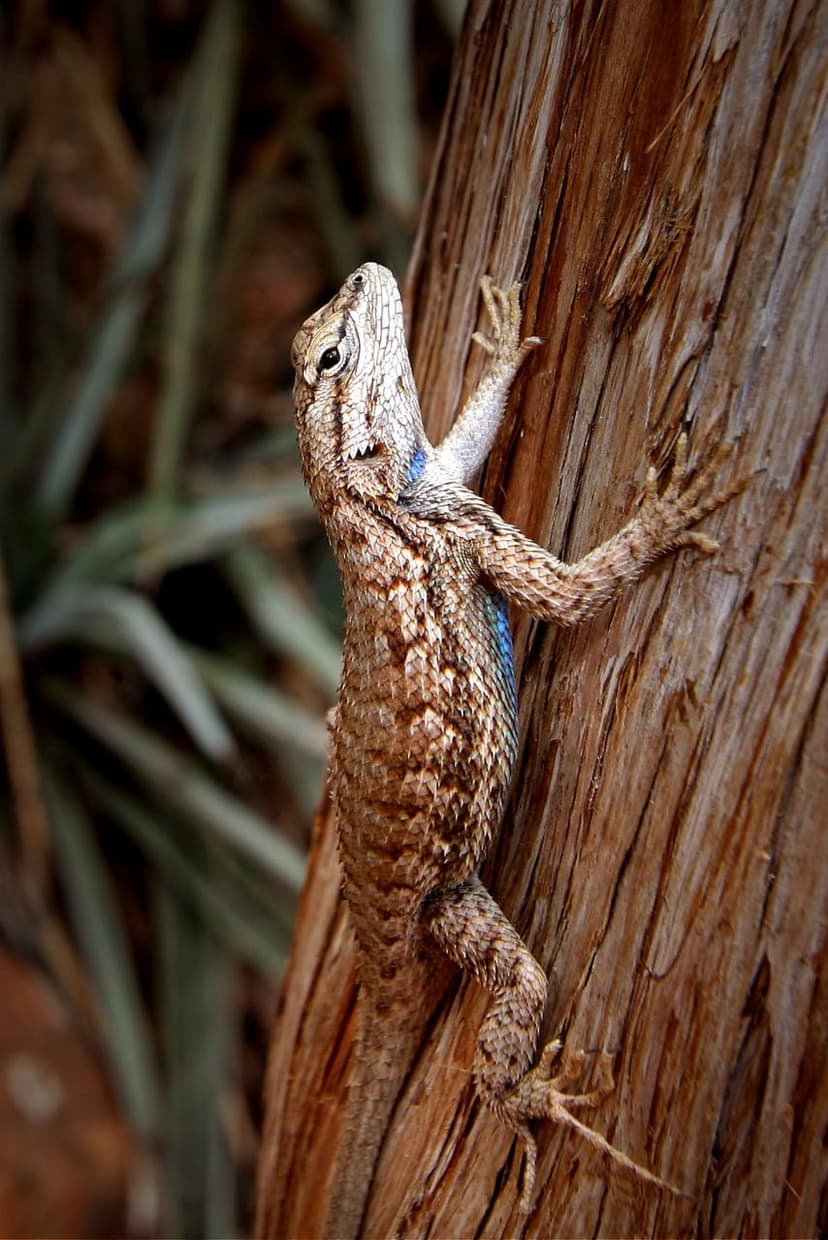
The canyon lizard, scientifically known as Sceloporus merriami, is a species of lizard native to the rocky desert areas of the southwestern United States and northern Mexico. It is characterized by its small dorsal scales, granular lateral scales, and coloration that matches its rocky habitat, often featuring dark spots and a black line before its front leg. Males also display distinctive blue and black lines on their throats.
Key Facts
- ›Native to the southwestern United States and adjacent northern Mexico.
- ›Prefers steep rocky areas of desert for its habitat.
- ›Adults can reach up to 58 mm snout-to-vent length and 162 mm total length.
- ›Dorsally, it is gray, tan, or reddish-brown, with four rows of dark spots.
- ›Males have blue and black lines on their throats.
- ›Reproduction is oviparous, with eggs buried in soil.

Canyon Lizard, Merriam's Canyon Lizard
United States, Mexico
- Adults May Reach 58 mm Snout-To-Vent Length .
- Total Length May Reach 162 mm Including the Tail.
- Dorsal Scales Are Small.
- Lateral Scales Are Granular.
- Dorsally, Coloration Is Gray, Tan, Or Reddish-Brown, Matching Surrounding Rocks.
- Four Rows of Dark Spots Are Present On the Back.
- A Vertical Black Line Is Located In Front of the Front Leg.
- Males Have Blue and Black Lines On the Throat.
Lives On Rock Faces of Canyon Walls., Shelters In Crevices.
About Sceloporus merriami
Sceloporus merriami: The Canyon Lizard
The canyon lizard, scientifically designated as Sceloporus merriami and commonly known by that name, is a species of lizard belonging to the Phrynosomatidae family. This reptile is native to the arid and semi-arid regions of the southwestern United States and extends into adjacent northern Mexico.
Habitat and Distribution
Sceloporus merriami is found in the United States within the state of Texas, and in Mexico, it inhabits the states of Chihuahua, Coahuila, Durango, and Nuevo León. Its preferred natural habitat consists of steep, rocky areas within desert environments. The species is particularly adapted to life on rock faces of canyon walls, where it finds shelter within crevices.
Physical Characteristics
Adult canyon lizards typically measure up to approximately 5.8 centimeters (2.2 inches) in snout-to-vent length (SVL), with their total length, including the tail, reaching up to 16.2 centimeters (6.4 inches). Their dorsal scales are small, and the lateral scales are granular. The coloration of the canyon lizard plays a crucial role in its camouflage; dorsally, individuals are usually gray, tan, or reddish-brown, closely matching the rocks they inhabit. Distinctive markings include four rows of dark spots along the back and a vertical black line situated just in front of the foreleg. Males possess additional distinguishing features, with blue and black lines adorning their throats.
Behavior and Reproduction
Behaviorally, Sceloporus merriami is adapted to its rocky environment, utilizing the surfaces of canyon walls for its daily activities and seeking refuge in crevices. The species is oviparous, meaning it reproduces by laying eggs. These eggs are deposited and buried within the soil, where they undergo incubation before hatching.
Source: Wikipedia ↗
Frequently Asked Questions
What is the scientific name for the canyon lizard?
The scientific name for the canyon lizard is Sceloporus merriami. This binomial nomenclature is used to classify the species within the scientific community.
Where is the canyon lizard found?
Sceloporus merriami is found in the United States, specifically in Texas, and in Mexico, in the states of Chihuahua, Coahuila, Durango, and Nuevo León. Its range is confined to these specific regions.
What kind of habitat does the canyon lizard prefer?
The canyon lizard prefers steep rocky areas within desert environments. They typically live on rock faces of canyon walls and utilize crevices for shelter.
What are the physical characteristics of the canyon lizard?
Adult canyon lizards can reach about 58 mm in snout-to-vent length and up to 162 mm in total length. Their dorsal scales are small and granular, and their coloration, typically gray, tan, or reddish-brown, helps them blend with their rocky surroundings. They also have dark spots on their back and a black line in front of their foreleg, with males exhibiting blue and black throat markings.
How does the canyon lizard reproduce?
The canyon lizard is oviparous, meaning it lays eggs. These eggs are then buried in the soil, where they incubate until hatching.
Are there different types of canyon lizards?
Yes, seven subspecies of Sceloporus merriami are recognized as valid. These include Sceloporus merriami annulatus, Sceloporus merriami australis, Sceloporus merriami ballingeri, Sceloporus merriami longipunctatus, Sceloporus merriami merriami, Sceloporus merriami sanojae, and Sceloporus merriami williamsi.
Related Lizards
Plateau fence lizard
The plateau fence lizard (Sceloporus tristichus) is a spiny lizard found in the rocky and wooded areas of central Arizona, southwestern Utah, western Colorado, and parts of New Mexico and Wyoming. This grayish, brownish, or greenish reptile is characterized by keeled scales, dark cross-bands on its back, and distinctive metallic blue patches on its belly and throat. It is known to be inactive during extreme temperatures and primarily feeds on insects and other arthropods.

Alsophylax boehmei
Alsophylax boehmei, formerly considered a subspecies of Altiphylax stoliczkai, is a species of gecko endemic to South Asia. It inhabits arid and mountainous regions, preferring deserts, grasslands, and rocky terrains. This species is oviparous, laying eggs as its primary method of reproduction.

Coleonyx switaki
Switak's banded gecko (Coleonyx switaki) is a species of lizard found in the deserts and rocky areas of the southwestern United States and northwestern Mexico. It is characterized by a body covered in round brown spots and can reach a snout-to-vent length of up to 8.6 centimeters. This oviparous species is named in honor of German herpetologist Karl-Heinz Switak.