
Sceloporus merriami annulatus
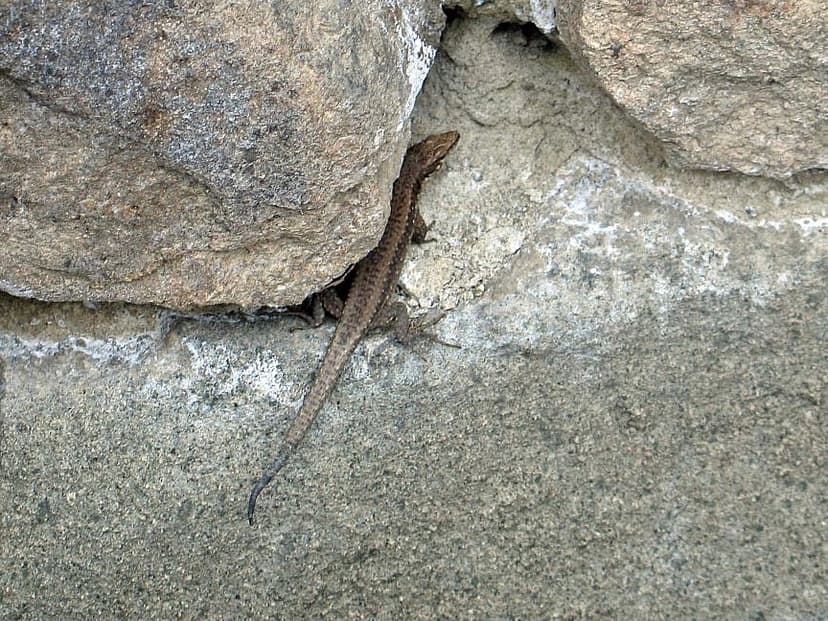
Sceloporus merriami annulatus, commonly known as the Big Bend canyon lizard, is a subspecies endemic to southwestern Texas and northeastern Mexico. This medium-sized lizard is characterized by its banded subcaudal surface and coloration that varies with its habitat, ranging from grey to reddish. It prefers rocky canyon environments with ample crevices for shelter and ledges for basking.
Key Facts
- ›Native to the Big Bend region of Texas and eastern Coahuila, Mexico.
- ›Possesses a banded subcaudal surface, distinguishing it from other subspecies.
- ›Coloration varies from grey to reddish, with dark spots on its back.
- ›Adults reach a total length of 11.5–16 cm (4.5–6.25 inches).
- ›Diurnal and insectivorous, inhabiting rocky canyon lands.
- ›Males have larger dewlaps and distinct blue patches on their bellies.

Big Bend Canyon Lizard
Southwestern Texas, Northeastern Mexico
Rocky Canyon Lands, Unvegetated Areas, Areas With Crevices, Areas With Basking Ledges
- Medium-Sized Lizard.
- Total Length Ranges From 11.5 To 16 cm .
- Coloration Varies From Grey To Reddish, Depending On Habitat Choice.
- Features Two Rows of Dark Spots Down Each Side of the Back.
- Has A Dark Line On the Shoulder Region.
- Possesses A Fairly Large Head Relative To Body Size.
- Males Have Larger Dewlaps Than Females.
- Males Exhibit Distinct Blue Patches On Either Side of the Belly.
- Has Fewer Than 53 Dorsal Scales From the Interparietal Scale To the Base of the Tail.
Insects
Diurnal ., Insectivorous ., Inhabits Rocky Canyon Lands., Utilizes Crevices For Hiding., Basks On Ledges.
About Sceloporus merriami annulatus
Sceloporus merriami annulatus: The Big Bend Canyon Lizard
The Big Bend canyon lizard, scientifically known as Sceloporus merriami annulatus, is a distinct subspecies of canyon lizard found in a specific geographic region. Its range is primarily confined to the Big Bend area of southwestern Texas in the United States and extends into adjacent northeastern Mexico, specifically eastern Coahuila.
Physical Characteristics and Habitat
This medium-sized lizard typically measures between 11.5 to 16 centimeters (4.5 to 6.25 inches) in total length. Its coloration can vary, often adapting to its surroundings and ranging from shades of grey to reddish hues. A notable characteristic is the presence of two rows of dark spots running down each side of its back, accompanied by a dark line on the shoulder region. A key feature that differentiates this subspecies is its banded subcaudal surface, a trait referenced in its subspecific name, 'annulatus', derived from the Latin word for 'ring'. Males are distinguishable by their larger dewlaps and the presence of distinct blue patches on their bellies.
The Big Bend canyon lizard thrives in arid, rocky canyon environments. Its preferred habitat consists of unvegetated rocky areas that offer abundant crevices for shelter and ledges for basking, a behavior essential for thermoregulation.
Behavior and Reproduction
As a diurnal species, the Big Bend canyon lizard is active during daylight hours. Its behavior is centered around foraging for insects, as it is an insectivore. They are known to utilize the natural features of their canyon habitat for both concealment and sun exposure.
Reproduction in Sceloporus merriami annulatus is oviparous, meaning they reproduce by laying eggs. Specific details regarding clutch size or incubation periods are not widely detailed in general accounts of the subspecies.
Source: Wikipedia ↗
Frequently Asked Questions
What is the Big Bend canyon lizard?
The Big Bend canyon lizard, scientifically known as Sceloporus merriami annulatus, is a subspecies of canyon lizard. It is found in southwestern Texas and adjacent parts of northeastern Mexico.
What does Sceloporus merriami annulatus eat?
This lizard species is insectivorous, meaning its diet consists primarily of insects. It is active during the day to hunt for its prey.
Where can the Big Bend canyon lizard be found?
Its natural geographic range is fairly narrow, encompassing the Big Bend region of Texas in the United States and extending into eastern Coahuila in Mexico. It prefers rocky canyon environments.
How large does the Big Bend canyon lizard get?
Adult Big Bend canyon lizards typically grow to a total length of between 11.5 to 16 centimeters (4.5 to 6.25 inches). They have a relatively large head for their body size.
What are the defining physical characteristics of Sceloporus merriami annulatus?
A key distinguishing feature is the banded subcaudal surface. They also have variable coloration from grey to reddish, with rows of dark spots on their back and a dark shoulder line. Males have larger dewlaps and blue belly patches.
What kind of habitat does the Big Bend canyon lizard prefer?
They are found in rocky, unvegetated canyon lands. These areas provide essential crevices for hiding and ledges for basking in the sun.
Related Lizards
Anatolian rock lizard
The Anatolian rock lizard, scientifically known as Anatololacerta anatolica, is a common lizard species found in western Anatolia and adjacent Greek islands. This lizard inhabits temperate forests and rocky environments, characterized by its flattened body and variable markings, often featuring pale spots on a dark olive-brown base.

Anolis carolinensis carolinensis
The Anolis carolinensis, commonly known as the green anole or Carolina anole, is a small to medium-sized lizard native to the southeastern United States. It is distinguished by its ability to change color from shades of brown to green, a trait that leads to its common nickname 'American chameleon,' though it is not a true chameleon. These arboreal lizards inhabit forests, grasslands, and can even adapt to urban environments with sufficient vegetation and insect prey.

Anolis cristatellus
Anolis cristatellus, commonly known as the crested anole or common Puerto Rican anole, is a small to moderately-sized lizard native to Puerto Rico and the Virgin Islands. Males are distinctive for their prominent caudal crest and colorful dewlap, used in dominance displays and mating rituals. This adaptable species thrives in various habitats, including urban environments, and is known for its ability to change color.