
Uma scoparia
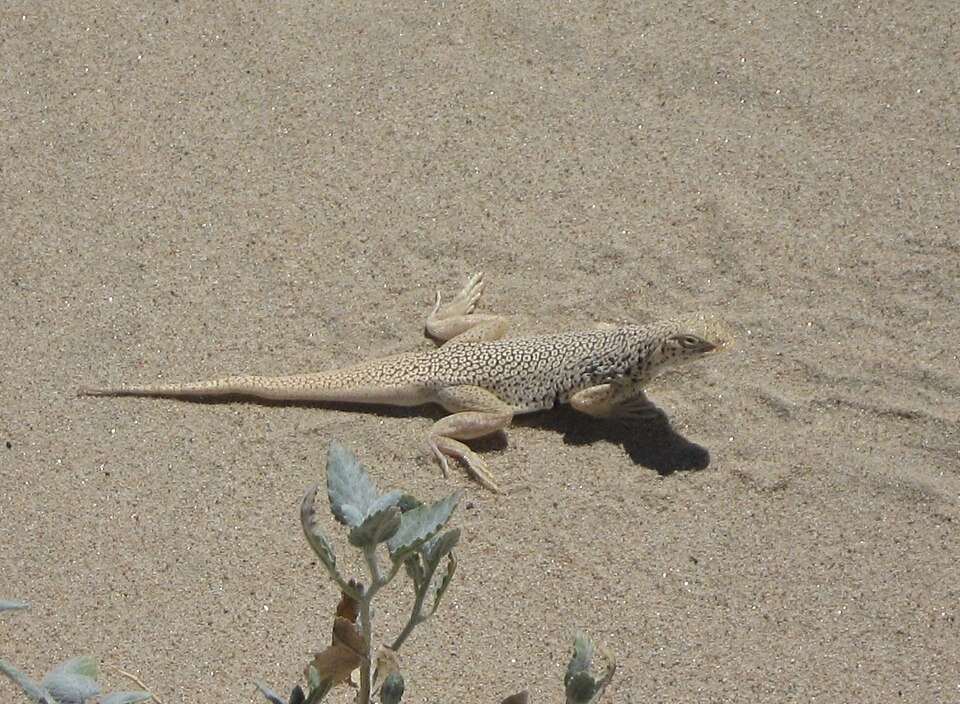
The Mojave fringe-toed lizard (Uma scoparia) is a medium-sized, diurnal lizard adapted to arid desert environments, particularly sand dunes. It is distinguished by unique fringed scales on its hind toes, which aid in locomotion across loose sand, and by its coloration, which camouflages it against its environment. This species exhibits distinct territorial behaviors in males and a diet that shifts seasonally between invertebrates and plant matter.
Key Facts
- ›Possesses unique fringed scales on hind toes for sand locomotion.
- ›Coloration ranges from tannish white to grayish white with black spots, aiding camouflage.
- ›Males are territorial and exhibit assertion displays related to reproduction.
- ›Diet is omnivorous, shifting from herbivorous to insectivorous as the season progresses.
- ›Adults typically hibernate from November to February, burying themselves deep in the sand.
- ›Breeding capacity is influenced by rainfall, with females laying 1-5 eggs.
Mojave Fringe-Toed Lizard
California, Usa, Arizona, Usa
Sand Dunes, Arid Climates, Desert Washes, Dry Lake Beds, Hillsides
- Medium-Sized Lizard With A Flat Body and Smooth Skin.
- Coloration Ranges From Tannish White To Grayish White, Often With Small Black Spots.
- Possesses Prominent Elongated Scales Forming A Fringe On the Sides of Hind Toes.
- Features Up To Three Crescent-Shaped Throat Markings.
- Dark Bands Are Present On the Tail, and Dark Blotches On the Sides of the Belly.
- During Breeding Season, Belly-Side Spots Turn Pink, and the Underside Becomes Pale Yellow.
- Tail Length Matches Body Length, With Total Length Around 7 Inches.
Ants, Beetles, Scorpions, Hemipterans, Spiders, Antlion Larvae, Grasshoppers, Seeds, Leaves, Flowers, Grasses, Smaller Lizards
- Diurnal Activity Pattern.
- Males Are Territorial and Exhibit Assertion Displays Associated With Reproduction.
- Females Exhibit Territoriality Over Specific Sites.
- Adults Hibernate Buried In Sand From November To February.
- Juveniles Hibernate Closer To the Surface Or Remain Active Year-Round.
- Activity Hours Are Reduced In Cooler Spring Temperatures Compared To Relatives.
Roadrunners, Badgers, Loggerhead Shrikes, Coyotes, Snakes
Off-Roading Recreational Vehicles, Toxins From Military Operations, Urban Development, Air Pollution, Global Warming
About Uma scoparia
The Mojave Fringe-Toed Lizard
The Mojave fringe-toed lizard, scientifically known as Uma scoparia, is a distinctive reptile adapted to the harsh desert conditions of the Mojave Desert. This medium-sized lizard is diurnal, meaning it is active during the day, and is particularly associated with sandy habitats like dunes, dry lake beds, and desert washes.
Physical Characteristics
A key feature of Uma scoparia is the presence of elongated, fringed scales on the sides of its hind toes. These specialized scales function like snowshoes, allowing the lizard to move efficiently across loose sand. Its body is flat, and its skin is smooth, typically colored in shades of white, grayish white, or tan, often adorned with small black spots that provide excellent camouflage against the desert floor. Characteristic markings include up to three crescent-shaped throat patches and dark bands on its tail and blotches on its belly, which can transform into pink during the breeding season, accompanied by a pale yellow underside.
Life Cycle and Behavior
Adult Mojave fringe-toed lizards typically hibernate from November to February, burying themselves deep within the sand for protection. Juveniles exhibit a similar behavior but remain closer to the surface and some may stay active year-round. Males of the species are known to be protective of their territory, engaging in assertion displays, primarily related to reproduction. Females, while not displaying territorial defense in the same manner as males, exhibit territoriality over specific locations. Sexual maturity is generally reached in the second year of life, with the mating season occurring in late spring. The success of reproduction is significantly influenced by the amount of rainfall, with more young produced after wetter winters due to increased food availability.
Diet
The diet of the Mojave fringe-toed lizard is varied and can shift seasonally. Primarily, they feed on invertebrates found near the sand's surface, such as ants, beetles, scorpions, and spiders. They also consume plant matter, including seeds, leaves, flowers, and grasses. As the summer months progress and annual plants become scarcer, their diet leans more heavily towards insects. Occasionally, they have been observed to prey on smaller lizards, including members of their own species.
Habitat and Distribution
The natural range of Uma scoparia extends across several counties in California, including Inyo, Los Angeles, Riverside, and San Bernardino, and into western Arizona. Their preferred habitat consists of areas with fine sand, such as sand dunes, dry lake beds, desert washes, and hillsides, typically within an elevational range from sea level up to 3,000 feet.
Threats and Conservation
Several factors pose significant threats to the Mojave fringe-toed lizard population. Natural predators include roadrunners, badgers, loggerhead shrikes, coyotes, and various snake species. More critically, human activities have led to substantial habitat loss and direct mortality. Off-roading recreational vehicles are a major concern, as they damage the lizards' habitat and food sources and cause direct casualties. Other significant threats include environmental contamination from military operations, urban development, air pollution, and the overarching impacts of global warming.
Source: Wikipedia ↗
Frequently Asked Questions
What are the distinctive physical features of the Mojave fringe-toed lizard?
The Mojave fringe-toed lizard is characterized by its flat body, smooth skin, and notably, elongated scales forming a fringe on the sides of its hind toes. It also displays characteristic dark bands on its tail and dark blotches on its belly sides, which can turn pink during the breeding season.
Where does the Mojave fringe-toed lizard live?
This species is primarily found in sand dunes and arid areas within the Mojave Desert. Its geographic range extends across parts of California, including Inyo, Los Angeles, Riverside, and San Bernardino counties, and into western Arizona.
What does the Mojave fringe-toed lizard eat?
The diet of the Mojave fringe-toed lizard is omnivorous. It primarily consumes invertebrates like ants, beetles, and spiders, but also feeds on plant matter such as seeds, leaves, flowers, and grasses. Their diet shifts seasonally, becoming more insectivorous during summer.
How does the Mojave fringe-toed lizard reproduce?
The mating season for this lizard occurs in late spring, with breeding capacity influenced by rainfall. Females typically lay 1-5 eggs per season, averaging 2-3, which hatch in September. The eggs are likely buried in the sand.
What are the main threats to the Mojave fringe-toed lizard population?
Significant threats include habitat loss due to off-roading recreational vehicles, which also cause direct casualties and damage food sources. Other threats include toxins from military operations, urban development, air pollution, and global warming.
Does the Mojave fringe-toed lizard hibernate?
Yes, adult Mojave fringe-toed lizards typically hibernate from November to February. They achieve this by burying themselves about a foot below the sand's surface. Juveniles hibernate closer to the surface, and some may remain active year-round.
Related Lizards

Uma notata
The Colorado Desert fringe-toed lizard (Uma notata) is a medium-sized, diurnal lizard found in the sandy habitats of the Colorado Desert in the United States and Mexico. This species is distinguished by its light pea-green coloration with darker green spots, a white underside, and unique orange/pinkish stripes on its flanks.
Sphaerodactylus fantasticus
The fantastic least gecko (Sphaerodactylus fantasticus) is a medium-sized gecko species found in the Caribbean, specifically on the islands of Dominica, Montserrat, and the Guadeloupe archipelago. This species exhibits sexual dichromatism in its coloration, with dorsal scales being keeled and ranging from brown to ochre, often mottled with light and dark scales. They are terrestrial and inhabit a variety of coastal environments, including forests, beaches, and human dwellings.

Podarcis carbonelli
Podarcis carbonelli, commonly known as Carbonell's wall lizard, is a species of lizard native to Portugal and Spain. It is characterized by its grey or brown dorsal coloration, often speckled with dark markings, and typically greenish flanks. This species inhabits temperate shrublands and sandy shores, with a declining population facing threats from habitat loss.