
Sphenomorphus maculatus
The Sphenomorphus maculatus, commonly known as the spotted forest skink or stream-side skink, is a non-venomous lizard found across South Asia and Southeast Asia. It is characterized by its brown coloration with faint darker markings and a pale throat and belly. This terrestrial skink inhabits the edges of streams and rivers in lowland and hilly areas, where it forages for small insects and invertebrates.
Key Facts
- ›Found in China, South Asia, and Southeast Asia.
- ›Primarily feeds on small insects and invertebrates.
- ›Reproduces by laying eggs (oviparous).
- ›Exhibits death-feigning behavior when handled.
- ›Inhabits the vicinity of streams and rivers.
- ›Maximum snout-vent length is 19 cm.

Spotted Forest Skink, Maculated Forest Skink, Stream-Side Skink
Bangladesh, Bhutan, Cambodia, China, India, Malaysia, Myanmar, Nepal, Singapore, Sunda Region, Thailand, Vietnam
Lowland Areas, Hilly Areas, Vicinity of Streams, Vicinity of Small Rivers
- Head Is Tapered and Flat.
- Tail Is Tapered and Approximately Two Times the Snout–Vent Length.
- Trunk and Eyelids Are Covered With Scales.
- Scales On the Back Towards the Tail Are Larger.
- Upper Side of the Head, Body, and Tail Is Brown With Smooth Scales and Faint Darker Markings.
- Throat and Belly Are Pale and Immaculate.
- Flanks Have A Mottled Zone Comprising Yellowish and Brown Spots Beneath A Dark Stripe.
- Maximum Snout-Vent Length Is 19 cm; Common Snout-Vent Length Is 17 cm .
Small Insects, Invertebrates
- Terrestrial
- Nocturnal
- Forages Among Rocks and Vegetation At the Water's Edge
- Exhibits Death-Feigning Behavior When Handled
- Courtship and Mating Are Strictly Ritualized
About Sphenomorphus maculatus
Sphenomorphus maculatus: The Spotted Forest Skink
The Sphenomorphus maculatus, commonly recognized as the spotted forest skink, maculated forest skink, or stream-side skink, is a species of skink native to a broad swathe of Asia, encompassing China, South Asia, and Southeast Asia. This lizard is characterized by its terrestrial and nocturnal habits, typically found in the humid environments adjacent to streams and small rivers within lowland and hilly terrains. Its coloration is predominantly brown on the upper surfaces, featuring faint darker markings, while its throat and belly are a pale, unblemished hue. Distinctive markings on its flanks include a mottled zone of yellowish and brown spots located beneath a dark stripe.
Physical Characteristics and Behavior
Physically, the Sphenomorphus maculatus possesses a tapered, flat head and a tail that can be as long as twice its snout-to-vent length. Its trunk and eyelids are covered in scales, with those on the back becoming larger towards the tail. Adult specimens commonly reach a snout-to-vent length of around 17 cm, with a maximum recorded length of 19 cm. This species is notable for its harmless nature towards humans and its non-venomous status. Behaviorally, it is adapted to foraging among rocks and vegetation at the water's edge. A particularly interesting documented behavior is its capacity for death-feigning; when handled, it may become immobile for approximately 35 to 45 seconds before rapidly regaining mobility and attempting to escape.
Reproduction and Diet
Sphenomorphus maculatus reproduces oviparously, laying eggs. The courtship and mating rituals are observed to be strictly ritualized, usually taking place between April and June. Hatchlings typically emerge from their eggs towards the end of August or in September. Its diet consists primarily of small insects and other invertebrates, which it hunts within its riparian habitat. The species' geographic distribution is extensive, including countries such as Bangladesh, Bhutan, Cambodia, China, India, Malaysia, Myanmar, Nepal, Singapore, Thailand, and Vietnam, as well as the Sunda region.
Source: Wikipedia ↗
Frequently Asked Questions
What is the scientific name for the spotted forest skink?
The scientific name for the spotted forest skink is Sphenomorphus maculatus. It is also known by other common names such as maculated forest skink or stream-side skink.
Where can the Sphenomorphus maculatus be found?
Sphenomorphus maculatus has a wide distribution across South Asia and Southeast Asia. Countries where it is found include Bangladesh, Bhutan, Cambodia, China, India, Malaysia, Myanmar, Nepal, Singapore, Thailand, and Vietnam, as well as the Sunda region.
What kind of habitat does this skink prefer?
This skink is terrestrial and prefers to live near streams and small rivers. It is typically found in lowland and hilly areas, often foraging among rocks and vegetation located right at the water's edge.
What does the Sphenomorphus maculatus eat?
The diet of the Sphenomorphus maculatus consists of small insects and other invertebrates. They are predators that hunt these small creatures within their riparian habitat.
How does this skink reproduce?
Sphenomorphus maculatus is an oviparous species, meaning it reproduces by laying eggs. Courtship and mating typically occur between April and June, with hatchlings emerging later in the year, from August to September.
Does Sphenomorphus maculatus exhibit any unusual behaviors?
Yes, the spotted forest skink is known to exhibit death-feigning behavior. When handled, individuals may drop onto their backs, remain immobile for a period, and then quickly recover and escape.
Is the spotted forest skink dangerous to humans?
No, the Sphenomorphus maculatus is a non-venomous and harmless species to humans. It poses no threat and is generally reclusive.
Related Lizards

Uromastyx dispar
The genus Uromastyx, commonly known as spiny-tailed lizards or dabb lizards, are agamid lizards native to Africa and the Middle East. These primarily herbivorous reptiles are characterized by their muscular, spiked tails, which they use as a defense mechanism. They inhabit rocky, hilly areas, spending their days basking and their nights in underground burrows.
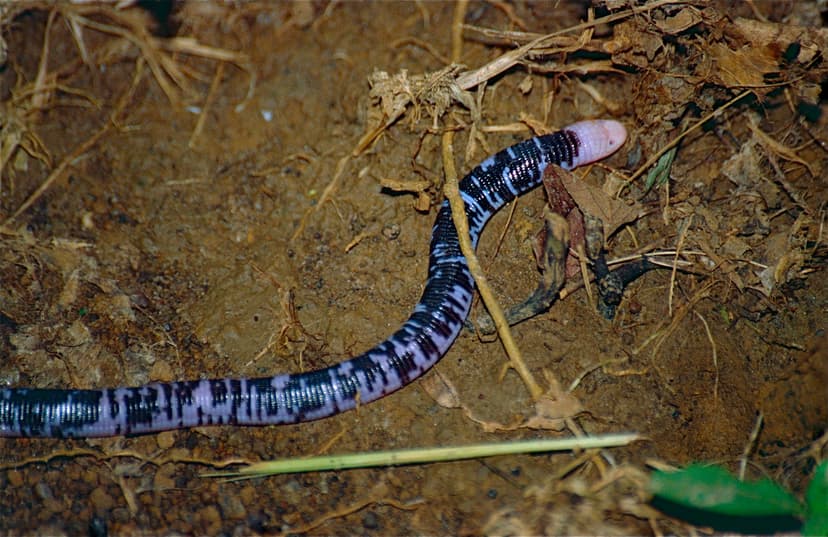
Amphisbaena fuliginosa
Amphisbaena fuliginosa, commonly known as the black-and-white worm lizard, is a fossorial species distinguished by its striking white and black mosaic pattern. It inhabits Amazonian forest areas in northern South America and is a burrowing, nocturnal predator of invertebrates and occasionally small vertebrates. This oviparous species plays a role in Yanomami mythology, where it is associated with warriors and the underworld.
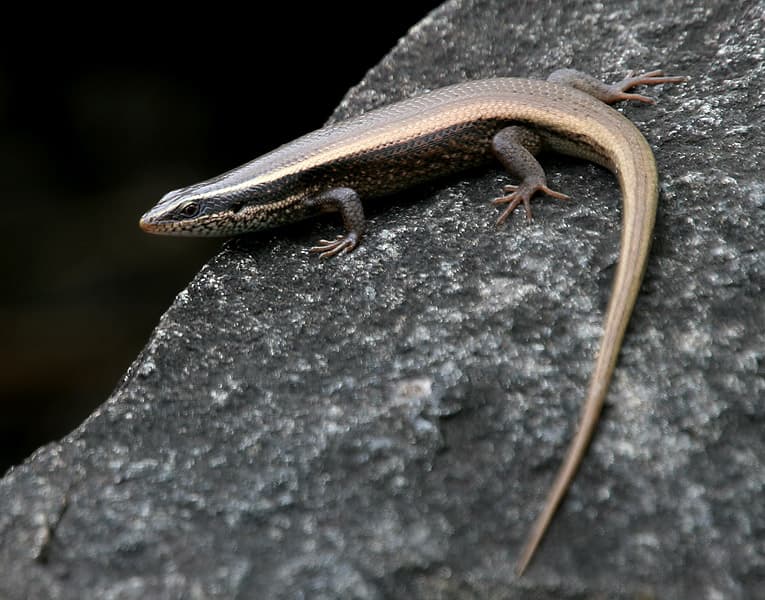
Bronze mabuya
The bronze grass skink, also known as the bronze mabuya or speckled forest skink, is a common but shy, ground-dwelling lizard found across South and Southeast Asia. It inhabits various environments including forests, grasslands, and rocky areas, and is characterized by its cylindrical body, keeled dorsal scales, and distinctive dorso-lateral bands. This skink is an insectivore, active both day and night, and plays a role in its ecosystem by consuming invertebrates.