
Teratoscincus scincus
Teratoscincus scincus, also known as the common wonder gecko or frog-eyed gecko, is a species of lizard native to the arid regions of Asia. It is well-adapted to desert life with specialized scales on its digits for sandy terrain and a broad head with large eyes. This nocturnal gecko primarily inhabits deserts and semi-arid areas, digging burrows to regulate its temperature and hydration.
Key Facts
- ›Possesses comb-like scales on its digits for efficient movement on loose sand.
- ›Features large eyes and a broad head, typical of desert-dwelling lizards.
- ›Exhibits a unique defense mechanism involving tail lashing that produces a rattling sound.
- ›Can autotomize (shed) its tail as a survival strategy.
- ›Adult coloration is buff or yellowish-brown with dark markings; juveniles are brightly colored.
- ›Its diet consists of insects and other small lizards.
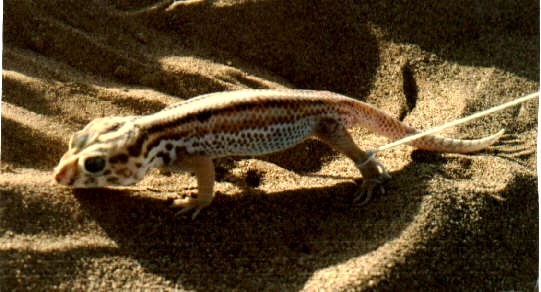
Common Wonder Gecko, Frog-Eyed Gecko
Middle East, Central Asia, Westernmost East Asia, Iran, Afghanistan, Pakistan, China, Arabian Peninsula, Kuwait, Qatar, United Arab Emirates, Oman, Kazakhstan, Turkmenistan, Uzbekistan, Tajikistan
Desert, Semi-Arid Areas, Sand Dunes, Gravel Plains
- Large Gecko Reaching About 16 cm In Total Length.
- Features A Broad Head and Large Eyes.
- Possesses Long, Robust Limbs.
- Has A Short Tail.
- Digits Are Fringed With Comb-Like Scales Instead of Expanded Toe-Pads.
- Scales On the Head Are Small; Scales On the Body and Tail Are Large.
- Adult Coloration Is Buff Or Yellowish-Brown With Broken Black Stripes Or Irregular Dark Spotting.
- Flanks and Belly Are White.
- Juveniles Are Vividly Colored, Bright Yellow With Dark Crossbands.
Insects, Other Lizards
- Nocturnal, Active During the Night.
- Digs Deep Burrows For Thermoregulation and Hydration.
- Defensive Vocalizations Include Yelping and Hissing.
- Tail Lashing Produces A Rattling Sound By Rubbing Scales Together.
- Adopts A Threatening Pose When Provoked, Standing On Tiptoe With An Arched Back and Expanded Throat.
- May Rush Forward To Bite When Further Provoked.
- Can Autotomize Its Tail As A Defense Mechanism.
About Teratoscincus scincus
Teratoscincus scincus, commonly known as the common wonder gecko or the frog-eyed gecko, is a fascinating lizard species native to the arid landscapes of Asia. Its scientific classification places it within the Sphaerodactylidae family, a group of geckos known for their diverse adaptations.
Description and Adaptations
This species is characterized by its robust build, reaching a total length of approximately 16 centimeters (6.3 inches). It possesses a broad head and strikingly large eyes, which are characteristic of many nocturnal desert dwellers. A key adaptation for its sandy environment is the absence of the typical gecko toe-pads; instead, its digits are equipped with comb-like scales that provide excellent traction on loose substrates. The scales on its body, particularly on the tail, are notably larger than those on its head. Adult coloration typically ranges from buff to yellowish-brown, adorned with broken black stripes or irregular dark spots, while its flanks and belly are a contrasting white. Juveniles are more vibrantly colored, displaying bright yellow with dark crossbands.
Distribution and Habitat
The geographic range of Teratoscincus scincus is extensive, covering central and western Iran, Afghanistan, Pakistan, and extending through regions east of the Caspian Sea into western China. Populations are also found across the Arabian Peninsula, including Kuwait, Qatar, the United Arab Emirates, and Oman, as well as in Kazakhstan, Turkmenistan, Uzbekistan, and Tajikistan. Its preferred habitat consists of deserts and semi-arid areas, including sand dunes and gravel plains, where its specialized features allow it to thrive.
Ecology and Behavior
Teratoscincus scincus is a nocturnal species, spending daylight hours in deep burrows it excavates. These burrows help it maintain a cool temperature and conserve moisture in the harsh desert climate. Its diet is varied, comprising mainly insects and other small lizards. When threatened, this gecko exhibits a range of defensive behaviors. It may emit yelping sounds or hiss, and it can rapidly lash its tail, causing the large scales to rub together and produce a distinctive rattling or vibrating sound. If further provoked, it will adopt an intimidating posture, arching its back and expanding its throat, before lunging to bite. A remarkable survival tactic is its ability to autotomize, or shed, its tail to distract predators and escape harm.
Source: Wikipedia ↗
Frequently Asked Questions
What are the common names for Teratoscincus scincus?
Teratoscincus scincus is commonly known as the common wonder gecko or the frog-eyed gecko. These names reflect its remarkable adaptations and distinctive facial features.
What is the typical habitat of Teratoscincus scincus?
This species thrives in desert and semi-arid environments. You can find them inhabiting sand dunes and gravel plains, where their specialized physical traits allow them to survive.
How does Teratoscincus scincus defend itself?
When threatened, Teratoscincus scincus employs several defense mechanisms. These include emitting a yelping vocalization or a hiss, aggressively lashing its tail to create a rattling sound, and if further provoked, it may bite its assailant. It can also shed its tail to escape predators.
What does Teratoscincus scincus eat?
The diet of Teratoscincus scincus is varied, reflecting its opportunistic predatory nature. It primarily consumes insects and is known to eat other small lizards found within its habitat.
What are the distinctive physical adaptations of Teratoscincus scincus for desert life?
Teratoscincus scincus has specialized scales on its digits that form a comb-like fringe, aiding in locomotion on loose sand. It also has a broad head and large eyes, which are beneficial for navigating its arid environment.
Is Teratoscincus scincus a climbing gecko?
Unlike many geckos that possess expanded toe-pads for climbing, Teratoscincus scincus lacks these. Its digits are fringed with comb-like scales, which are adapted for movement on sandy substrates rather than vertical surfaces.
Related Lizards
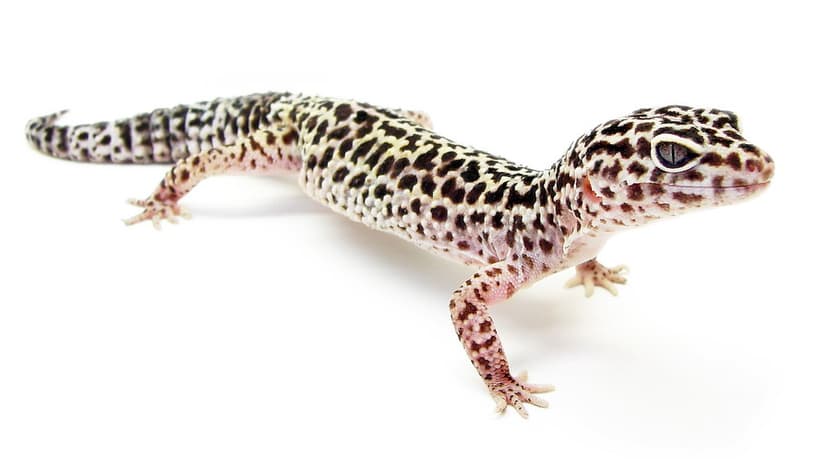
Leopard gecko
The leopard gecko, scientifically known as Eublepharis macularius, is a ground-dwelling lizard native to the dry grasslands and deserts of South Asia. Renowned for its distinctive spotted pattern, it is a popular pet, often considered the first domesticated lizard species. These geckos possess unique features like movable eyelids and thick, fat-storing tails.
Eublepharis macularius
The leopard gecko (Eublepharis macularius) is a ground-dwelling lizard native to the dry grasslands and deserts of South Asia. Known for its distinctive spotted pattern, it is a popular pet and often considered the first domesticated lizard species due to extensive captive breeding. These geckos possess unique features like mobile eyelids and a thick tail used for fat storage.

Gray checkered whiptail
The gray checkered whiptail (Aspidoscelis dixoni), also known as Dixon's whiptail, is a lizard species found in northern Mexico and the southwestern United States. It is characterized by its gray coloration, thin body, and long tail adorned with 10-12 longitudinal white or yellow stripes, often with checkering. This diurnal and insectivorous species prefers rocky, semi-arid habitats with sparse vegetation and reproduces asexually through parthenogenesis.