
Theobald's toad-headed agama
Theobald's toad-headed agama, also known as the snow lizard, is a species of lizard endemic to Asia, specifically found in arid and semi-arid regions of Turkestan, India, Nepal, and western China. It inhabits deserts, grasslands, and shrublands at high altitudes and is notable for being viviparous, meaning it gives birth to live young.
Key Facts
- ›Endemic to Asia, found in regions like Turkestan, Kashmir, Ladakh, Nepal, and western China.
- ›Inhabits desert, grassland, and shrubland environments at high altitudes.
- ›Reproduction is viviparous, with females giving birth to live young.
- ›Named in honor of British naturalist William Theobald.
- ›Its type locality is Lake Tso Moriri in Ladakh, India.

Theobald's Toad-Headed Agama, Snow Lizard
Eastern Turkestan, India, Nepal, Western China
About Theobald's toad-headed agama
Theobald's toad-headed agama, scientifically classified as Phrynocephalus theobaldi, is a species of lizard belonging to the Agamidae family. This species is endemic to Asia, with its natural range extending across several high-altitude regions. It is commonly referred to as the snow lizard.
Geographic Range and Habitat
This agama is distributed across eastern Turkestan, parts of India including Kashmir and Ladakh, Nepal, and western China, specifically in Xinjiang and southern Tibet. Its preferred natural habitats are arid and semi-arid environments, including deserts, grasslands, and shrublands. These lizards thrive at considerable altitudes, typically found between 2,700 and 4,200 meters (8,900 to 13,800 feet) above sea level. The type locality for this species is recorded as Lake Tso Moriri in Ladakh.
Reproduction
A distinctive characteristic of Phrynocephalus theobaldi is its reproductive strategy. Unlike many lizard species that lay eggs, this agama is viviparous. This means that the females give birth to live young, a trait that influences their life cycle and reproductive behaviors.
Etymology
The specific epithet, "theobaldi," was chosen to honor the British naturalist William Theobald, recognizing his contributions to the study of the region's fauna.
Source: Wikipedia ↗
Frequently Asked Questions
Where can Theobald's toad-headed agama be found?
Theobald's toad-headed agama is found in eastern Turkestan, India (specifically Kashmir and Ladakh), Nepal, and western China (Xinjiang and southern Tibet).
What kind of habitat does this lizard prefer?
This species prefers natural habitats such as deserts, grasslands, and shrublands. It is typically found at high altitudes, ranging from 2,700 to 4,200 meters (8,900 to 13,800 feet).
How does Theobald's toad-headed agama reproduce?
Theobald's toad-headed agama is viviparous. This means that instead of laying eggs, the females give birth to live young.
What is the origin of the name 'theobaldi'?
The specific name, 'theobaldi,' was given in honor of the British naturalist William Theobald.
Are there other common names for this lizard?
Yes, besides Theobald's toad-headed agama, it is also commonly known as the snow lizard.
Related Lizards

Egernia stokesii
Egernia stokesii, also known as the Gidgee skink or spiny-tailed skink, is a gregarious lizard species native to Australia. It is distinguished by its spiny tail and complex social structures, forming stable, long-term aggregations. This diurnal species inhabits semi-arid environments and exhibits an omnivorous diet. While the species as a whole is listed as Least Concern, one subspecies is considered endangered.

Eremias przewalskii
Eremias przewalskii, commonly known as the Gobi racerunner, is a species of lizard belonging to the Lacertidae family. This reptile is endemic to Asia, inhabiting diverse environments ranging from deserts and shrublands to forests and wetlands. It is distinguished by its viviparous reproductive method.
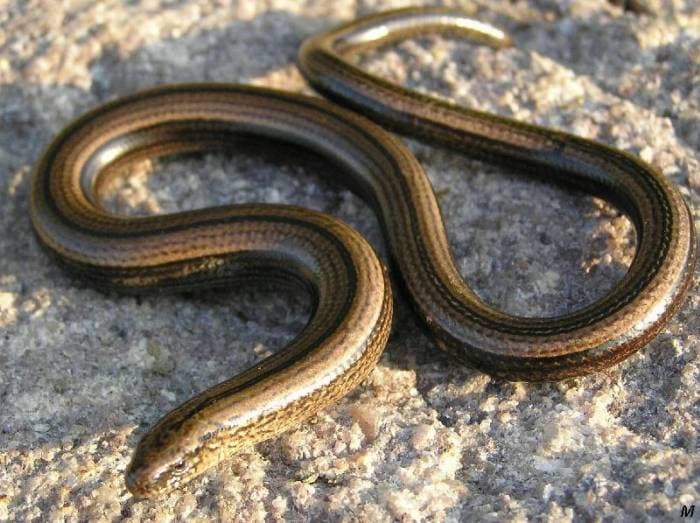
Anguis
Anguis, commonly known as slow worms, are a genus of legless lizards that are often mistaken for snakes. They are characterized by their grey-brown coloration, with females often exhibiting a coppery sheen and males displaying blue spots, especially during breeding season. These lizards inhabit a variety of warm, protected environments across Europe and parts of Asia, feeding primarily on invertebrates.