
Transcaspian bent-toed gecko
The Transcaspian bent-toed gecko, scientifically known as Mediodactylus russowii, is a species of lizard native to Asia, found across a wide range from Russia to northwestern China. It typically inhabits desert and shrubland environments and reproduces by laying eggs.
Key Facts
- ›Native to a broad region of Asia, including Russia, Turkmenistan, Kazakhstan, Iran, China, Uzbekistan, Tajikistan, and Kyrgyzstan.
- ›Inhabits desert and shrubland environments at various altitudes.
- ›Reproduces by laying eggs (oviparous).
- ›Has two recognized subspecies: Mediodactylus russowii russowii and Mediodactylus russowii zarudnyi.
- ›Named after Estonian naturalist Valerian von Russow.

Grey Thin-Toed Gecko, Russow's Bent-Toed Gecko, Transcaspian Bent-Toed Gecko
Russia, Turkmenistan, Kazakhstan, Iran, China, Uzbekistan, Tajikistan, Kyrgyzstan
About Transcaspian bent-toed gecko
The Transcaspian bent-toed gecko, scientifically classified as Mediodactylus russowii, is a species of lizard belonging to the Gekkonidae family. This reptile is native to Asia and is known by several common names, including the grey thin-toed gecko and Russow's bent-toed gecko. The specific name, russowii, honors the Estonian naturalist Valerian von Russow.
Geographic Range and Habitat
This gecko is distributed across a significant portion of Central Asia, with its range extending from Russia southward through Turkmenistan, Kazakhstan, northeastern Iran, northwestern China, Uzbekistan, Tajikistan, and Kyrgyzstan. Its preferred natural habitats are arid environments, specifically deserts and shrublands. The species has been observed in areas ranging from 45 meters below sea level up to altitudes of 2,000 meters above sea level, indicating a tolerance for varied topographical conditions within these dry ecosystems.
Reproduction and Subspecies
Mediodactylus russowii is an oviparous species, meaning it reproduces by laying eggs. The species is further divided into two recognized subspecies: Mediodactylus russowii russowii and Mediodactylus russowii zarudnyi. These subspecies were originally described in different genera before being placed under Mediodactylus.
Source: Wikipedia ↗
Frequently Asked Questions
What is the scientific name for the Transcaspian bent-toed gecko?
The scientific name for the Transcaspian bent-toed gecko is Mediodactylus russowii. It belongs to the family Gekkonidae.
Where is the Transcaspian bent-toed gecko found?
This gecko is found across a wide geographic range in Asia, including Russia, Turkmenistan, Kazakhstan, northeastern Iran, northwestern China, Uzbekistan, Tajikistan, and Kyrgyzstan.
What kind of habitat does the Transcaspian bent-toed gecko prefer?
Its preferred natural habitats are desert and shrubland. It can be found at altitudes ranging from 45 meters below sea level to 2,000 meters above sea level.
How does the Transcaspian bent-toed gecko reproduce?
The Transcaspian bent-toed gecko is oviparous, meaning it reproduces by laying eggs.
Are there different types of Transcaspian bent-toed geckos?
Yes, there are two recognized subspecies: Mediodactylus russowii russowii and Mediodactylus russowii zarudnyi.
Related Lizards
Acanthodactylus cantoris
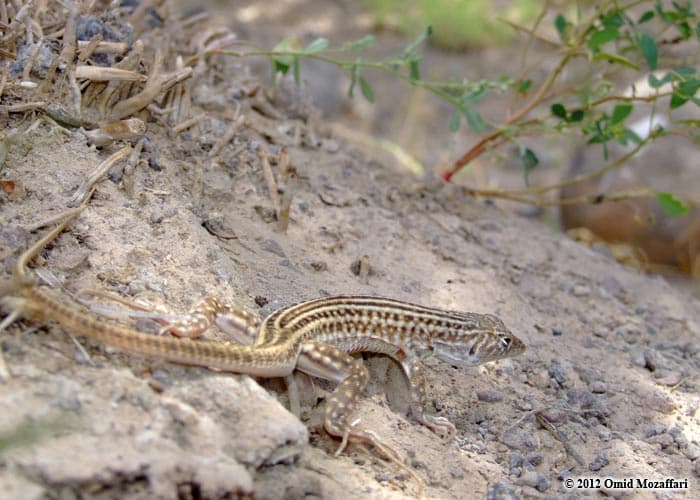
The Indian fringe-fingered lizard (Acanthodactylus cantoris) is a terrestrial species endemic to Asia, primarily found in sandy desert and shrubland habitats. It is characterized by its acutely pointed snout, keeled dorsal scales, and strong digital denticulations. This oviparous lizard burrows in the sand for protection and its young have distinctive white longitudinal lines on a blackish background.

Agama anchietae
Agama anchietae, commonly known as Anchieta's agama or the western rock agama, is a species of lizard native to southern Africa. It is characterized by its cryptic coloration, a wider head and longer tail in males due to sexual dimorphism, and a diet primarily consisting of insects, particularly ants. This species inhabits diverse environments including deserts, shrublands, and grasslands, and it reproduces by laying eggs.
Crossobamon eversmanni
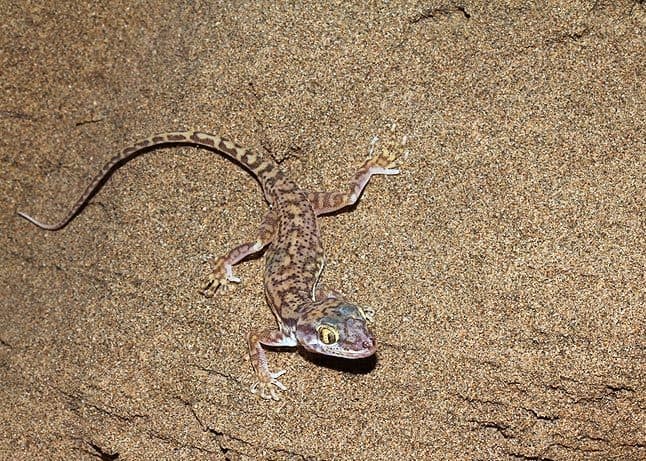
Crossobamon eversmanni, commonly known as the comb-toed gecko, is a species of Asian gecko found in desert, grassland, and shrubland habitats across Iran, Pakistan, and Central Asia. This terrestrial and nocturnal lizard is characterized by its burrowing behavior and oviparous reproduction, with females laying one to two eggs per clutch.