
Tropical house gecko
The Tropical house gecko, also known as the cosmopolitan house gecko, is a species of lizard native to sub-Saharan Africa that has been introduced to the Americas and the Caribbean. These geckos are characterized by their banded coloration, ability to change color slightly with temperature and light, and specialized toe lamellae that allow them to climb vertical surfaces. Primarily nocturnal hunters, they inhabit urban environments and are known for their vocalizations.
Key Facts
- ›Native to sub-Saharan Africa, but widely introduced to the Americas and Caribbean.
- ›Average total length is 10–12.7 cm (3.9–5.0 in).
- ›Coloration ranges from dark brown to light grey, with the ability to change color based on ambient conditions.
- ›Possesses scaly lamellae on toe undersides for excellent climbing ability.
- ›Primarily nocturnal and hunts insects drawn to lights.
- ›Vocalizations include quiet peeps and rapid squeaking sounds.

Cosmopolitan House Gecko, Wood Slave
Sub-Saharan Africa, North America, Central America, South America, Caribbean
Urban Locations
- Average Total Length of 10–12.7 cm Including Tail.
- Females Are Slightly Larger Than Males On Average.
- Average Male Svl Is 51.56 mm ; Average Female Svl Is 54.47 mm .
- Normally Colored In Black and Brown Bands.
- Can Slowly Change Color Based On Ambient Temperature and Lighting.
- Scales Vary In Color From Dark Brown To Light Grey.
- Possesses Scaly Lamellae On the Underside of Its Toes For Gripping Vertical Surfaces.
Isopods, Centipedes, Spiders, Scorpions, Cockroaches, Beetles, Moths, Flies, Mosquitoes, Snails, Slugs, Frogs, Anoles, Other Geckos, Blind Snakes, Orthoptera Species
- Mainly Nocturnal
- Voracious Hunter of Nocturnal Flying and Crawling Insects
- Waits Near Outdoor Lighting Fixtures To Catch Insects
- Capable of Vocalization, From Quiet Peeps To Rapid Short Squeaking Sounds
About Tropical house gecko
The Tropical house gecko (Hemidactylus mabouia), also known as the cosmopolitan house gecko, is a species of lizard belonging to the Gekkonidae family. It is a native resident of sub-Saharan Africa but has been widely introduced to North, Central, and South America, as well as the Caribbean, largely due to human activity.
Physical Characteristics
This gecko typically reaches an average total length of 10–12.7 centimeters (3.9–5.0 inches), including its tail. Females tend to be slightly larger than males. The species is characterized by its banded coloration, usually in black and brown, although it possesses the ability to subtly change its color in response to ambient temperature and lighting conditions, with its scales ranging from dark brown to light grey. A distinctive feature is the presence of scaly lamellae on the underside of its toes, which provide exceptional grip on vertical surfaces.
Habitat and Behavior
Tropical house geckos are predominantly found in urban environments, having adapted well to living in human-modified landscapes. They are primarily nocturnal hunters, actively seeking out and consuming flying and crawling insects that are active at night. These geckos have been observed to wait near outdoor lighting fixtures, capitalizing on the insects attracted to the light. They are also known for their vocalizations, which can range from quiet peeps to rapid squeaking sounds, often heard on quiet nights near open windows.
Diet
The diet of the Tropical house gecko is quite varied, encompassing a wide array of prey. This includes invertebrates like isopods, centipedes, spiders, scorpions, cockroaches, beetles, moths, flies, mosquitoes, snails, and slugs. They also consume small vertebrates such as frogs, anoles, other geckos, and blind snakes. A significant component of their diet consists of Orthoptera species.
Human Interaction
In some Caribbean cultures, the presence of a Tropical house gecko in a home is considered a sign of good luck, as they help control household insect pests. However, their droppings, which are dark brown and approximately 5 mm long and 2 mm wide, can pose a staining problem on light-colored surfaces if not managed. Despite being harmless, in places like Trinidad and Tobago, some individuals perceive the common house gecko, or "wood slave," as a bad omen and falsely believe it has a poisonous touch.
Source: Wikipedia ↗
Frequently Asked Questions
What is the scientific name of the Tropical house gecko?
The scientific name for the Tropical house gecko is Hemidactylus mabouia. It is also sometimes referred to as the cosmopolitan house gecko.
Where is the Tropical house gecko found naturally?
The Tropical house gecko is native to sub-Saharan Africa. However, it has been unintentionally introduced by humans to North, Central, and South America, as well as the Caribbean.
What does the Tropical house gecko eat?
This gecko has a varied diet that includes a range of invertebrates such as isopods, spiders, cockroaches, and moths. It also consumes small vertebrates like anoles and other geckos, with a particular preference for Orthoptera species.
What are the physical characteristics of the Tropical house gecko?
The Tropical house gecko typically measures 10–12.7 cm (3.9–5.0 in) in total length. Its scales vary in color from dark brown to light grey, and it has the ability to subtly change its color in response to its surroundings. A key physical feature is the scaly lamellae on its toes, which aid in climbing.
What is the habitat of the Tropical house gecko?
The Tropical house gecko is predominantly found in urban environments. It has adapted well to living alongside humans, often found in and around buildings.
Is the Tropical house gecko venomous?
Despite some local beliefs, the Tropical house gecko is not considered venomous. In Trinidad and Tobago, it is harmless, though some consider its touch to be poisonous.
What are the behavioral traits of the Tropical house gecko?
The Tropical house gecko is mainly nocturnal and an active hunter, often waiting near lights to catch insects. It is also known to vocalize, producing sounds ranging from soft peeps to quick squeaks.
Related Lizards
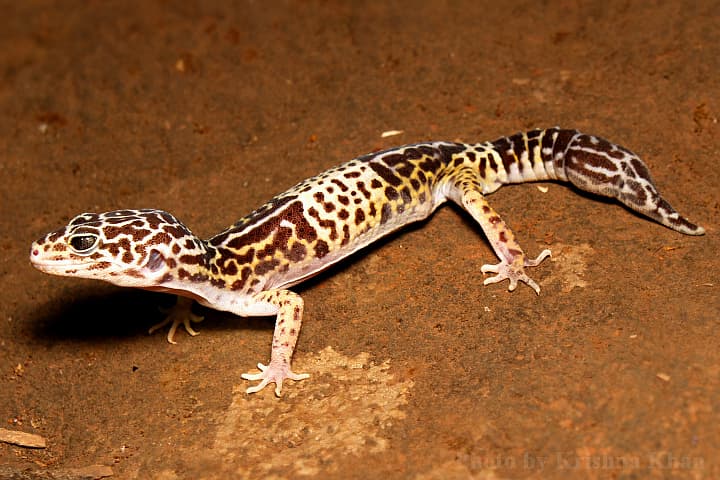
Eublepharis fuscus
The West Indian leopard gecko (Eublepharis fuscus) is a robust gecko species found in western India and potentially extending into southeastern Pakistan. Known for its dusky coloration, it inhabits forested hill tracts, scrub, and rocky areas. This nocturnal, terrestrial lizard primarily preys on scorpions and other arthropods.

Underwoodisaurus milii
The Underwoodisaurus milii, commonly known as the thick-tailed or barking gecko, is a reptile native to southern Australia. This species is distinguished by its plump tail and a unique barking defensive call. It inhabits rocky outcrops and shelters in burrows or under rocks during the day, emerging at night to prey on arthropods and smaller geckos.
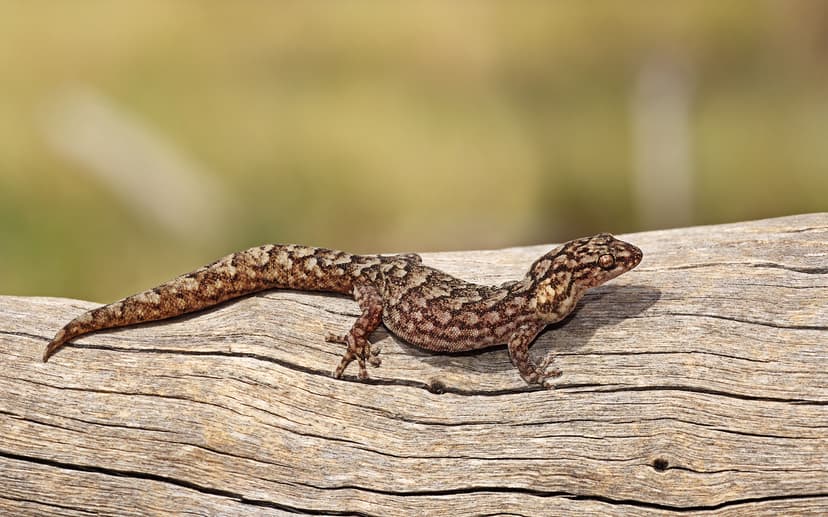
Christinus marmoratus
Christinus marmoratus, also known as the marbled gecko or southern marbled gecko, is a small, nocturnal gecko native to southern mainland Australia. This species is highly adaptable, inhabiting a range of environments from open shrubland to urban areas, and is notable for its ability to shed its tail when threatened. They are insectivorous and often found in aggregations.