
Tropiocolotes steudneri
Steudner's dwarf gecko, scientifically known as Tropiocolotes steudneri, is a small lizard species native to North Africa and the Middle East. It is characterized by its diminutive size and its habitat in arid and semi-arid regions. The species is named in honor of the naturalist Hermann Steudner.
Key Facts
- ›Native to North Africa and the Middle East.
- ›Found in countries including Algeria, Egypt, Libya, Sudan, and Jordan.
- ›Named after naturalist and explorer Hermann Steudner.
- ›Belongs to the Gekkonidae family.
- ›Reproduces by laying eggs (oviparous).

Steudner's Dwarf Gecko, Algerian Sand Gecko, Steudner's Pigmy Gecko
Algeria, Egypt, Ethiopia, Jordan, Libya, Sudan, Iran
About Tropiocolotes steudneri
What is Steudner's Dwarf Gecko?
Steudner's dwarf gecko, scientifically classified as Tropiocolotes steudneri, is a species of lizard belonging to the Gekkonidae family. It is commonly known by several names, including the Algerian sand gecko and Steudner's pigmy gecko, reflecting its geographical origin and small stature. The species is native to the arid and semi-arid environments of North Africa and the Middle East.
Etymology and Discovery
The specific name, steudneri, was given in honor of Hermann Steudner, a naturalist and explorer whose work contributed to the understanding of the region's fauna. The species was formally described in scientific literature, with early taxonomic references noting its classification under different genera before its current placement.
Geographic Range and Habitat
Tropiocolotes steudneri has a broad geographic distribution across parts of North Africa and the Middle East. It is documented in countries such as Algeria, Egypt, Ethiopia, Jordan, southeastern Libya, and northern Sudan. There is also a possibility of its presence in Iran, though further confirmation may be needed. This species typically inhabits desert and arid landscapes.
Reproduction
In terms of reproduction, Steudner's dwarf gecko is oviparous, meaning that it lays eggs. This reproductive strategy is common among many lizard species, allowing for the development of young outside the mother's body.
Source: Wikipedia ↗
Frequently Asked Questions
What is Steudner's dwarf gecko commonly known as?
Steudner's dwarf gecko is also commonly referred to as the Algerian sand gecko and Steudner's pigmy gecko. These names reflect its geographic origin and small size.
Where can Steudner's dwarf gecko be found?
This species is geographically distributed across North Africa and the Middle East. Specific locations include Algeria, Egypt, Ethiopia, Jordan, southeastern Libya, and northern Sudan, with a possibility of its presence in Iran.
What does the scientific name Tropiocolotes steudneri refer to?
The scientific name, Tropiocolotes steudneri, honors Hermann Steudner, who was a notable naturalist and explorer. The specific epithet 'steudneri' directly acknowledges his contributions.
How does Steudner's dwarf gecko reproduce?
Tropiocolotes steudneri is oviparous, meaning it reproduces by laying eggs. This is a common reproductive strategy among many lizard species.
What is the family of Steudner's dwarf gecko?
Steudner's dwarf gecko belongs to the Gekkonidae family, which is the family of geckos. This family is known for its diverse range of species found worldwide.
Related Lizards
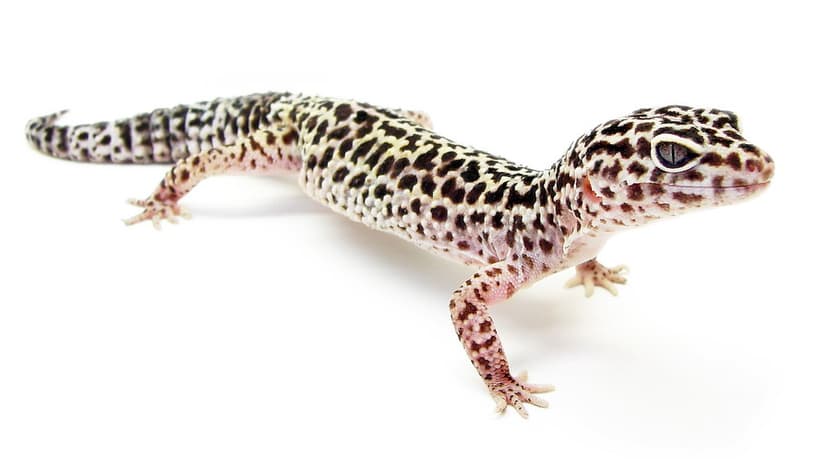
Common leopard gecko
The common leopard gecko (Eublepharis macularius) is a ground-dwelling lizard native to the arid regions of South Asia, including Afghanistan, Pakistan, India, and Nepal. Known for its distinctive spotted patterns and thick, fat-storing tail, it is a popular pet, often considered the first domesticated lizard species. These geckos are primarily nocturnal and opportunistic predators, feeding on invertebrates and small vertebrates.
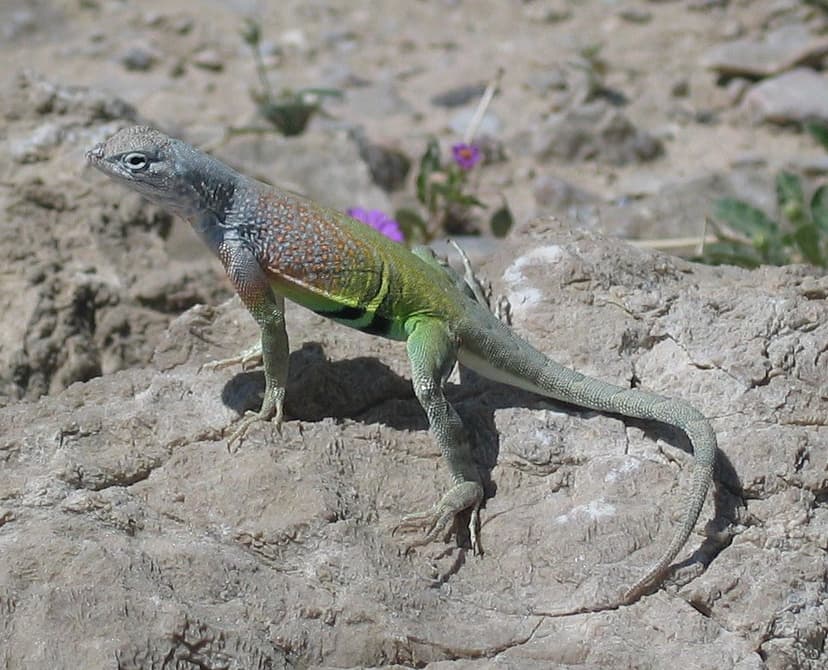
Cophosaurus texanus
The greater earless lizard (Cophosaurus texanus) is a medium-sized lizard native to arid and semi-arid regions of the southwestern United States and northern Mexico. It is distinguished by its lack of external ear openings, an adaptation for burrowing, and exhibits notable sexual dimorphism, with males being larger and more vibrantly colored than females. These lizards are primarily insectivores and rely on camouflage and speed to evade predators.

Ctenotus pantherinus
The leopard ctenotus (Ctenotus pantherinus) is a skink species found in the arid and semi-arid regions of central and western Australia. It is characterized by its brown or grey coloration with distinctive yellow/white spots outlined in black, and a tail nearly as long as its body. This fast-growing species is an insectivore, primarily feeding on termites and their larvae, and is oviparous, laying clutches of 4-7 eggs.