
Valentin's lizard
Valentin's lizard, also known as the Caucasian rock lizard, is a species of lizard belonging to the Lacertidae family. It is native to rocky areas, grasslands, and shrublands in southeastern Europe and western Asia, specifically found in Armenia, Georgia, Iran, and Turkey at high altitudes. This oviparous species is distinguished by its scientific name honoring naturalist Jean Valentin.
Key Facts
- ›Native to Armenia, Georgia, Iran, and Turkey.
- ›Inhabits rocky areas, grassland, and shrubland.
- ›Found at altitudes ranging from 1,300 to 3,000 meters.
- ›Reproduction method is oviparous (egg-laying).
- ›Named in honor of naturalist Jean Valentin.
- ›The genus Darevskia contains three recognized subspecies.

Caucasian Rock Lizard
Armenia, Georgia, Iran, Turkey
About Valentin's lizard
Valentin's lizard, scientifically known as Darevskia valentini and commonly referred to as the Caucasian rock lizard, is a species of lizard belonging to the Lacertidae family. This species is found in southeastern Europe and western Asia, with its natural range encompassing Armenia, Georgia, Iran, and Turkey.
Habitat and Distribution
The preferred natural habitats for Valentin's lizard are rocky areas, grasslands, and shrublands. These lizards are typically found at significant altitudes, ranging from 1,300 to 3,000 meters (approximately 4,300 to 9,800 feet) above sea level.
Taxonomy and Etymology
The species name, valentini, is an honorific designation, commemorating the naturalist Jean Valentin (1868–1898). Jean Valentin was associated with the Senckenberg Naturmuseum, and his contributions are recognized through this naming convention. There are three recognized subspecies of Darevskia valentini.
Reproduction
Valentin's lizard is oviparous, meaning that it reproduces by laying eggs. This is a common reproductive strategy among many reptile species.
Source: Wikipedia ↗
Frequently Asked Questions
What is Valentin's lizard commonly known as?
Valentin's lizard is also commonly known as the Caucasian rock lizard. It is a species within the Lacertidae family of lizards.
Where can Valentin's lizard be found?
This lizard species is native to southeastern Europe and western Asia. Its geographic range includes Armenia, Georgia, Iran, and Turkey.
What type of habitat does Valentin's lizard prefer?
Valentin's lizard prefers natural habitats such as rocky areas, grasslands, and shrublands. These environments are typically found at high altitudes.
How does Valentin's lizard reproduce?
Valentin's lizard is oviparous, meaning it reproduces by laying eggs.
Why is it called Valentin's lizard?
The specific name, valentini, was given in honor of the naturalist Jean Valentin, who lived from 1868 to 1898 and was associated with the Senckenberg Naturmuseum.
Are there different types of Valentin's lizard?
Yes, there are three recognized subspecies of Darevskia valentini. These include the nominotypical subspecies and two others.
Related Lizards

Delma fraseri
Fraser's delma (Delma fraseri), also known as Fraser's scalyfoot, is a species of legless lizard found in Western Australia. It inhabits diverse environments including forests, shrublands, grasslands, and rocky areas. This oviparous species is named in honor of botanist Charles Fraser.
Diporiphora lalliae
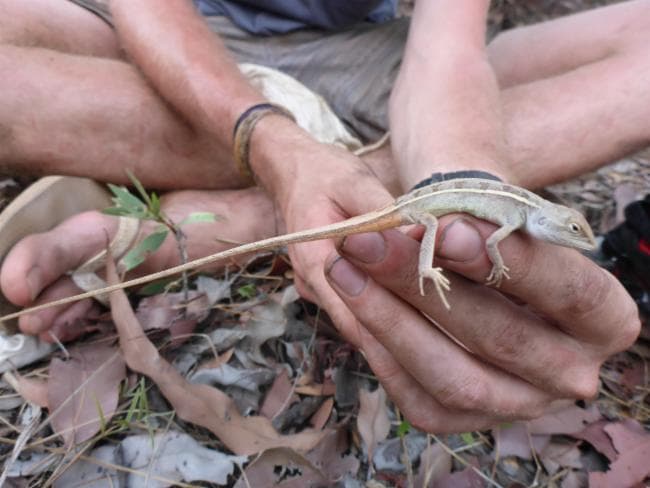
Diporiphora lalliae, also known as Lally's two-line dragon, is a species of lizard endemic to northern Australia. This agamid lizard is characterized by its long tail, a gular fold, and strongly keeled dorsal scales. It inhabits a variety of environments including forests, shrublands, grasslands, and rocky areas.
Eumeces schneiderii
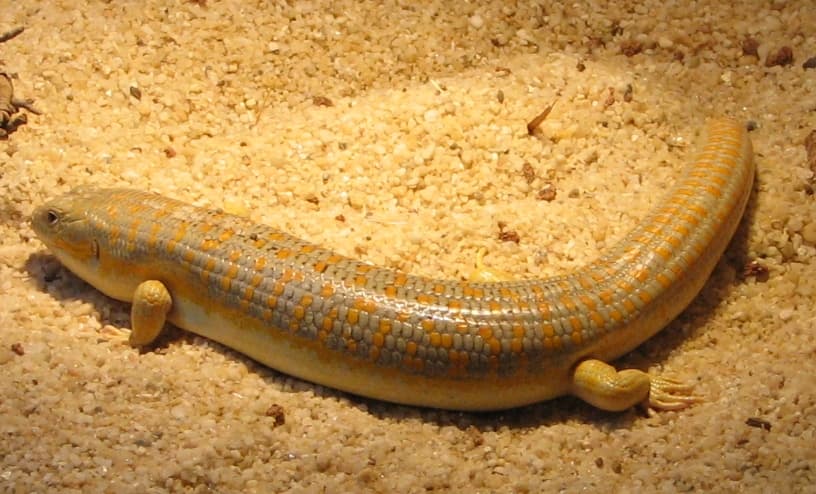
Eumeces schneiderii, commonly known as Schneider's skink, is a species of lizard found across Central Asia, Western Asia, and North Africa. It is characterized by its smooth scales, a moderately sized head with an obtuse snout, and a yellowish lateral streak. This oviparous species inhabits a variety of environments including rocky areas, grasslands, and shrublands.