
Dugong
Mammalia, Sirenia·Warm coastal waters with large seagrass meadows, including wide and shallow protected bays, mangrove channels, and inter-reefal waters.·Vulnerable·Fluke-like (dolphin-like)
The dugong is a marine mammal and the only surviving species of the family Dugongidae, found in the Indo-West Pacific region. Distinctive for its dolphin-like fluke tail and sharply downturned snout, it is a strictly herbivorous creature that relies heavily on seagrass for sustenance. Despite facing numerous threats, its slow reproduction rate and long lifespan make it particularly vulnerable to population decline.
Key Facts
- ›The dugong is the sole living member of the Dugongidae family and the only sirenian in its Indo-West Pacific range.
- ›It is a strictly marine herbivore, feeding primarily on seagrass found in shallow, protected coastal waters.
- ›Dugongs possess a fusiform body, paddle-like flippers, and a distinctive fluke-like tail, resembling that of a dolphin.
- ›Adult dugongs typically range from 250 to 900 kg, with females generally being larger than males.
- ›The species has a long lifespan, often exceeding 70 years, and a slow reproductive rate.
- ›Major threats include fishing-related fatalities, habitat degradation, and hunting, leading to its vulnerable conservation status.
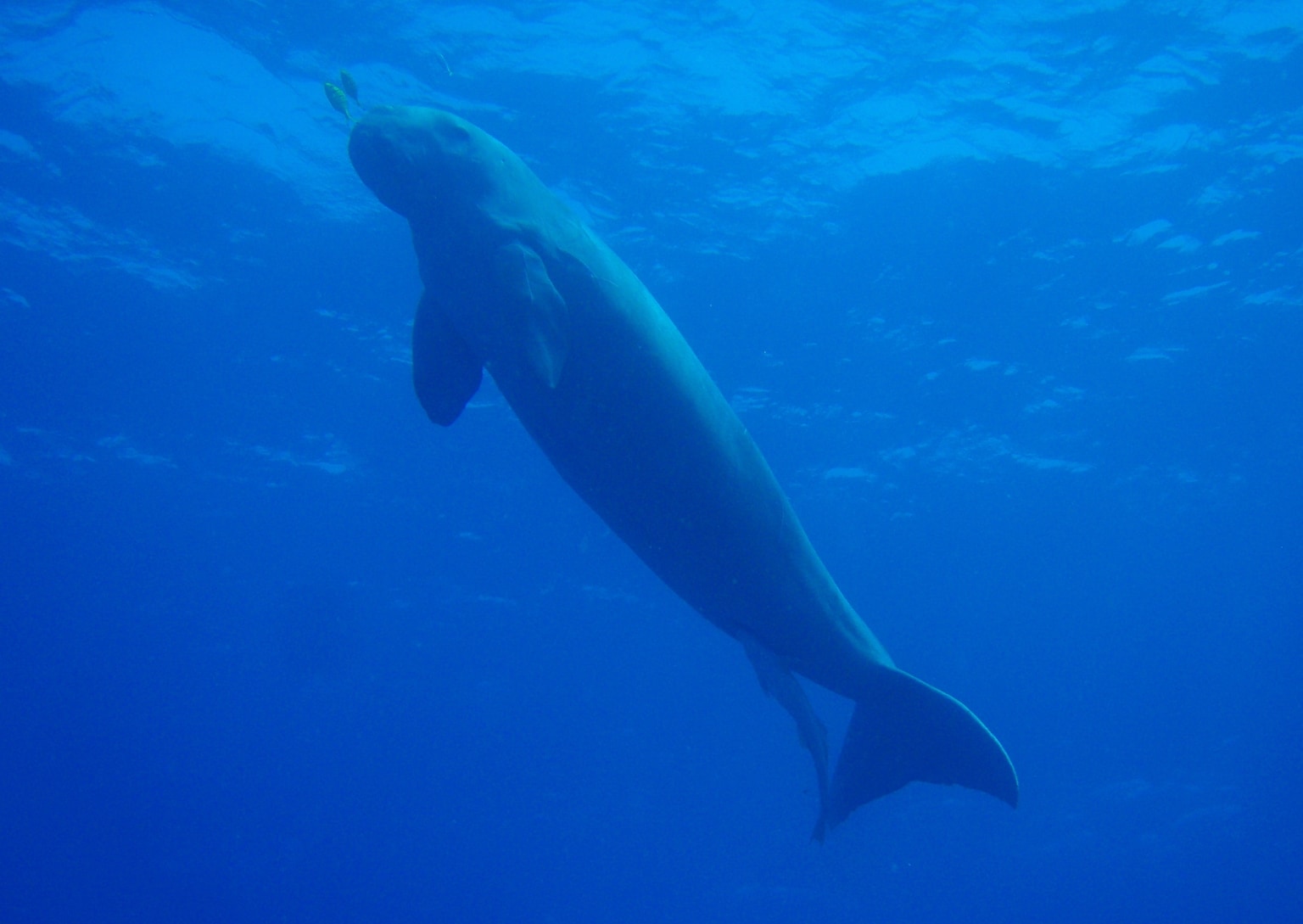
Sea Cow, Sea Pig, Sea Camel
- Indo-West Pacific: Waters of Some 40 Countries and Territories From East Africa To the Western Pacific
- Fusiform Body, Tapering At Both Ends.
- Thick, Smooth Skin, Pale Cream At Birth, Darkening To Brownish-To-Dark-Grey With Age.
- Paddle-Like Forelimbs and A Fluke-Like, Dolphin-Shaped Tail.
- Sharply Downturned Snout With A Highly Mobile, Horseshoe-Shaped Upper Lip.
- Sparse Covering of Short Hair, More Developed Around the Mouth.
- Small Eyes With Limited Vision, But Acute Hearing.
- Nostrils On Top of the Head, Equipped With Closable Valves.
- Two Teats Located Behind Each Flipper.
- Solid, Dense Bones That May Act As Ballast.
- Forages For Seagrass Using Its Prehensile Upper Lip.
- Uses Flukes For Propulsion and Flippers For Steering and Slowing.
- Possesses Acute Hearing and Limited Vision.
- Can Close Nostrils With Valves When Submerged.
Fishing-Related Fatalities, Habitat Degradation, Hunting, Illegal Poaching, Oil Spills, Marine Trash and Plastic Ingestion
About Dugong
The dugong (Dugong dugon) is a remarkable marine mammal, serving as the sole living representative of the family Dugongidae and one of four extant species within the order Sirenia. Its range spans the warm coastal waters of the Indo-West Pacific, from East Africa to the western Pacific Ocean. The dugong is uniquely adapted to its environment, characterized by a fusiform body, paddle-like flippers, and a distinctive fluke-like tail reminiscent of a dolphin's. Its snout is sharply downturned, an adaptation for its specialized diet.
Diet and Habitat
Dugongs are strictly herbivorous, relying almost exclusively on seagrass for sustenance. Consequently, they are found in shallow, protected coastal habitats that support seagrass meadows, such as wide bays, mangrove channels, and the waters around large inshore islands. Australia's northern waters, particularly between Shark Bay and Moreton Bay, are considered a contemporary stronghold for the species. While primarily marine, they can tolerate brackish waters found in coastal wetlands.
Anatomy and Appearance
Adult dugongs typically measure around 3 meters in length and weigh approximately 420 kilograms, though individuals can reach up to 4.06 meters and over 1,000 kilograms. Females tend to be larger than males. Their skin is thick and smooth, changing from pale cream at birth to a darker greyish-brown with age, sometimes influenced by algal growth. They possess limited vision but acute hearing, with nostrils located on top of their heads that can be closed using valves. Unlike manatees, dugongs have a unique skull structure and two incisors, or tusks, which emerge in males and can erupt in females later in life.
Conservation and Threats
Dugongs have been hunted for thousands of years for their meat and oil, a practice that still holds cultural significance in some regions. Despite legal protections in many countries, the species faces significant threats, including accidental entanglement in fishing gear, degradation of seagrass habitats, and continued hunting. Their long lifespan of 70 years or more and slow reproductive rate make them particularly vulnerable to population decline. The IUCN lists the dugong as vulnerable to extinction, with many populations fragmented and critically endangered. Efforts to conserve the species are ongoing, but the challenges remain substantial.
Source: Wikipedia ↗
Frequently Asked Questions
What is a dugong and where does it live?
A dugong is a marine mammal, the only living representative of the Dugongidae family. It inhabits warm coastal waters across the Indo-West Pacific, spanning from East Africa to the western Pacific Ocean, and is dependent on seagrass meadows.
How is a dugong different from a manatee?
While both are sirenians, dugongs are distinguishable from manatees by their fluke-like, dolphin-shaped tail, and a uniquely downturned snout adapted for feeding on benthic seagrass. Manatees have paddle-shaped tails and a different skull structure.
What do dugongs eat?
Dugongs are strictly herbivorous and feed almost exclusively on seagrass. They use their highly mobile, muscular upper lip to forage for these plants in benthic seagrass communities.
What are the main threats to dugongs?
The primary threats to dugongs are anthropogenic, including accidental entanglement in fishing gear, degradation of their seagrass habitat, and continued hunting. Their slow reproduction and long lifespan make them especially vulnerable to these pressures.
What is the conservation status of the dugong?
The International Union for Conservation of Nature (IUCN) lists the dugong as vulnerable to extinction. Many populations are fragmented and believed to be close to extinction due to ongoing threats.
Do dugongs live in freshwater?
No, dugongs are strictly marine mammals, unlike manatees which utilize freshwater to some degree. However, they can tolerate brackish waters found in coastal wetlands.
Related Manatees & Dugongs
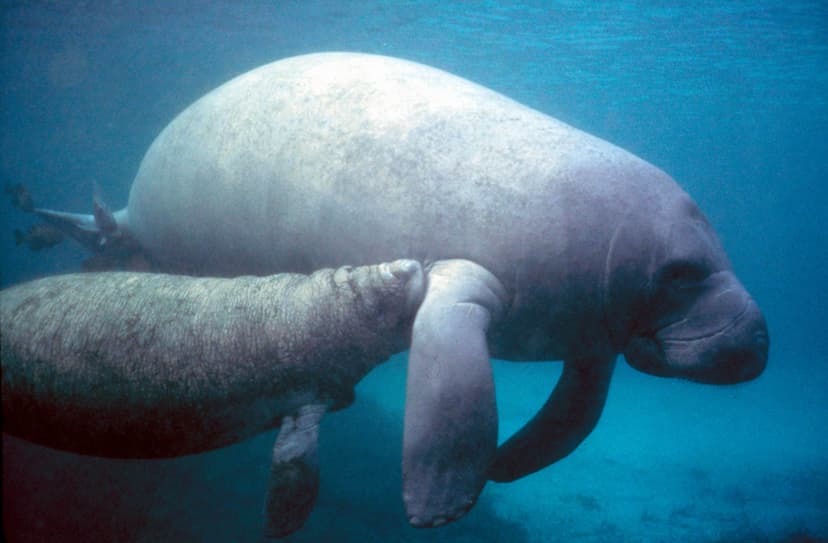
West Indian manatee
The West Indian manatee is a large, herbivorous marine mammal found in warm coastal waters from the southeastern United States to northern Brazil. Distinctive for its prehensile snout, sensitive whiskers (vibrissae), and paddle-like tail, it navigates shallow aquatic environments, feeding on over 60 species of plants. Facing threats from human activities, this species is a focus of ongoing conservation efforts.
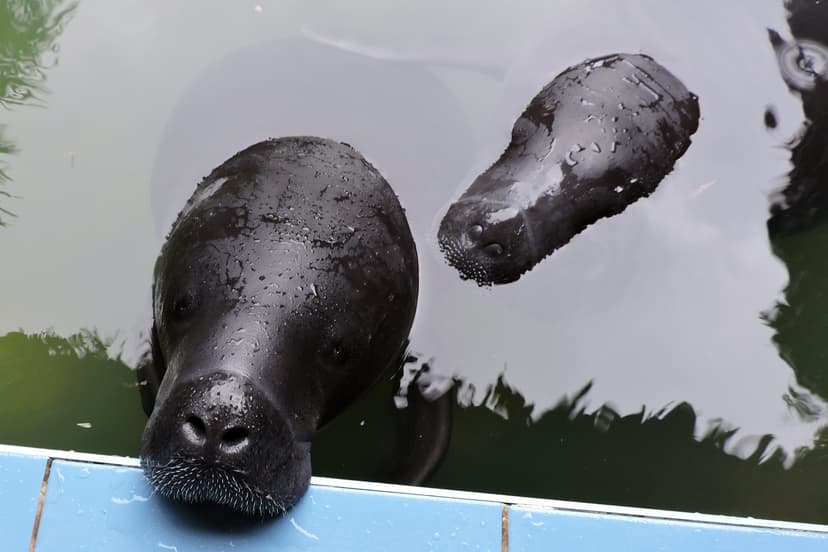
Amazonian manatee
The Amazonian manatee (Trichechus inunguis), also known as cowfish in Brazil, is the smallest of the three extant manatee species. It inhabits the freshwater basins of the Amazon River in South America and is distinguished by its thin, wrinkled gray or brownish skin, fine body hairs, and a white chest patch. This docile herbivore is uniquely adapted to its aquatic environment and faces significant threats from illegal hunting.
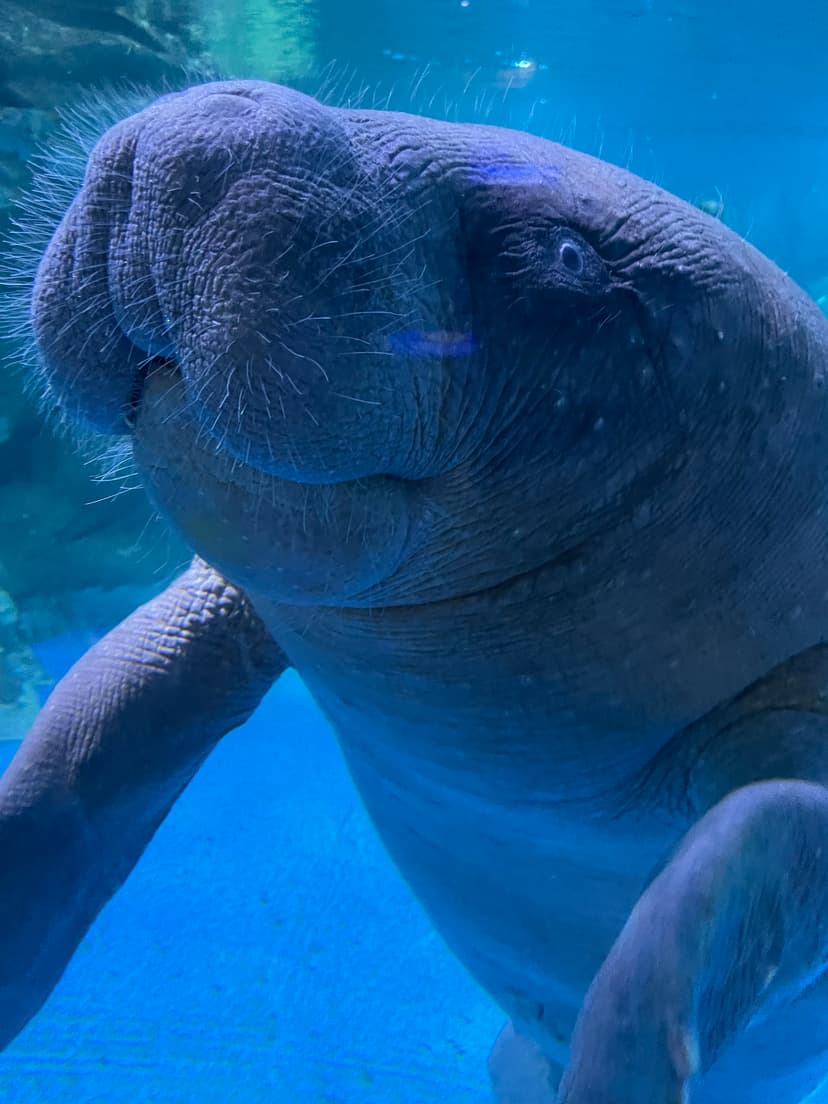
West African manatee
The West African manatee, scientifically known as Trichechus senegalensis, is the sole manatee species found in the Old World, inhabiting coastal and inland waters from Senegal to Angola. It is distinguished by its unique ability to tolerate both saltwater and freshwater environments and its occasional consumption of non-plant material, setting it apart from other sirenian species.