
West Indian manatee
Mammalia, Sirenia·Shallow coastal areas, including rivers and estuaries, in both freshwater and saltwater environments.·Vulnerable (overall species and Florida subspecies), Endangered (Antillean subspecies)·Spatula-like paddle
The West Indian manatee is a large, herbivorous marine mammal found in warm coastal waters from the southeastern United States to northern Brazil. Distinctive for its prehensile snout, sensitive whiskers (vibrissae), and paddle-like tail, it navigates shallow aquatic environments, feeding on over 60 species of plants. Facing threats from human activities, this species is a focus of ongoing conservation efforts.
Key Facts
- ›Inhabits warm coastal waters of the Caribbean, from the Eastern United States to northern Brazil.
- ›Feeds on over 60 species of aquatic plants, consuming 5-10% of its body weight daily.
- ›Possesses a prehensile snout, sensitive vibrissae for navigation and feeding, and dense bones for buoyancy control.
- ›Breathes air, is warm-blooded, and produces milk, demonstrating full adaptation to aquatic life.
- ›Females give birth to one calf every two to three years after a 12-14 month gestation period.
- ›Faces threats including habitat loss, pollution, and collisions with watercraft.
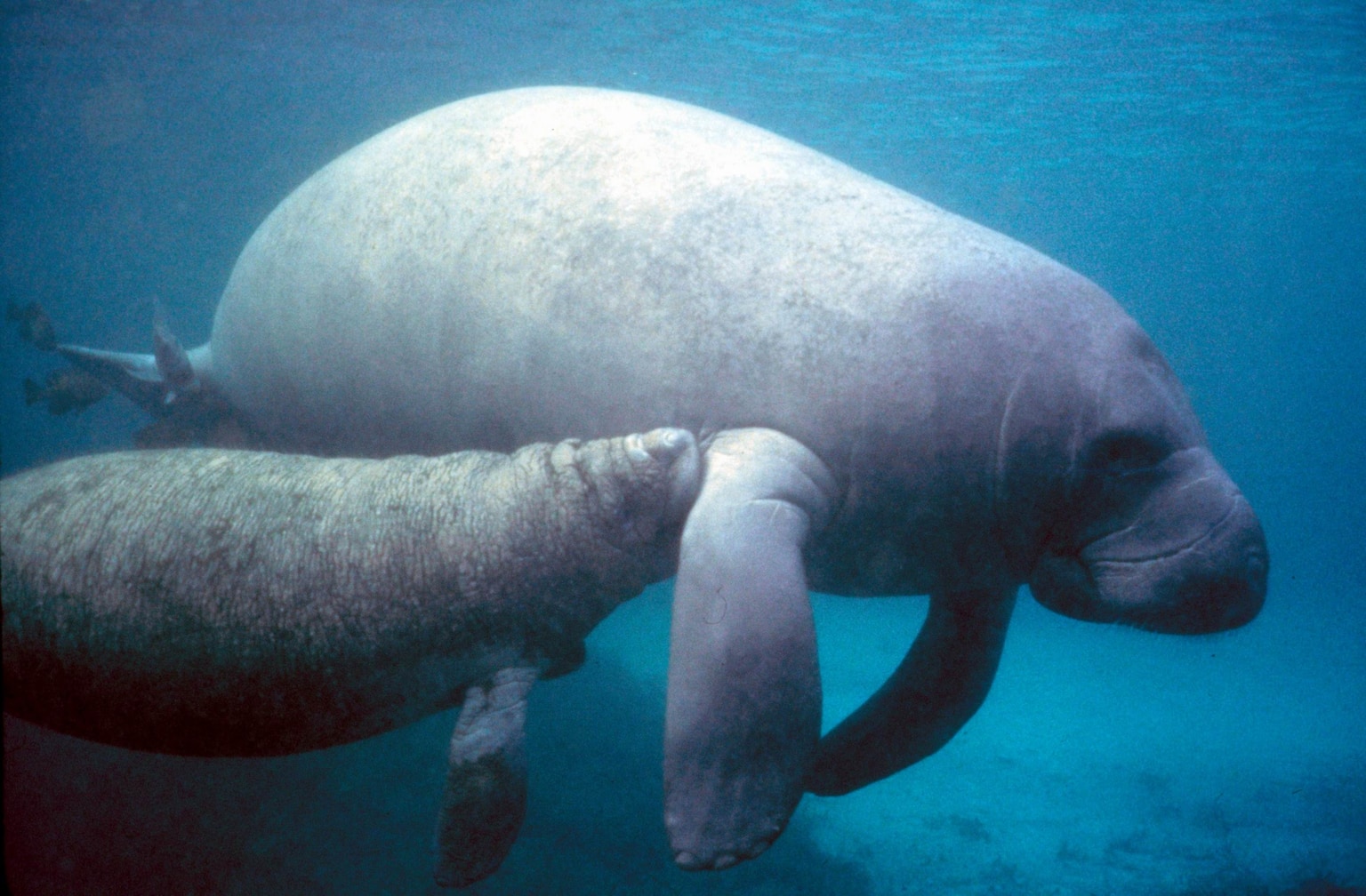
North American Manatee
Eastern United States, Caribbean, Northern Brazil
- Large Aquatic Mammal With A Streamlined Body.
- Possesses A Prehensile Snout For Grasping Vegetation.
- Covered In Highly Sensitive Whiskers Used For Feeding and Navigation.
- Has A Spatula-Like Paddle Tail For Propulsion.
- Lacks External Ear Flaps and Hind Limbs.
- Skin Is Gray But Can Vary In Coloration Due To Algae and Other Biota.
- Has Three To Four Nails On Each Flipper .
- Possesses Dense, Solid Bones For Ballast and Buoyancy Control.
- Has A Longitudinally Oriented, Split Diaphragm.
- Generally Solitary But Aggregates At Warm-Water Habitats and During Mating Season.
- Lacks Predator Avoidance Behavior Due To Lack of Natural Predators In Their Evolutionary Habitat.
- Capable of Long and Deep Dives Due To Low Metabolic Rates.
- Communicate Through Vocalizations, With Sex and Age-Related Differences Noted.
- Exhibit Lombard Effect, Increasing Vocal Effort In Noisy Environments.
- Use Vibrissae For Active Touch Discrimination and Detecting Hydrodynamic Stimuli.
Collisions With Watercraft, Habitat Loss and Degradation, Pollution, Harmful Algae Blooms, Entanglement and Ingestion of Debris, High Perinatal Mortality, Illegal Hunting, Habitat Fragmentation
American Alligators, American Crocodiles, Large Sharks
About West Indian manatee
The West Indian manatee (Trichechus manatus), also known as the North American manatee, is a large, gentle marine mammal that inhabits the warm, shallow coastal waters of the Caribbean, extending from the southeastern United States down to northern Brazil. These herbivores are the largest living members of the order Sirenia, a group that also includes the dugong and extinct species like Steller's sea cow. They are characterized by their large size, paddle-like tails, sensitive whiskers, and a distinctive prehensile snout used for grasping vegetation.
Life and Habitat
West Indian manatees are fully adapted to aquatic life, possessing streamlined bodies, dense bones for buoyancy control, and the ability to breathe air. They are found in a variety of aquatic environments, including coastal areas, rivers, and estuaries, and can tolerate both freshwater and saltwater. Their low metabolic rate limits them to warm waters, and they seek out warmer refuges during colder periods. Manatees are herbivores, feeding on over 60 species of aquatic plants, and spend a significant portion of their day grazing. Their unique "marching molars" continuously replace worn teeth, a necessary adaptation for their abrasive diet.
Behavior and Reproduction
Manatees are often solitary but may aggregate in warm-water habitats or during mating season. They exhibit developed vocal communication abilities, with distinct calls used between individuals, particularly between mothers and calves. Reproduction is characterized by a significant gestation period of 12-14 months, typically resulting in a single calf. Calves remain with their mothers for up to two years, learning essential survival behaviors. Females can reproduce every two to three years, and wild manatees have been known to produce offspring into their late 30s.
Threats and Conservation
Historically, West Indian manatees faced significant exploitation, particularly in Brazil for their hides. Today, major threats include collisions with watercraft, habitat loss and degradation, pollution, and entanglement in marine debris. The Antillean subspecies also faces pressures from illegal hunting and habitat fragmentation. While population numbers have shown increases, leading to reclassifications from endangered to threatened in the United States, conservation efforts remain crucial. Legal protections, such as the Endangered Species Act and the Marine Mammal Protection Act, are in place to safeguard the species. The International Union for Conservation of Nature (IUCN) currently assesses the West Indian manatee as vulnerable, with the Florida subspecies also vulnerable and the Antillean subspecies endangered.
Source: Wikipedia ↗
Frequently Asked Questions
What is the scientific name for the West Indian manatee?
The scientific name for the West Indian manatee is Trichechus manatus. This binomial nomenclature is used to classify this large aquatic mammal within the scientific community.
Where are West Indian manatees found?
West Indian manatees are found in warm coastal areas of the Caribbean, ranging from the southeastern United States down to northern Brazil. They inhabit shallow coastal areas, including rivers and estuaries, and can tolerate both freshwater and saltwater environments.
What do West Indian manatees eat?
West Indian manatees are obligate herbivores, feeding on more than 60 species of aquatic plants in both fresh and saltwater. Seagrass is a primary food source, but they also consume grasses, roots, leaves, and algae.
How long do West Indian manatees live?
West Indian manatees are estimated to live 50 years or more in the wild. One captive Florida manatee lived to be 69 years old, and another reached 71 years of age.
What are the main threats to West Indian manatees?
Major threats to West Indian manatees include collisions with watercraft, habitat loss and degradation, pollution, and entanglement in debris. Antillean manatees also face pressure from illegal hunting and habitat fragmentation.
Are West Indian manatees endangered?
The conservation status of the West Indian manatee has varied. While it was listed as endangered in the United States in the 1970s, it was reclassified as threatened in 2017 due to population increases. However, a petition to reinstate their endangered status began in 2025, and the Antillean subspecies is currently assessed as endangered by the IUCN.
Related Manatees & Dugongs
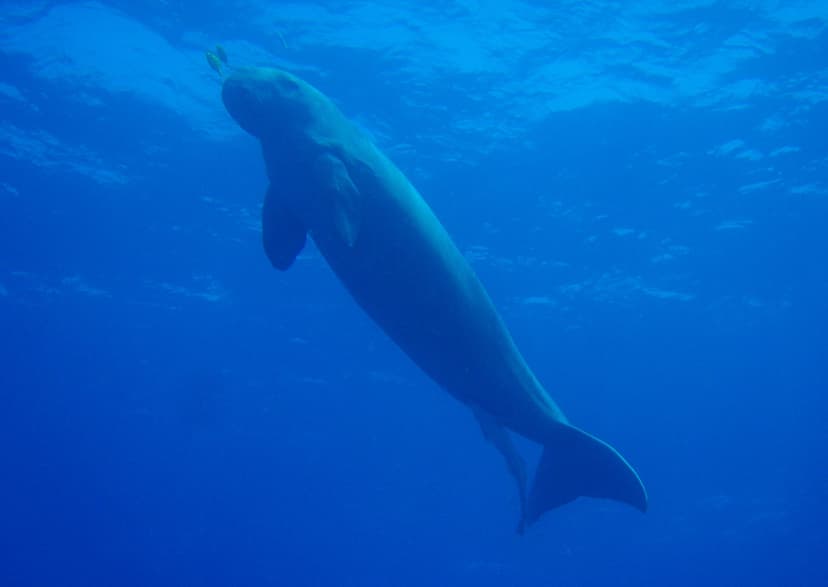
Dugong
The dugong is a marine mammal and the only surviving species of the family Dugongidae, found in the Indo-West Pacific region. Distinctive for its dolphin-like fluke tail and sharply downturned snout, it is a strictly herbivorous creature that relies heavily on seagrass for sustenance. Despite facing numerous threats, its slow reproduction rate and long lifespan make it particularly vulnerable to population decline.
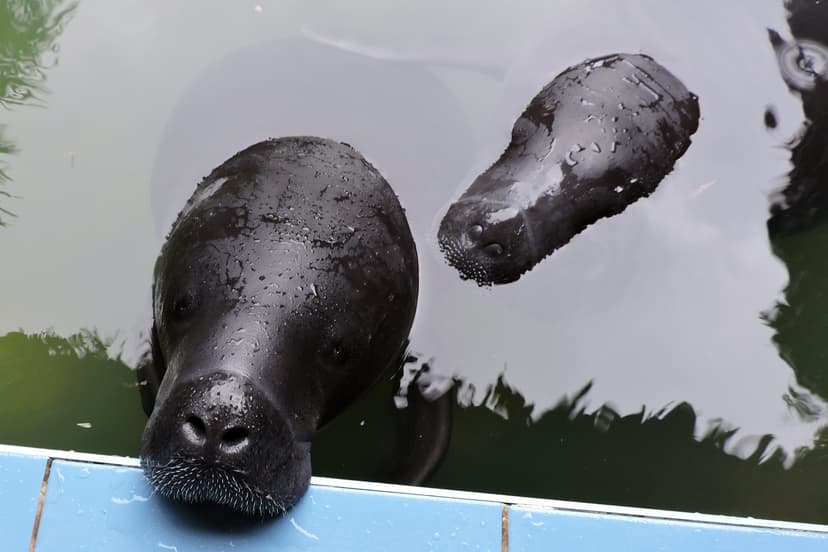
Amazonian manatee
The Amazonian manatee (Trichechus inunguis), also known as cowfish in Brazil, is the smallest of the three extant manatee species. It inhabits the freshwater basins of the Amazon River in South America and is distinguished by its thin, wrinkled gray or brownish skin, fine body hairs, and a white chest patch. This docile herbivore is uniquely adapted to its aquatic environment and faces significant threats from illegal hunting.
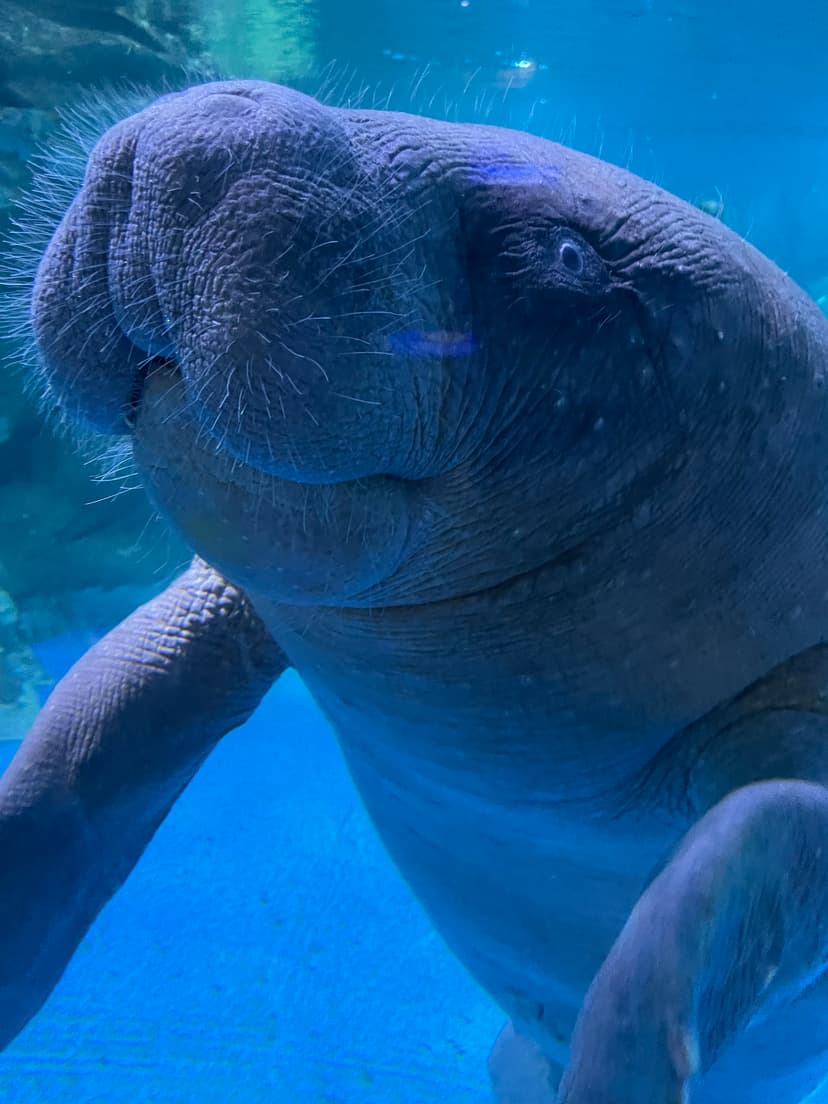
West African manatee
The West African manatee, scientifically known as Trichechus senegalensis, is the sole manatee species found in the Old World, inhabiting coastal and inland waters from Senegal to Angola. It is distinguished by its unique ability to tolerate both saltwater and freshwater environments and its occasional consumption of non-plant material, setting it apart from other sirenian species.